

Snaking its way through Riverside, the Tequesquite Arroyo cuts a path that separates certain portions of the city. The Victoria Avenue Bridge is one solution to this problem, allowing Victoria Avenue to cross over the ravine. The Magnolia Fill was another answer that allowed Magnolia Avenue to connect to Downtown Riverside. Another answer to the obstacle of the arroyo was building a trestle near the western end of the arroyo to extend the Lower Canal on its journey to bring water to the southern part of the city.
The early Riverside settlers brought water to their homes and fields by digging a canal that ran along the eastern edge of the mile square of Downtown Riverside and brought water to the city as early as 1871. This became known as the Upper Canal.
As Samuel C. Evans and William Sayward began to develop the area south of the original Riverside Colony, they needed a source of water. When John W. North refused permission to build a canal through the Colony property, Evans and his associates bought out the control of the Southern California Colony and combined it with their holdings and formed the Riverside Land and Irrigating Company. They could then build their canal, which became the Lower Canal.
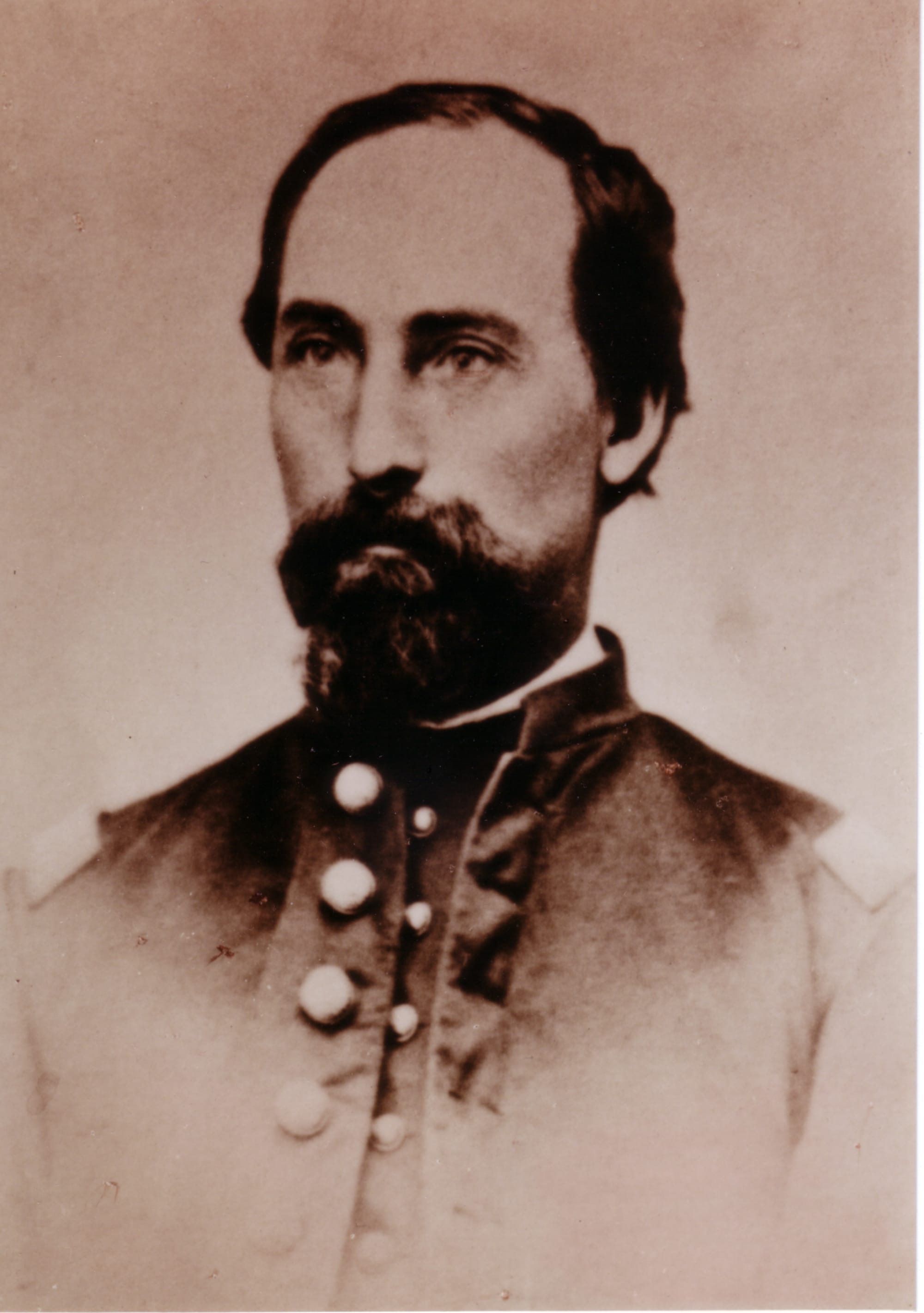
To build this canal, they hired Christopher Columbus Miller, the father of Frank Miller. The elder Miller arrived in Riverside in 1874 from Tomah, Wisconsin.
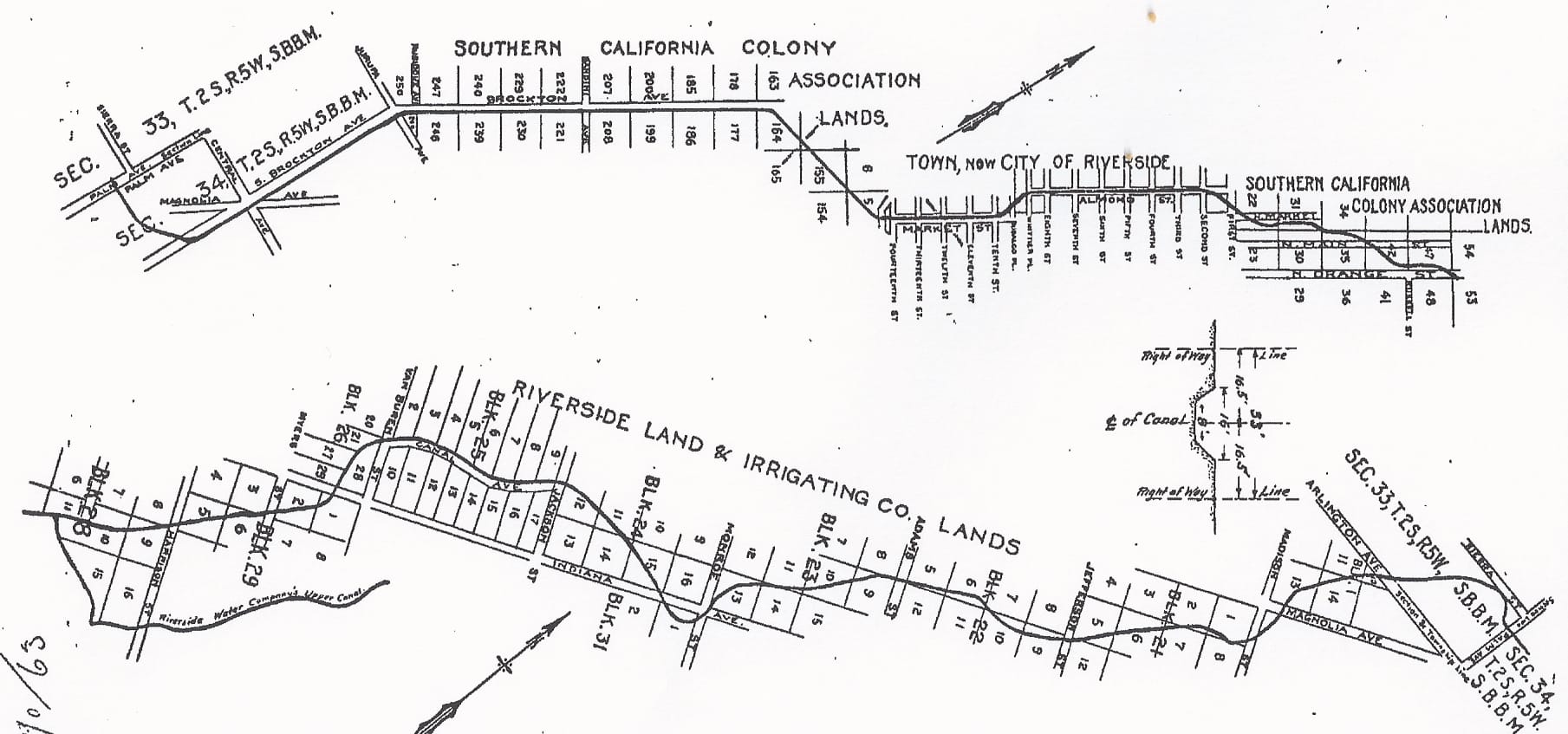
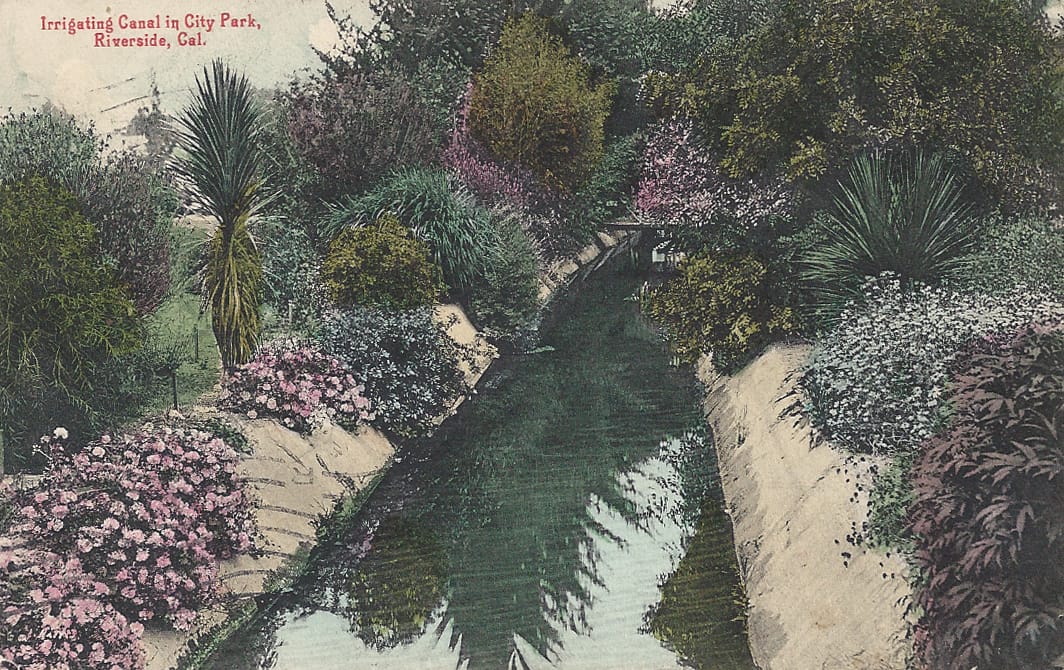
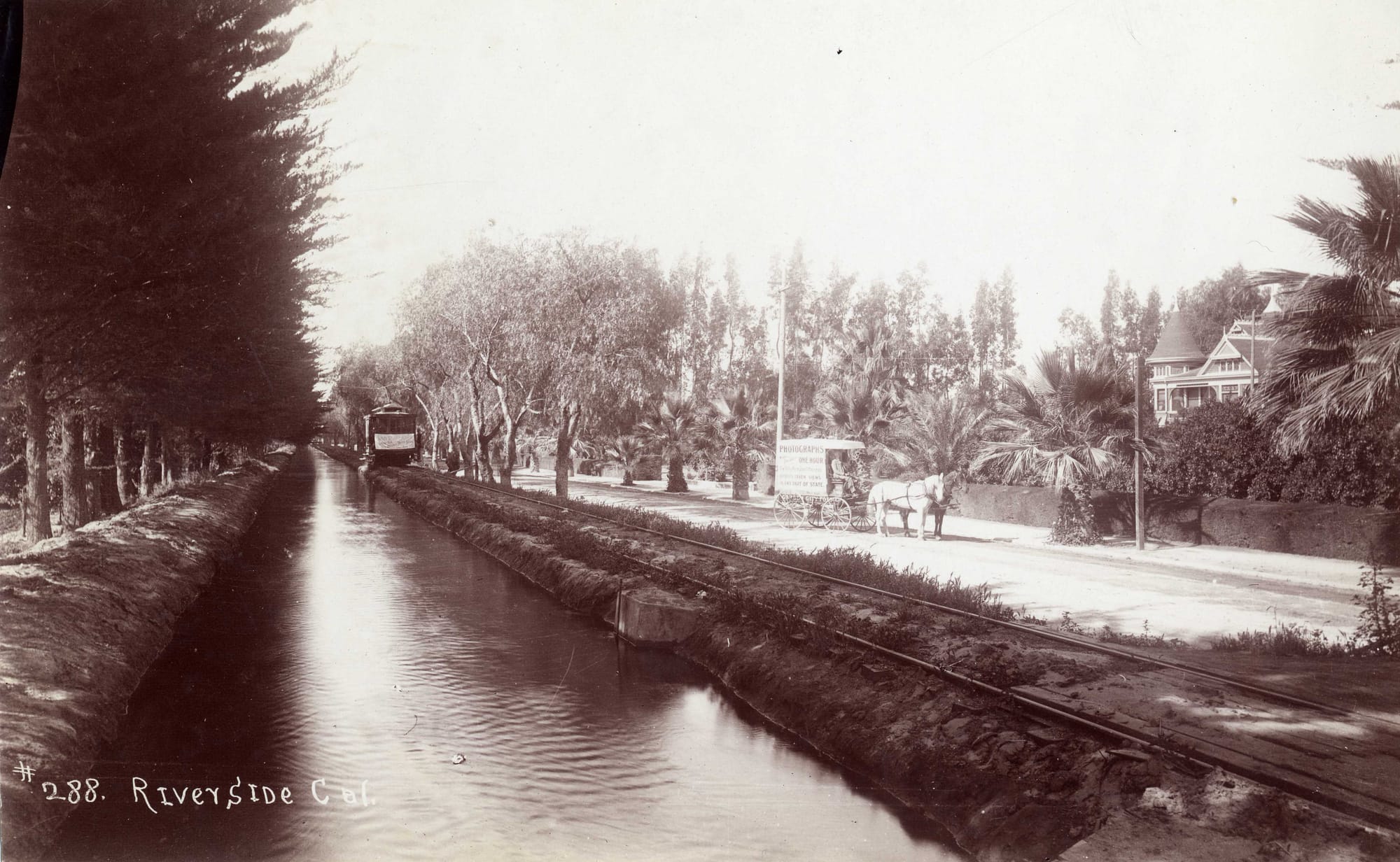
As can be seen in the Lower Canal Map, the canal route came into the city on a curving route until it met Almond Street. It followed Almond Street until Ninth Street, when it turned down through White Park before following along Market Street.
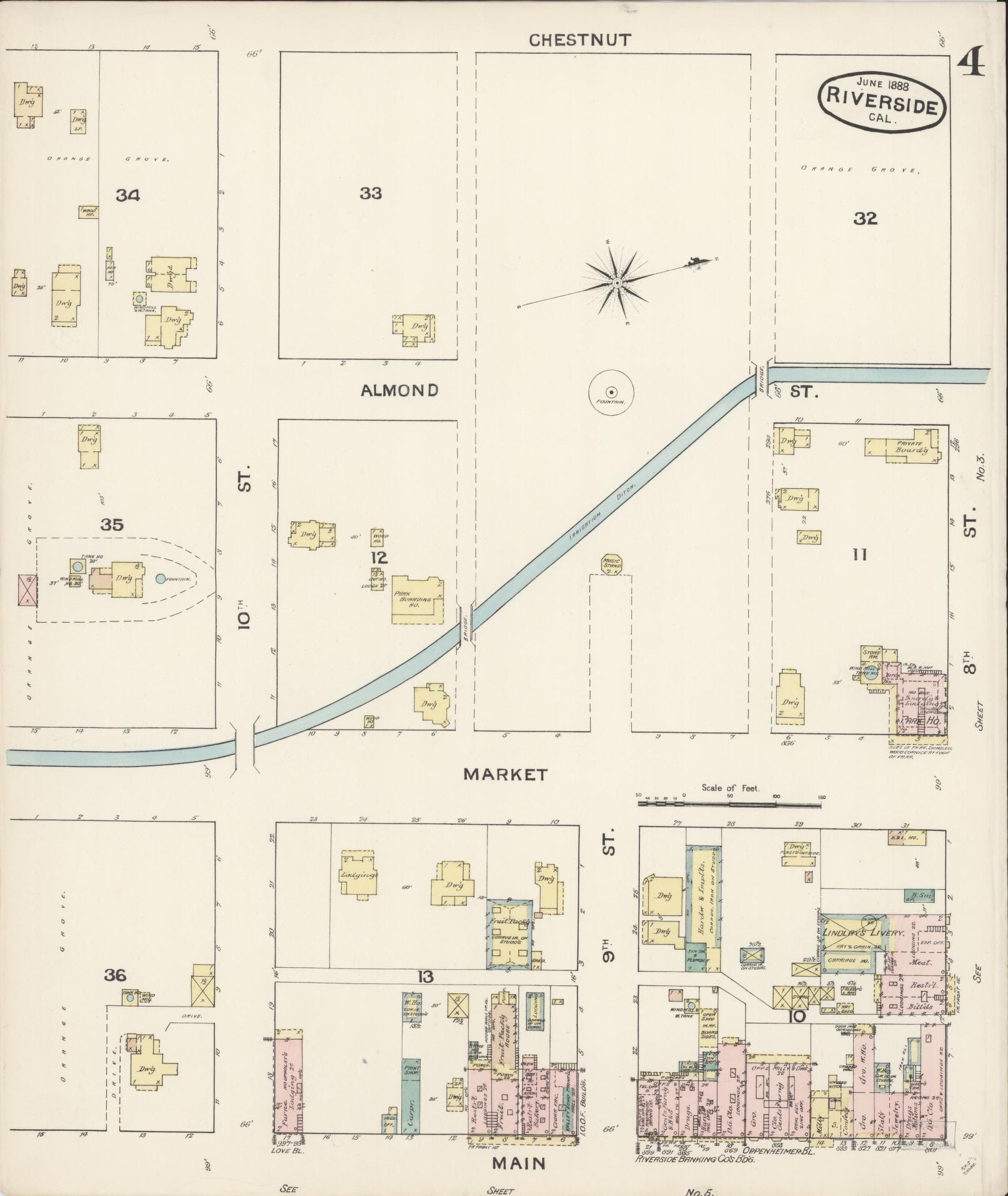
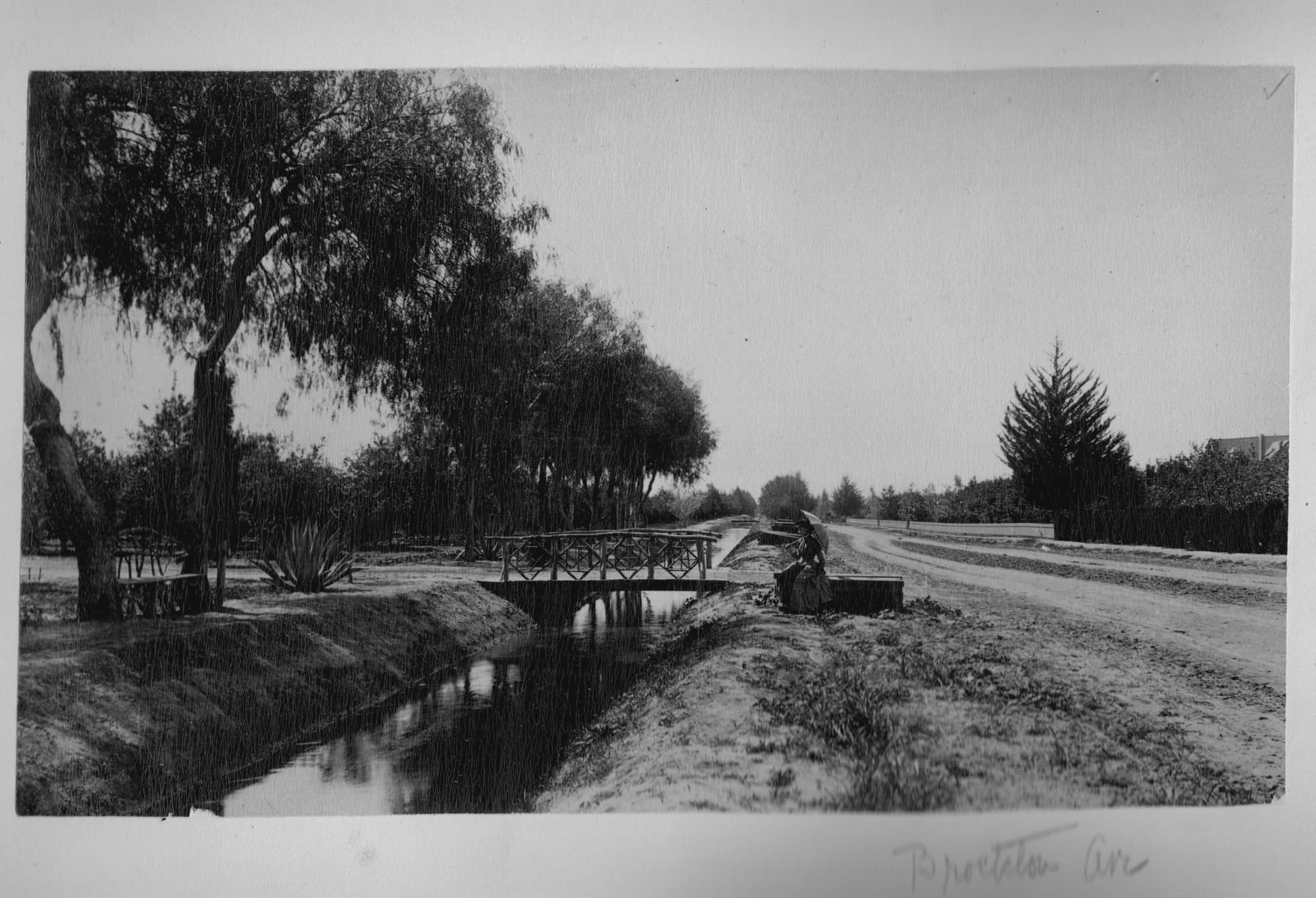
At Fourteenth Street, the canal turned southwest, crossing the Tequesquite Arroyo, then turned again and flowed along Brockton Avenue.
As just mentioned, the canal crossed the Tequesquite Arroyo. This was not a simple crossing; it created a special engineering task in the design and erection of the flume crossing over a wooden trestle. This flume was built in 1876 by A. McCrary and Son, bridge and flume builders. The structure was almost 700 feet long and 40 feet in height. The trestle was described as "a carefully carpentered structure, with mortised joints and carefully fitted braces." The estimated cost was about $5,000. The canal over the flume trestle ran from the Newman Ranch, near what is now Calvary Presbyterian Church, across the Arroyo to the Rice Ranch near Brockton Avenue.
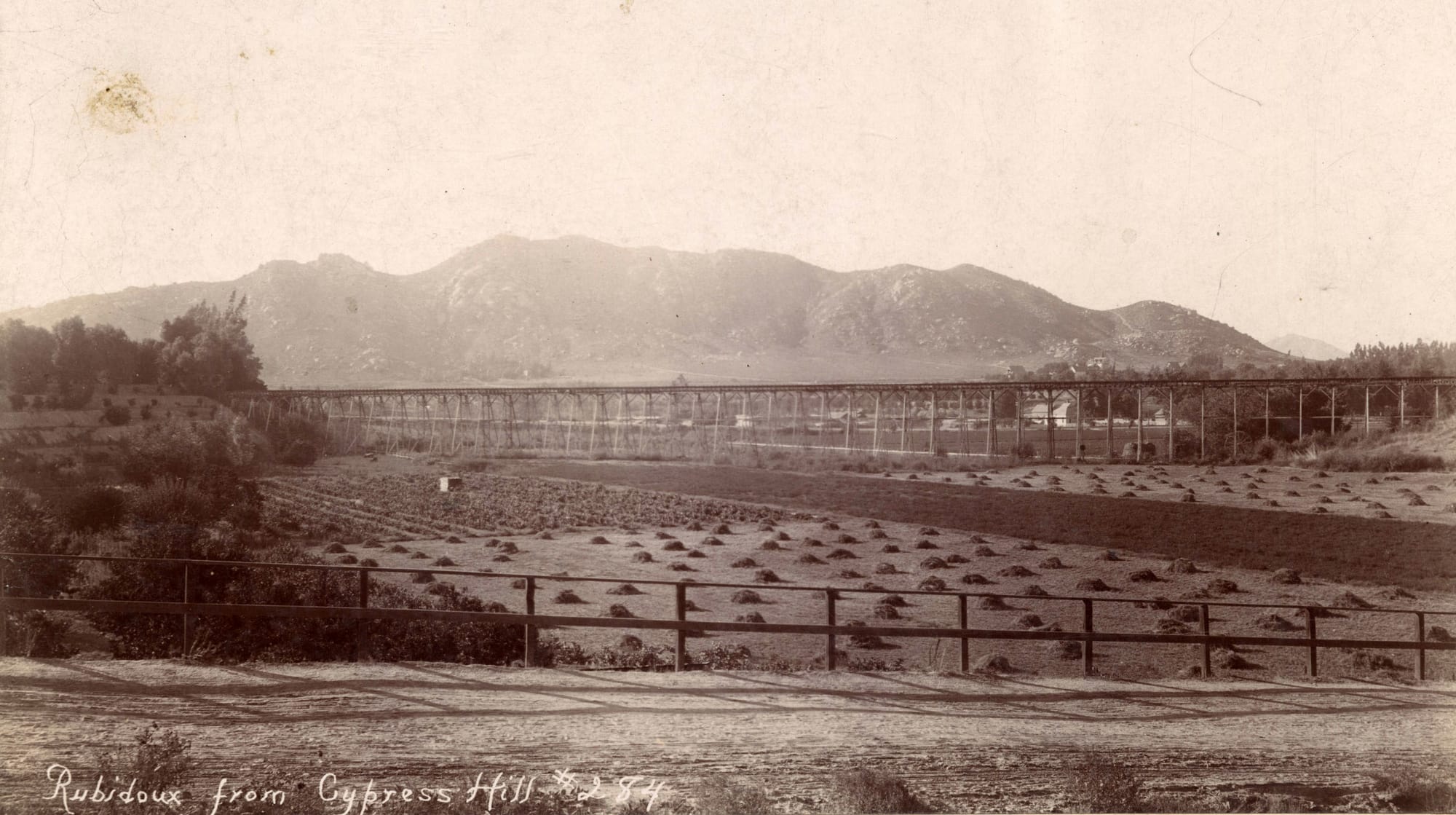
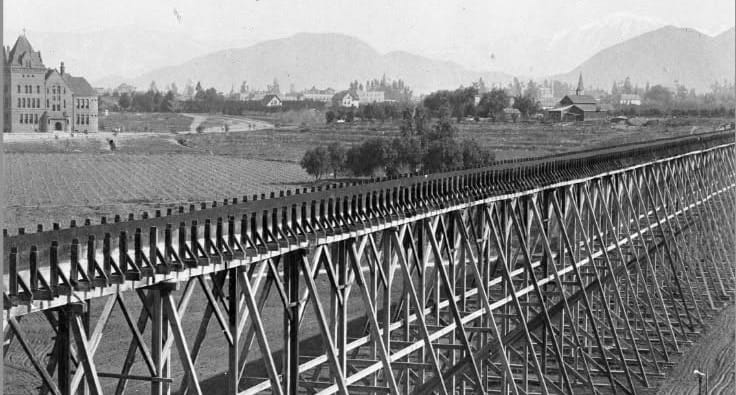
In 1886, the flume over the Tequesquite Arroyo was overhauled with the work of re-chalking and retarring the structure.
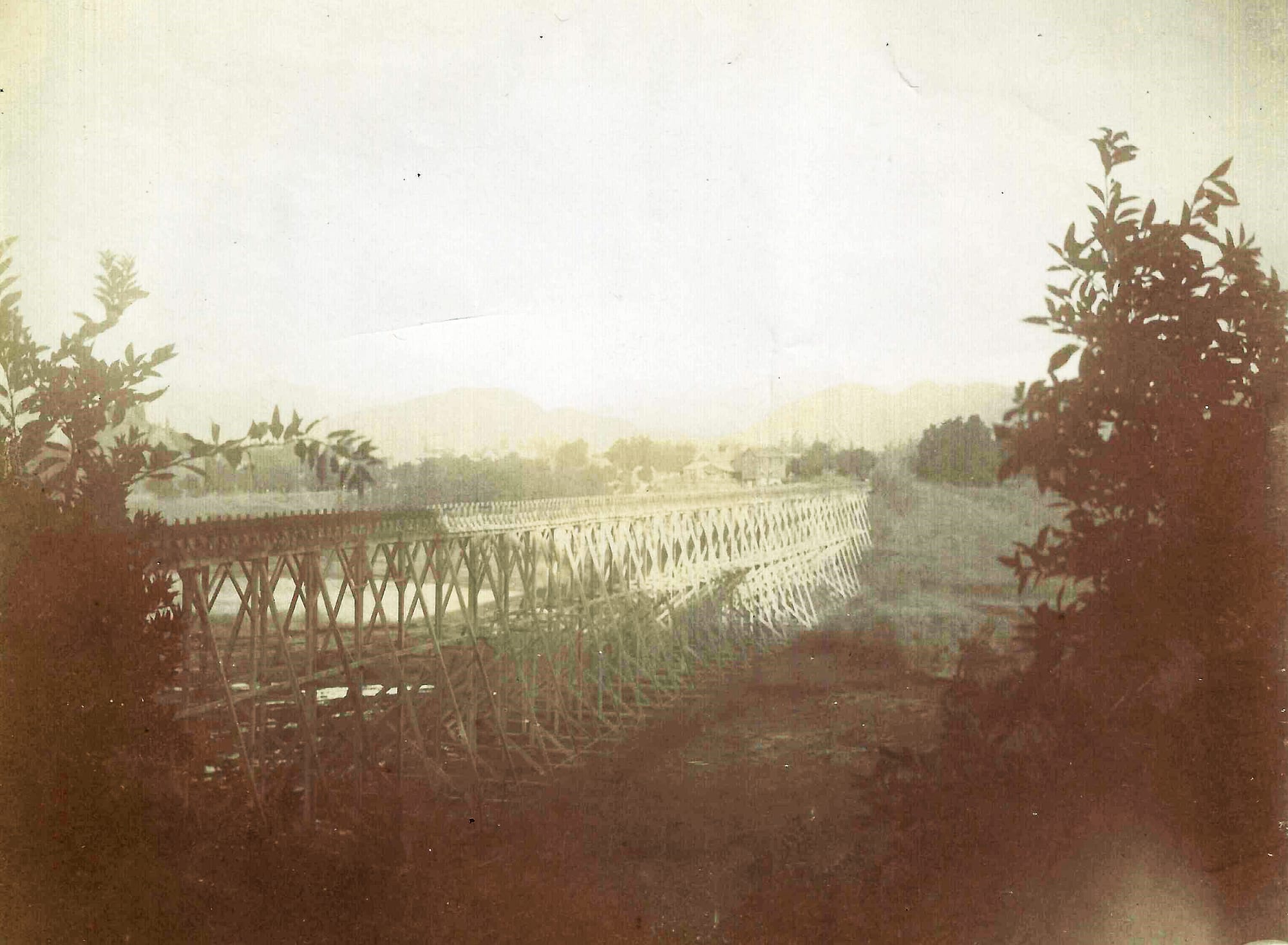
Sometime after the flume was built, an artist sketched it because of its picturesque setting. To make the picture even more charming, he added a railroad train. He must have also widened the trestle, as even a narrow-gauge train would have been too large. However, with the magic of modern AI photo enhancement, the artist's fictional drawing can be replicated.
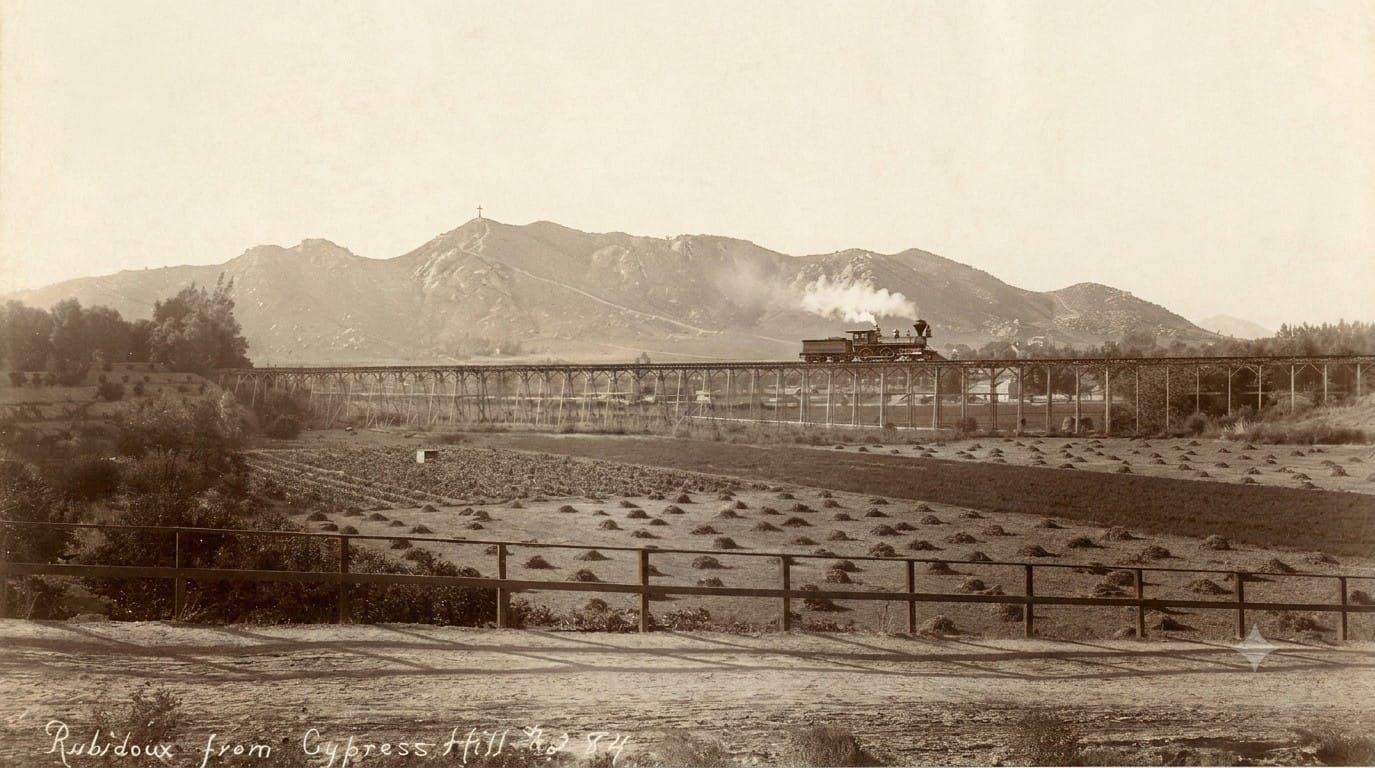
In 1913, the Lower Canal was abandoned as it was redundant with the supply of water via the Upper Canal. By 1914, the decision was made to take down the unused trestle and flume.
The water company's initial plan was to dismantle the old structure piece by piece to salvage all the wood. However, upon inspection, much of the wood was too rotten, and dismantling it would be too dangerous for the workers. The plan then was to pull the structure over in one grand crash. After cutting away the supports at each end, and with the center portion tottering on its 40-foot-high braces, a water company truck was hooked on with long ropes and pulled it over with a large crash. On Saturday morning, April 18, 1914, the old landmark flume and trestle came spectacularly down. As one reporter said, "It would have made a striking picture for a moving picture camera."
Many of the longer wood pieces were still in excellent condition and were sold for $10 to $15 per thousand feet. The scraps and broken pieces were sold for $2.00 per two-horse load or were delivered within 1½ miles at the price of $3.00 per two-horse load.
A few days after the trestle came tumbling down, the Daily Press lamented: "Riverside pioneers read with feelings of sorrow the news of the dismantling of the flume across the Tequesquite arroyo, because of the historic interest of the old structure as connected with the early development of the city."


