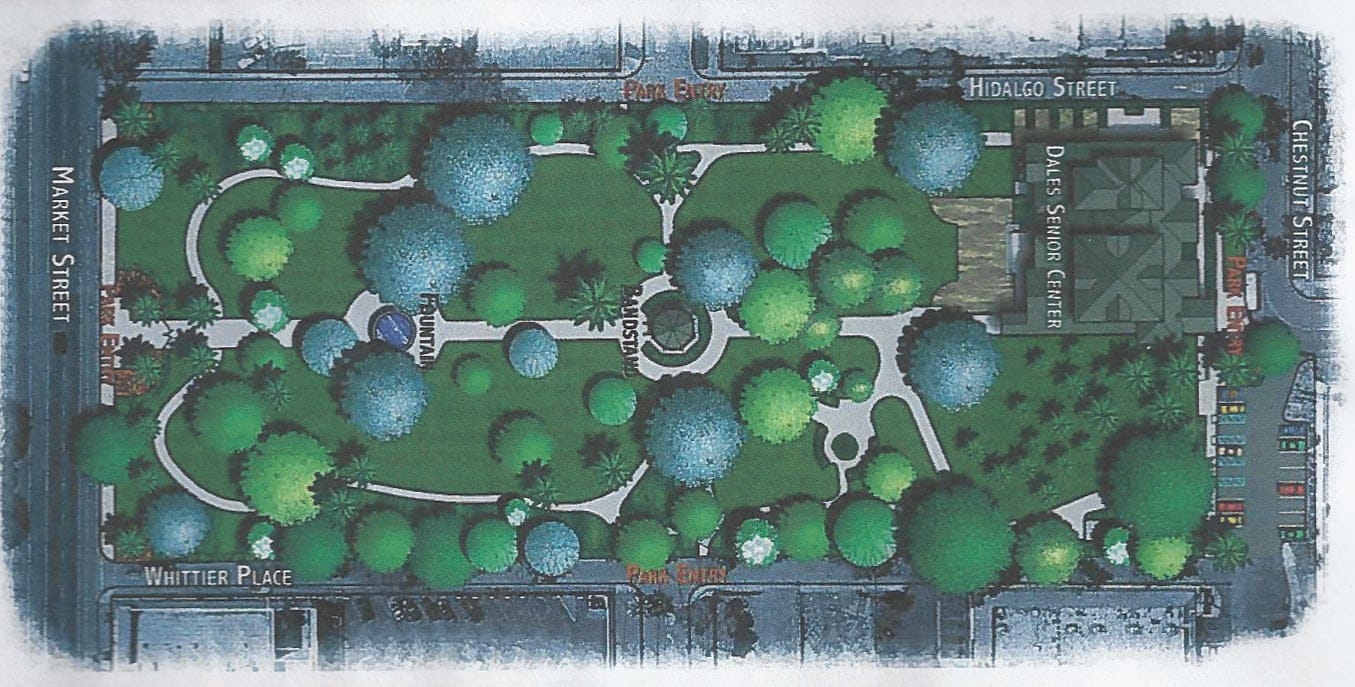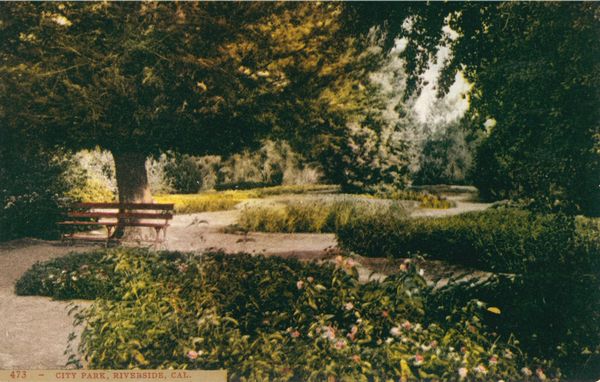

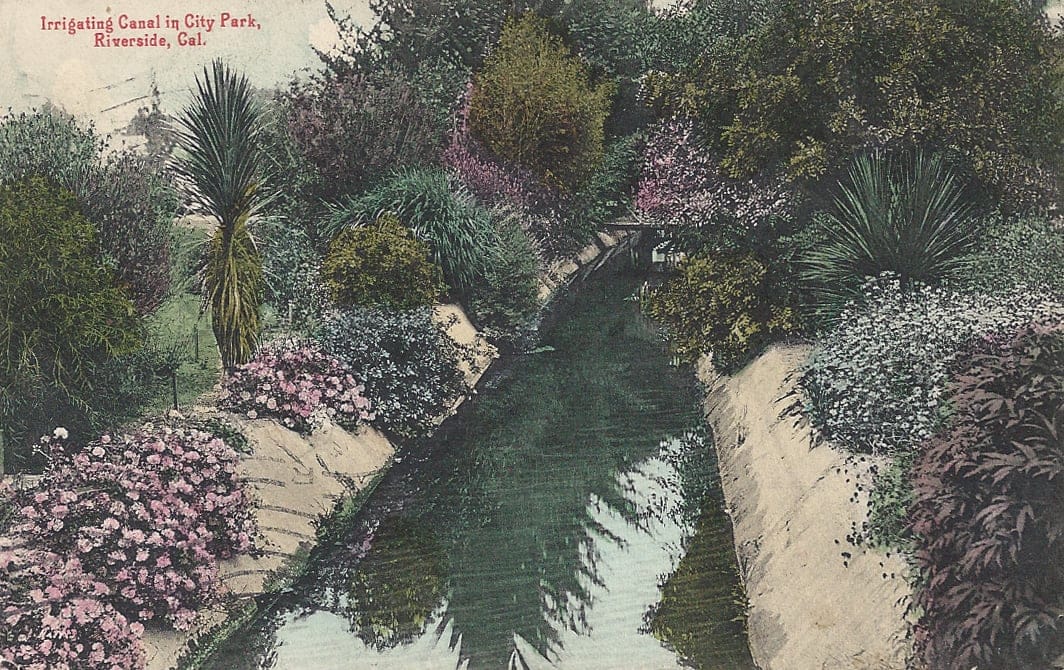
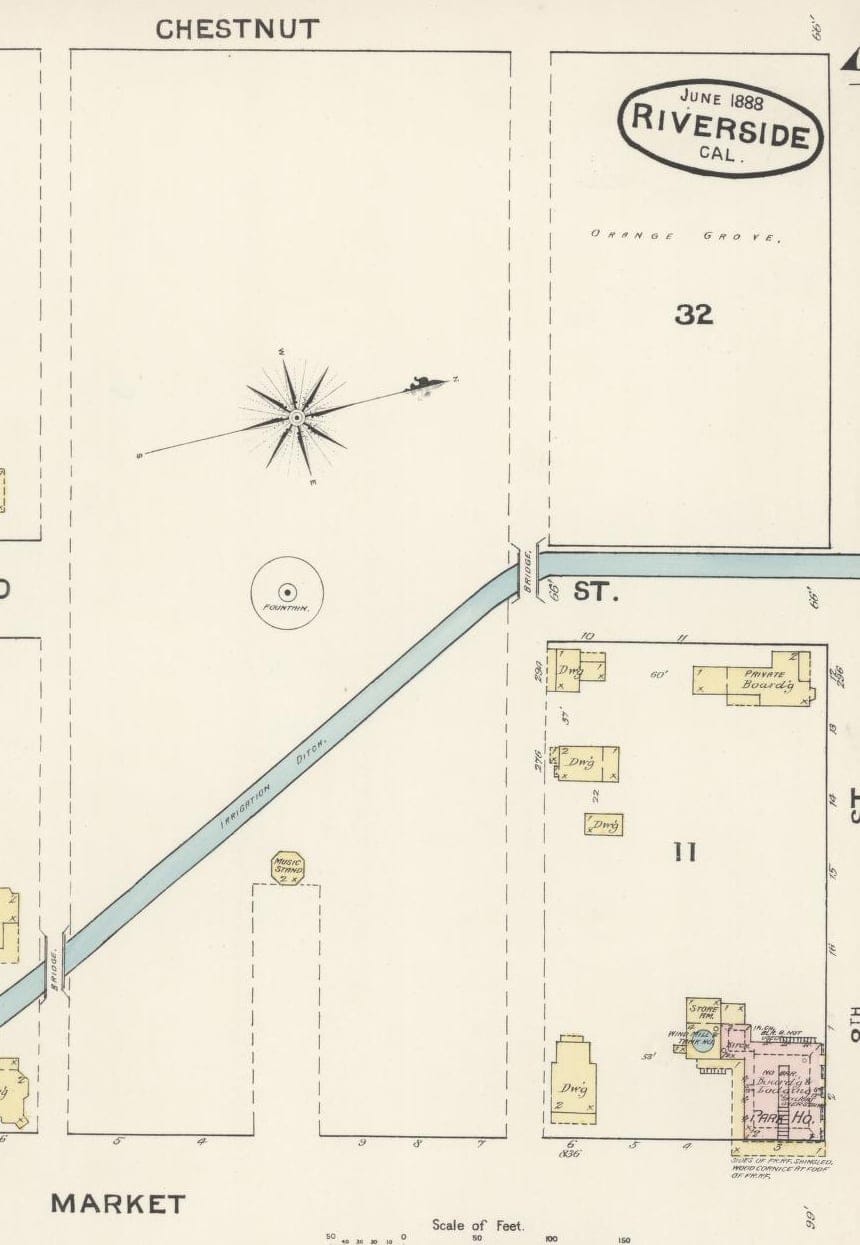
Riverside's first park was established in 1883 and was named simply "City Park." Built on what had been swampland, the property was graded and filled in by Dr. Clark Whittier. In exchange, Whittier received property on the park's outer edges, on which he built a sanitarium on the corner of Market and Eighth, which later became Park Hotel and later the Plaza Hotel. Today, the location is home to Riverside City College Culinary Academy and the Henry Coil Sr. and Alice Edna Coil School for the Arts. City Park is bounded by Market, Whittier, Chestnut and Hidalgo streets. The Lower Canal ran diagonally through the park, with footbridges spanning the canal.
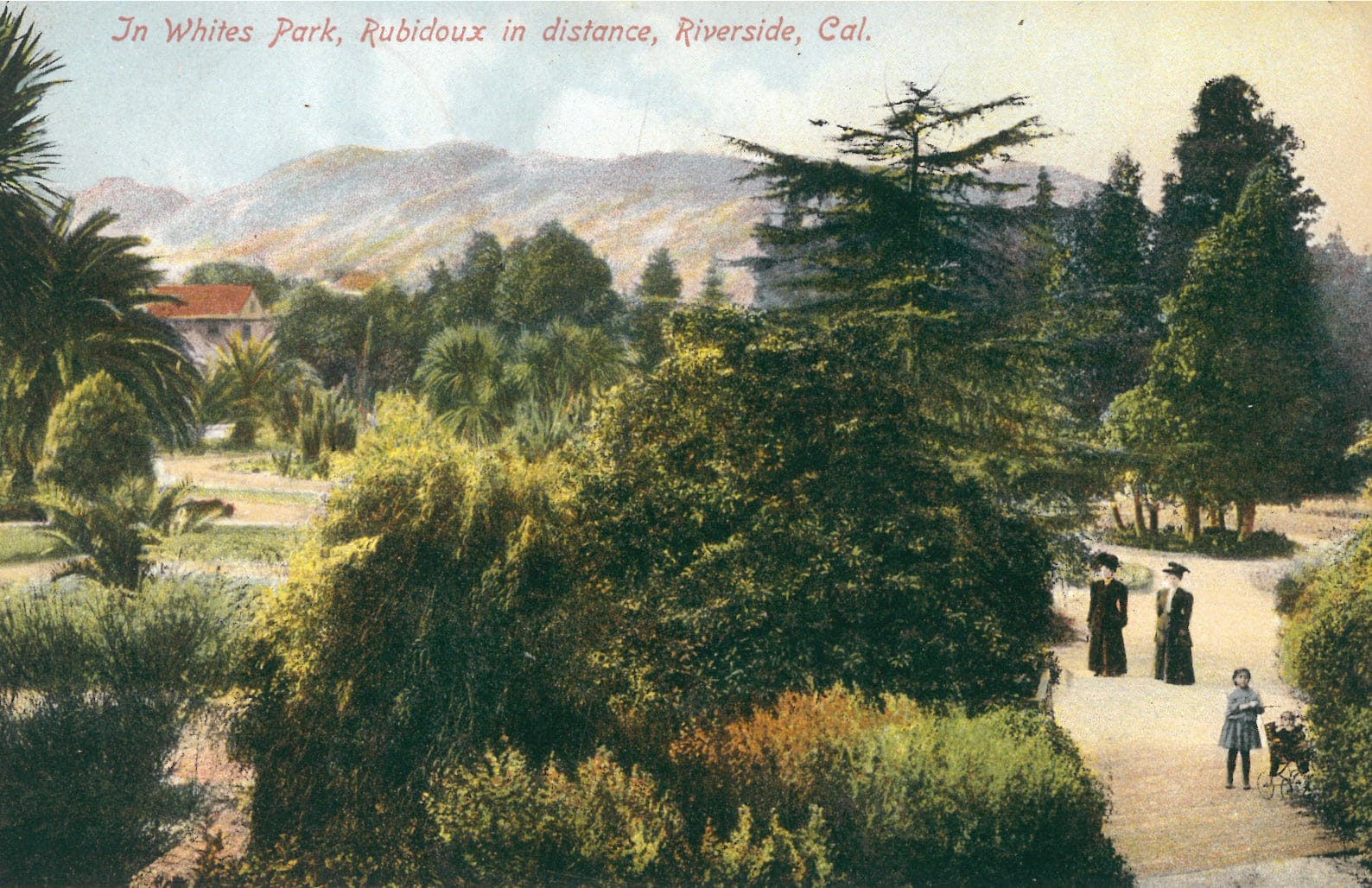
In 1899, the city renamed the park the Albert S. White Park. White was an early park commissioner who did much to help develop the park. White, along with Franz Hosp, was responsible for most of the park's original plants and cacti. He was a close friend of Frank A. Miller of the Mission Inn and the first paying guest at the old Glenwood Cottage.
After the contract was awarded in early 1883 to grade and develop the park, plans were also made to erect an octagonal bandstand with a 25-foot diameter. Mr. Stevens drew up the plans, and in early March, Mr. Portor and Mr. Davis were awarded the contract to construct the structure for $500. By March 17, the Press and Horticulturist reported that the "architecturally beautiful" bandstand would be completed by June 1 for $600, a slight cost increase. The June 1 date was not met; on June 30, the newspaper wrote that the bandstand was nearly complete. A week later, the paper said some citizens criticized the new bandstand's color as "too loud." The new bandstand featured white, brown, blue and bright red paint. The bandstand was basically two stories high, with storage beneath the upper level where the band performed. At the same time, four rustic footbridges were built to cross the canal.
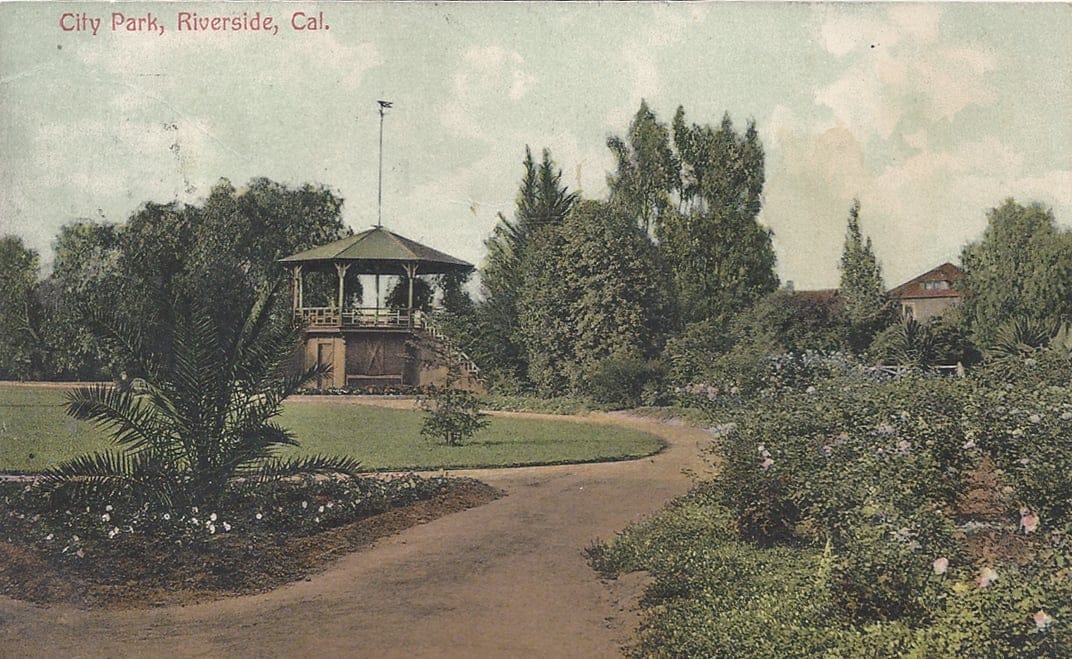
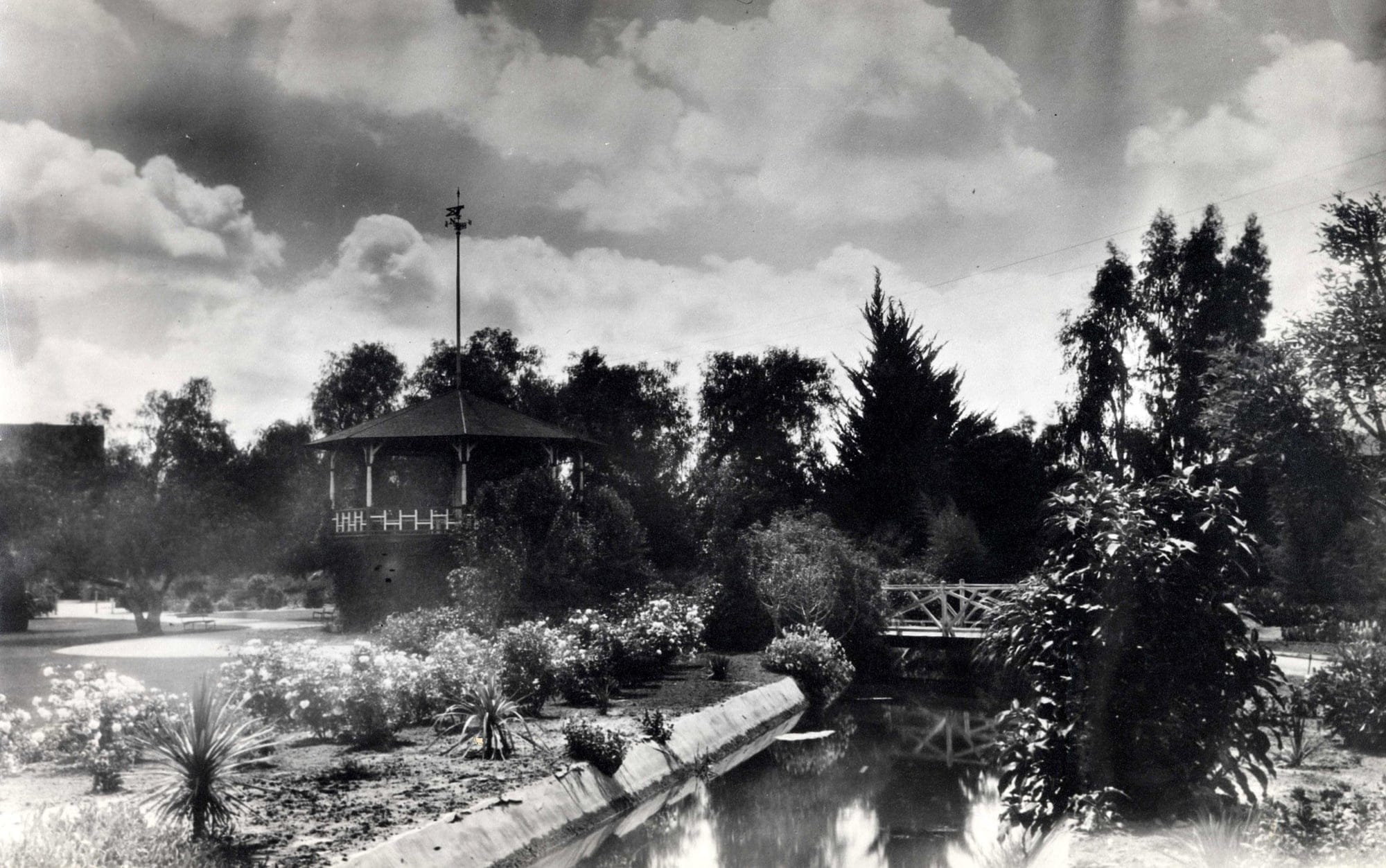
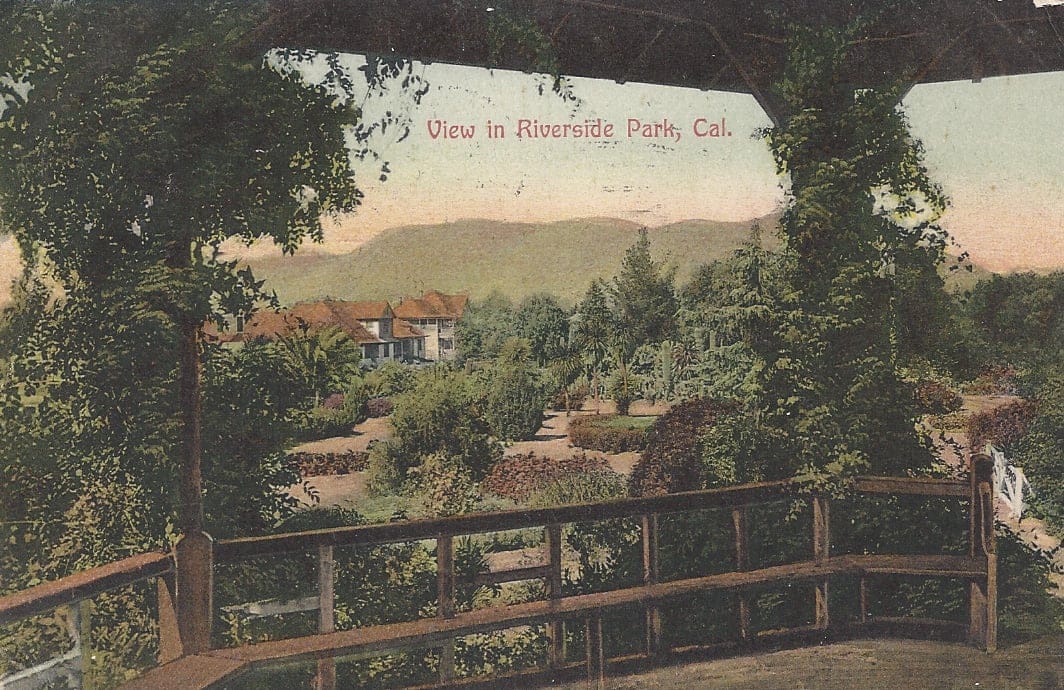
Over the years, the Riverside Band and later the Riverside Military Band performed concerts at the bandstand in White Park. By 1905, the band was under the directorship of Gustav Hilverkus, longtime Riverside High School band director and cornetist for many years at the annual Mount Rubidoux Sunrise Easter Services.
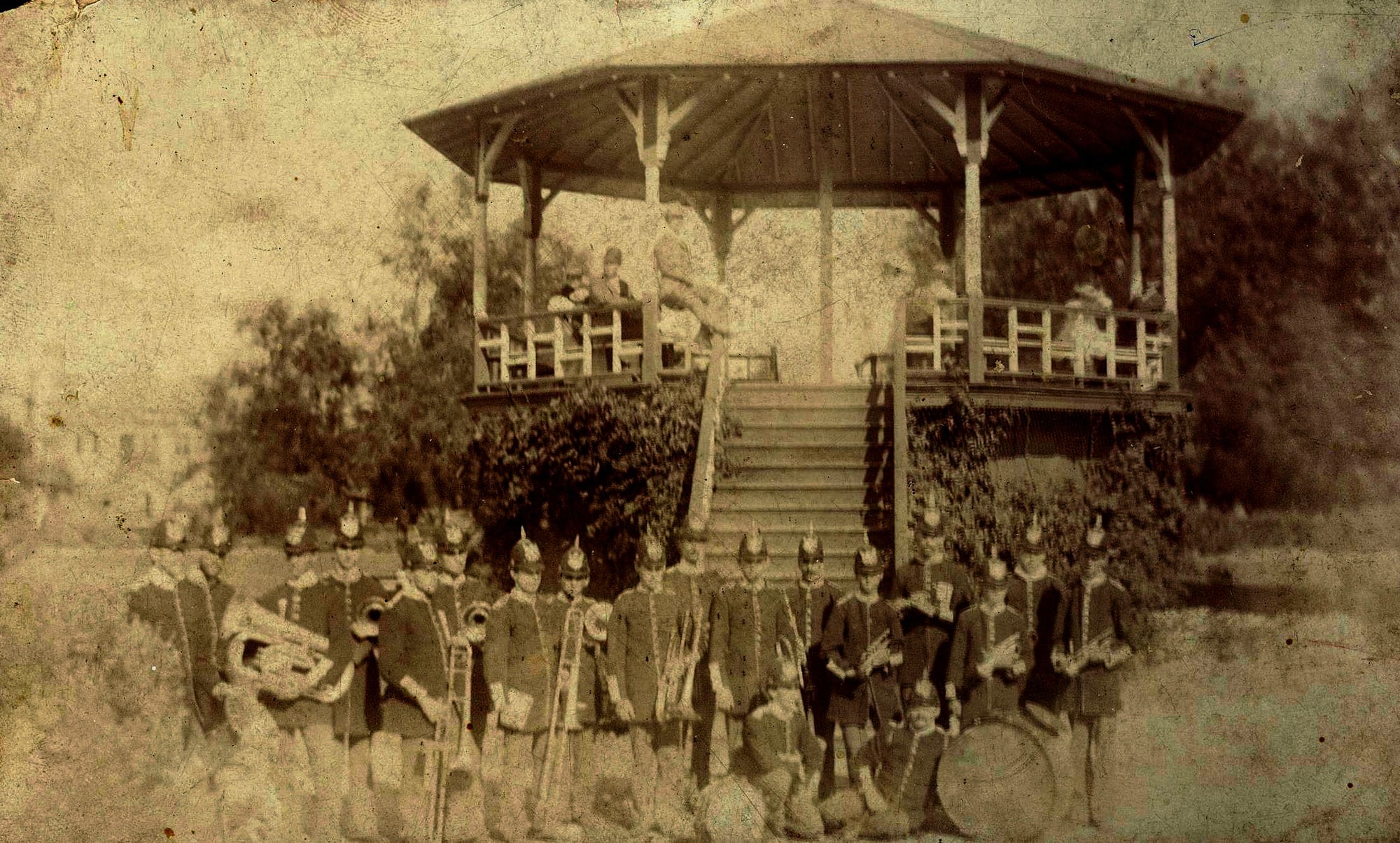
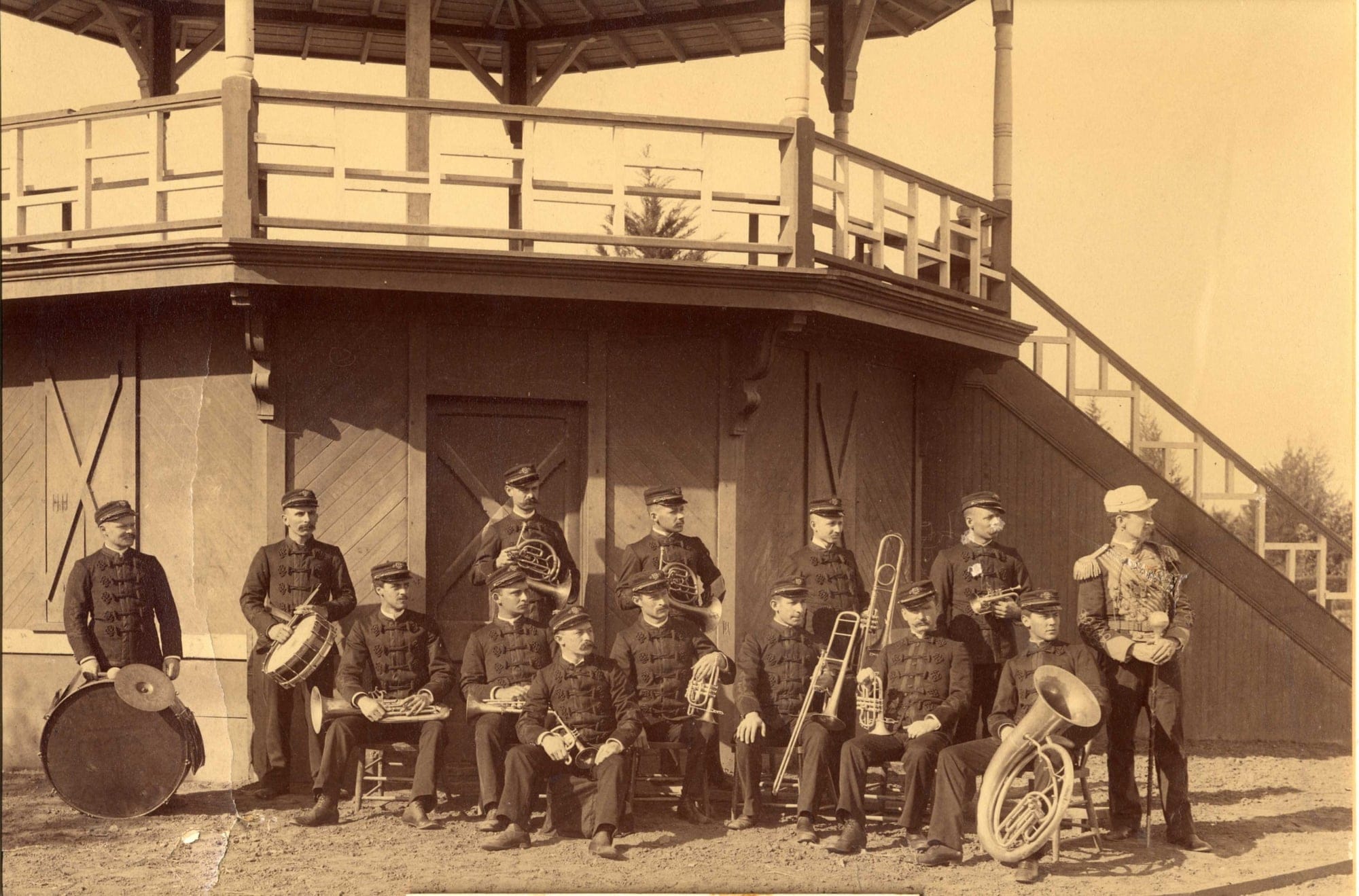
By 1908, the old bandstand in White Park was in poor shape and labeled an eyesore. Albert White, for whom the park was renamed, urged its removal, insisting it detracted from the park's beauty and was used as "a gathering place for undesirable characters in the evenings." The park commission advertised for bids to remove the bandstand, stipulating that it be removed within 10 days. With no bids received, the commission authorized Frank Richmond in May 1908 to take down the bandstand and move the structure to Fairmount Park. There, the band concerts could be held in the old bandstand until a new one could be built at Fairmount Park.
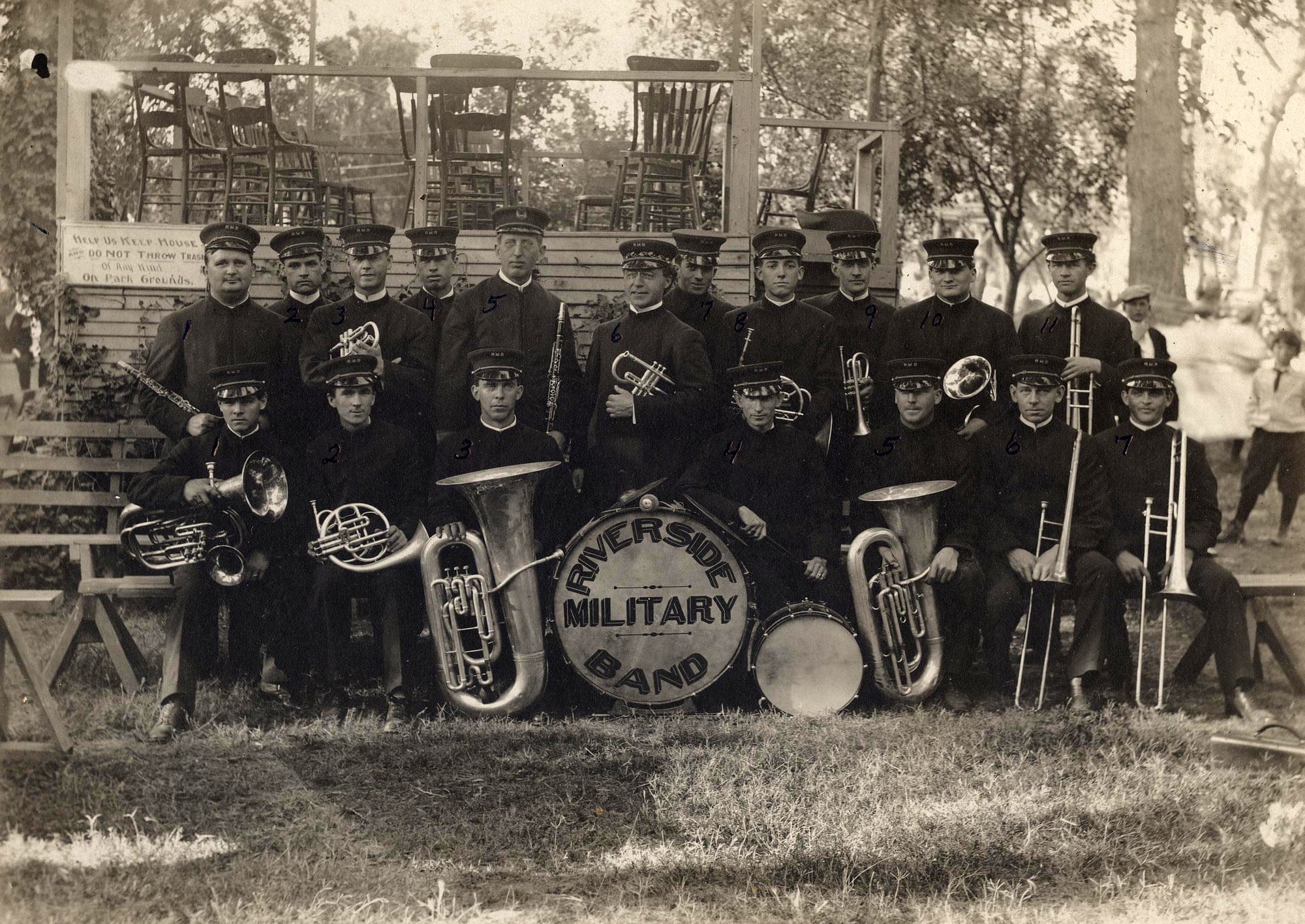
At the bandstand's location near the front of the park, a new fountain was erected. George Reynolds, a public-minded citizen and one of the city's largest merchants owning both Reynolds Department Store and Reynolds Hotel, donated the funds for the new fountain. The fountain and its history are another story.
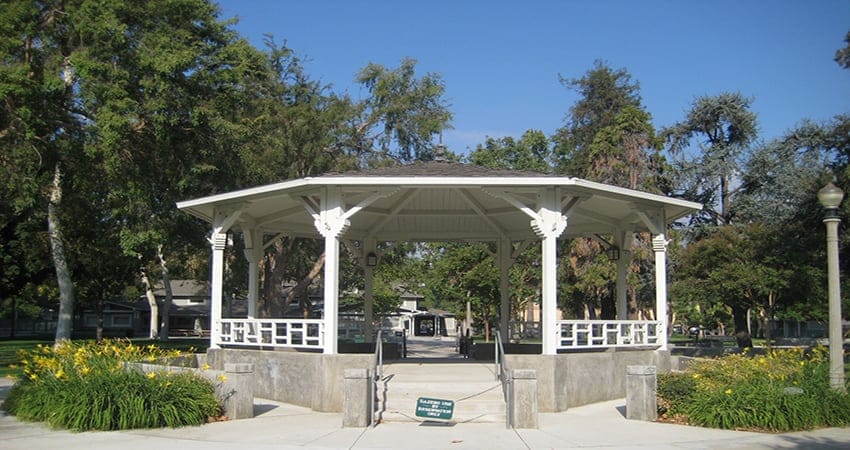
White Park, located in downtown Riverside, fell into disrepair over the years and earned a very poor reputation. In 1997, the city closed the park for an 18-month renovation project. The renovations took four and a half years, and the park reopened in November 2001 with a wrought-iron fence surrounding the park. One of White Park's new features is a handsome white bandstand in the very center of the park. It is not as "architecturally beautiful" as the 1883 bandshell, but the new gazebo does restore the possibility of concerts in the city's original park.