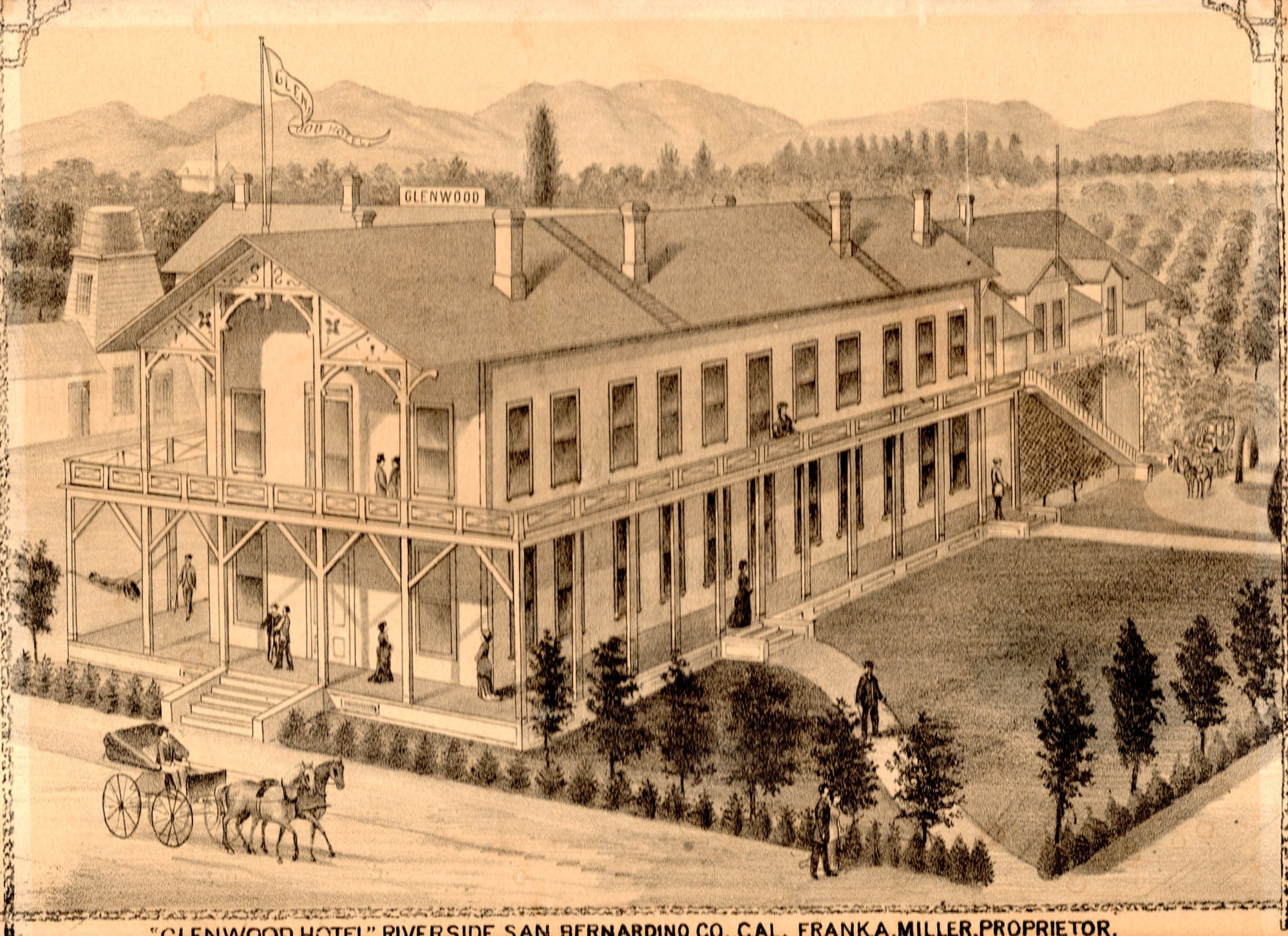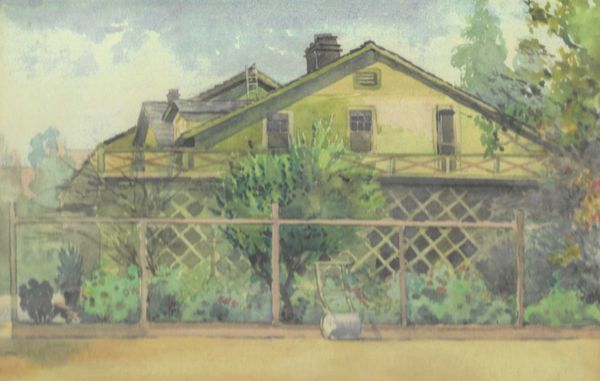

Later this month marks 150 years since the first paying guest moved into the Glenwood Cottage, the Miller family's home. Albert S. White, a New York businessman, came to Riverside, California, in January 1876 with a lingering case of pneumonia. Enjoying the climate, he returned to New York that summer to close out his business interests and return permanently to Riverside. Arriving back in Riverside on Nov. 22, 1876, he became the first paying boarder in the Miller home. He would not leave until his death on June 21, 1909, in his apartment in the Glenwood Mission Inn. White became more than a boarder; he became a close family friend and business advisor to the younger Frank Miller.
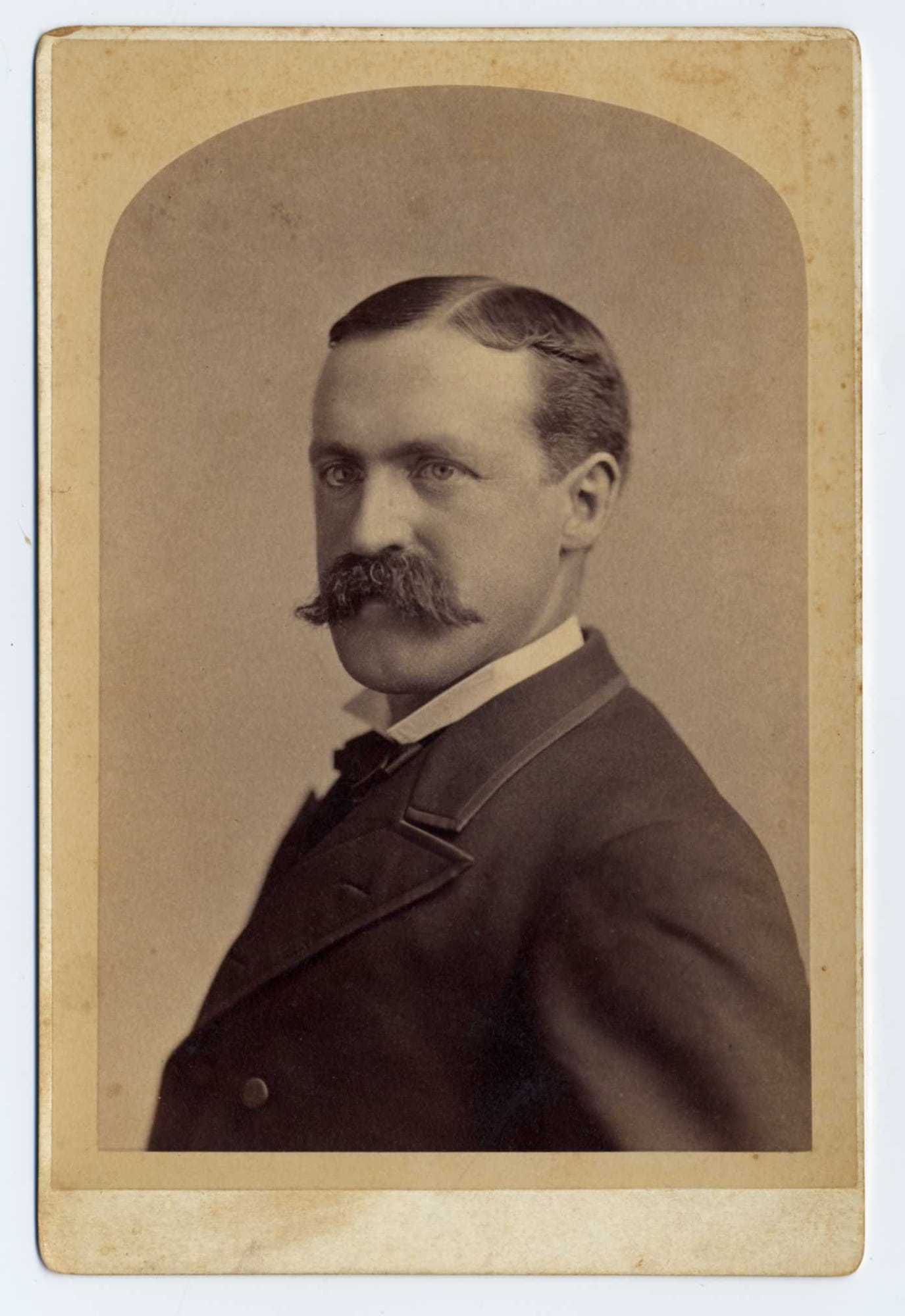
Christopher Columbus Miller arrived in Riverside in the spring of 1874, just four years after the city's founding. As a civil engineer, he mapped and helped construct some of the early canals. That fall, the rest of his family joined him: his wife Mary and four children, Emma, Frank, Alice and Edward. C.C. Miller soon purchased the city block bounded by Seventh, Main, Sixth and Orange streets for $250. In mid-1875, the family began building their home there. Frank Miller, at age 18, recorded in his diary the hard work of hauling rock for the foundation.
By July 1876, the home was finished enough for the family to move in. Shortly after that, daughter Emma married Gustavus O. Newman, C.C. Miller’s business partner, in a ceremony in the new home. By November, as mentioned earlier, the Millers were ready for their first paying guest.
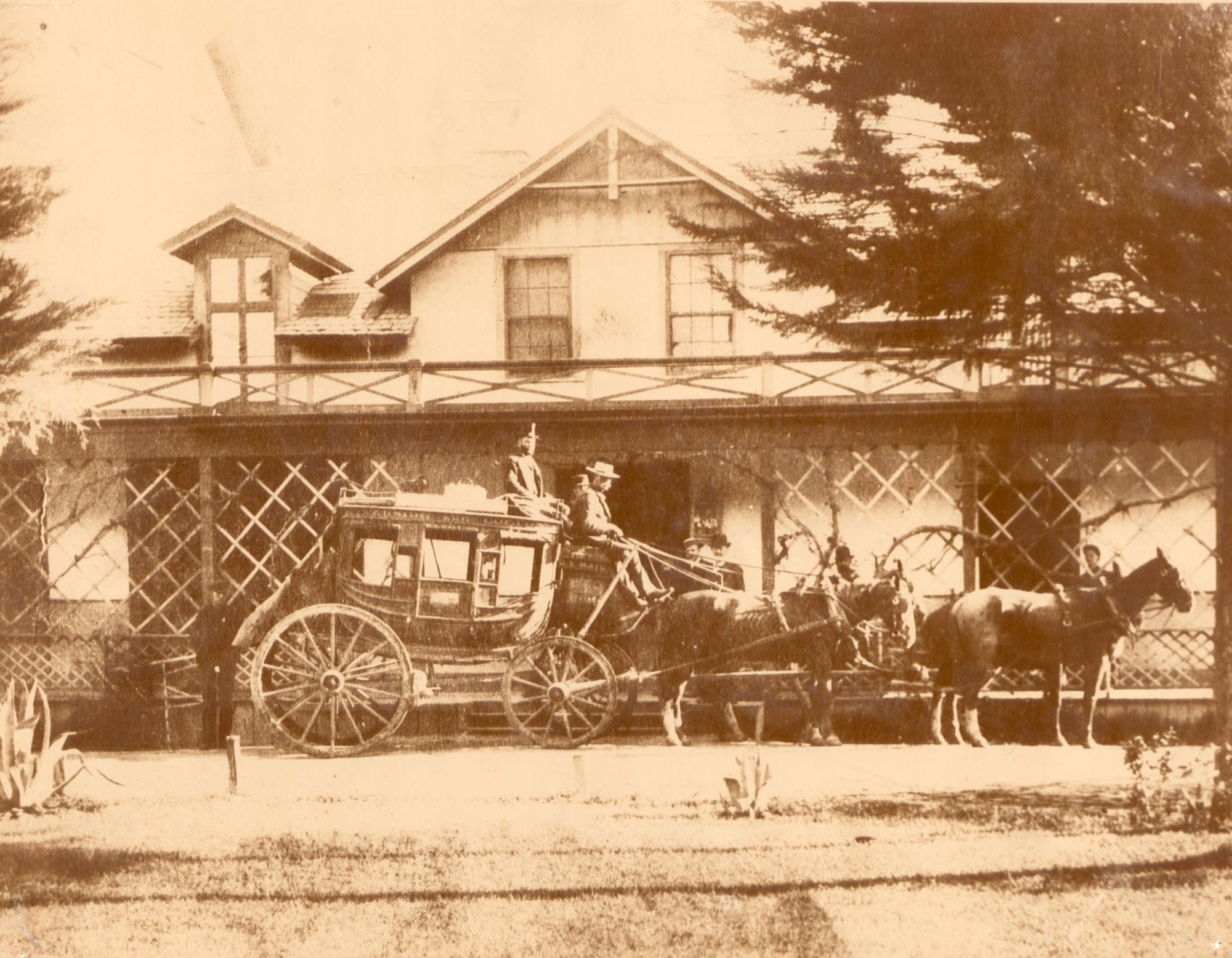
No floor plans exist for this early structure, but Maurice Hodgen, in his biography of Frank Miller, provides a description.
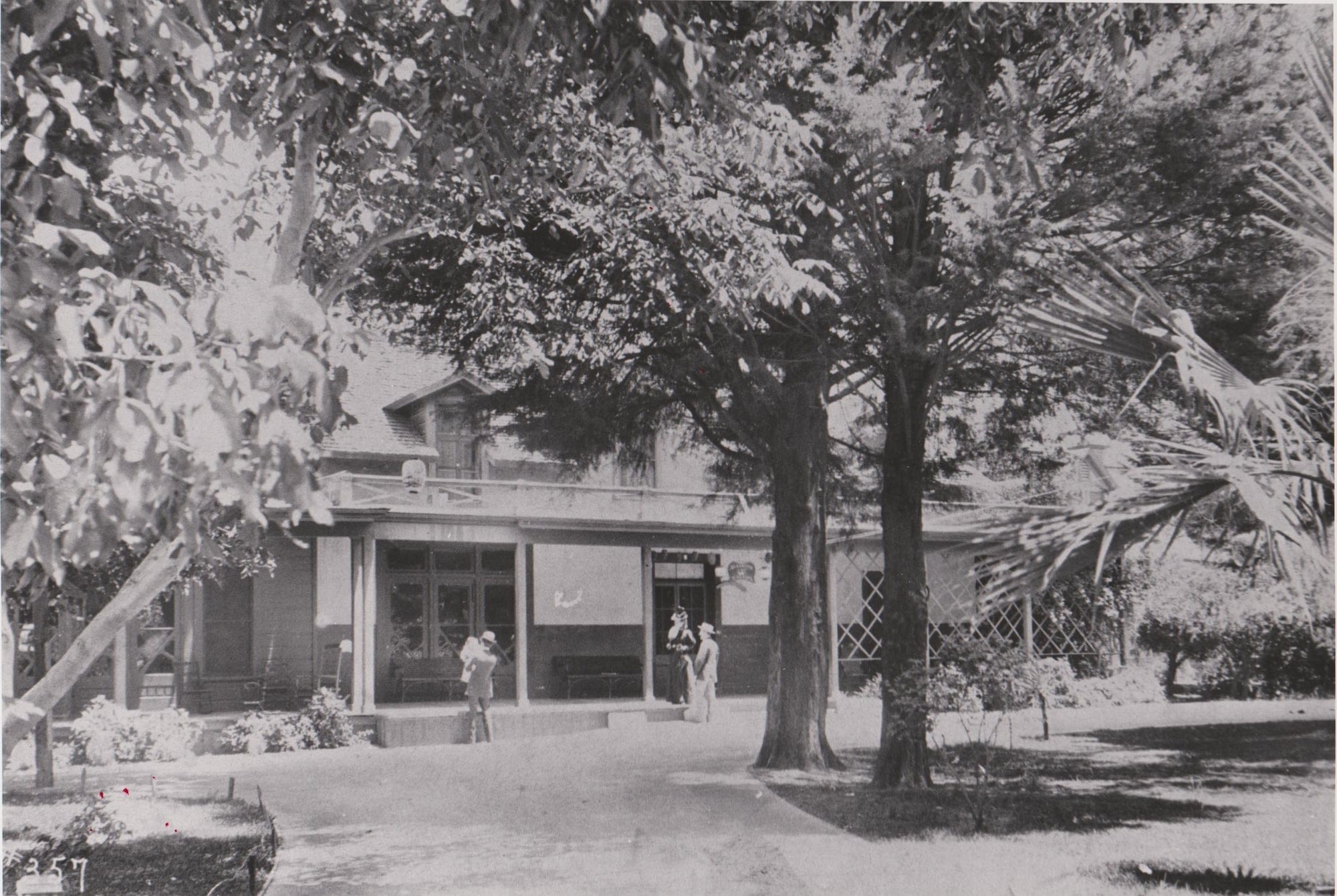
Photographs and isolated comments indicate adobe construction on the lower floor of at least three large rooms, with a large, open fireplace. The kitchen and service areas appear to have been at the back, even detached. The upper floors, framed in wood, provide about a dozen rooms, those on the third floor with dormer windows. (Master of the Inn, page 336)
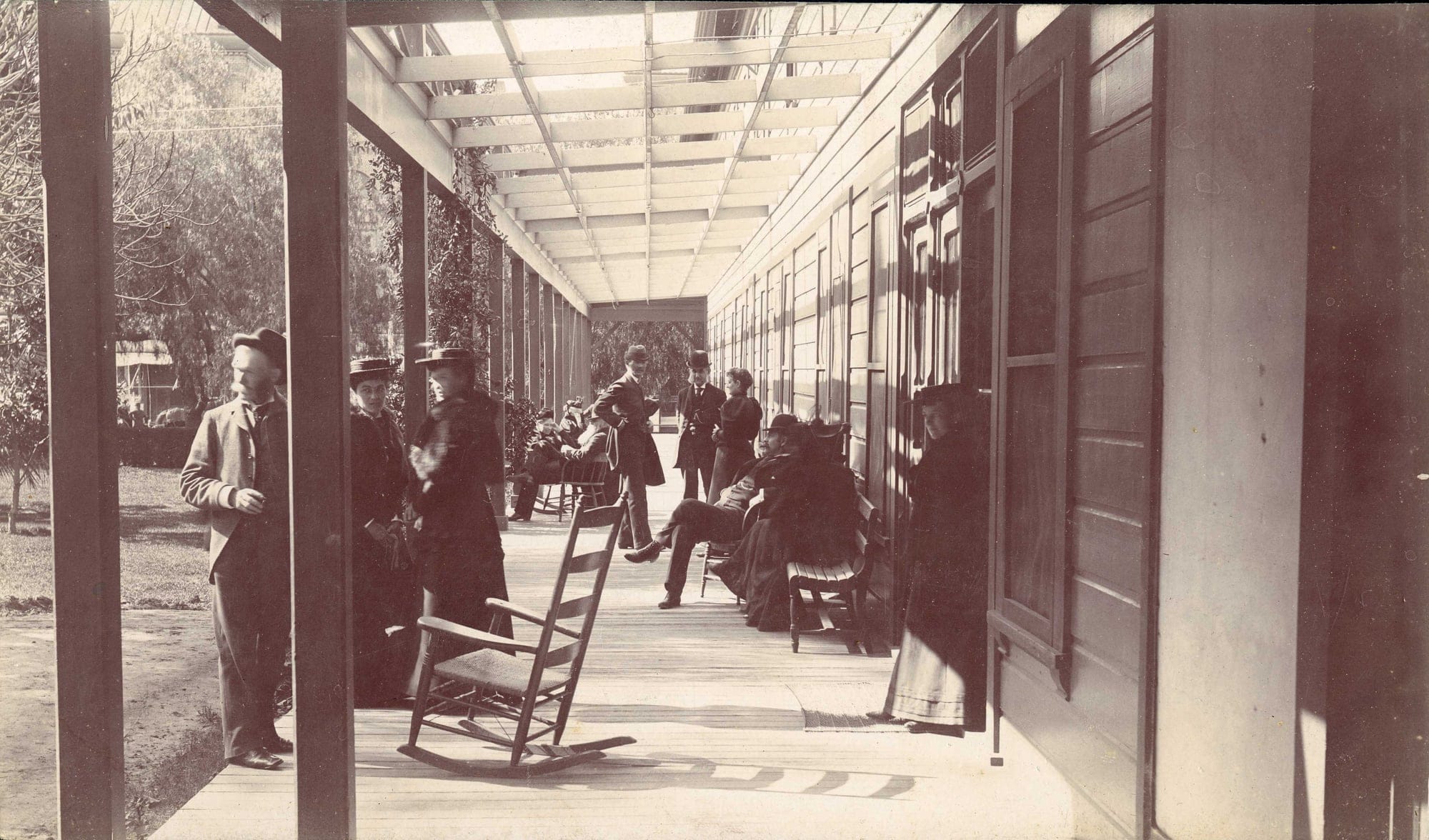
The family named their new enterprise the Glenwood Cottage. They also called the business the Glenwood Tavern and the Hotel Glenwood.
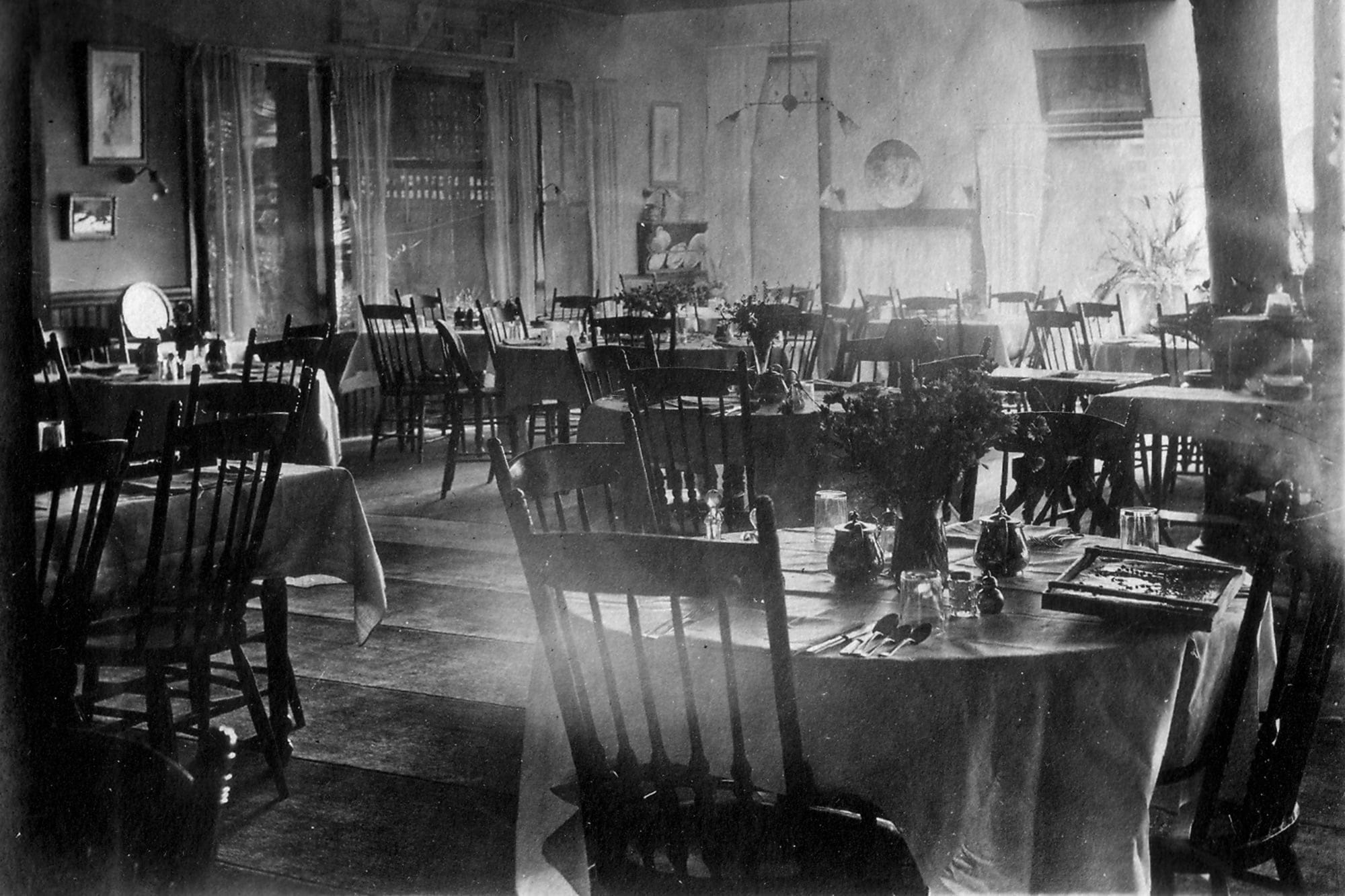
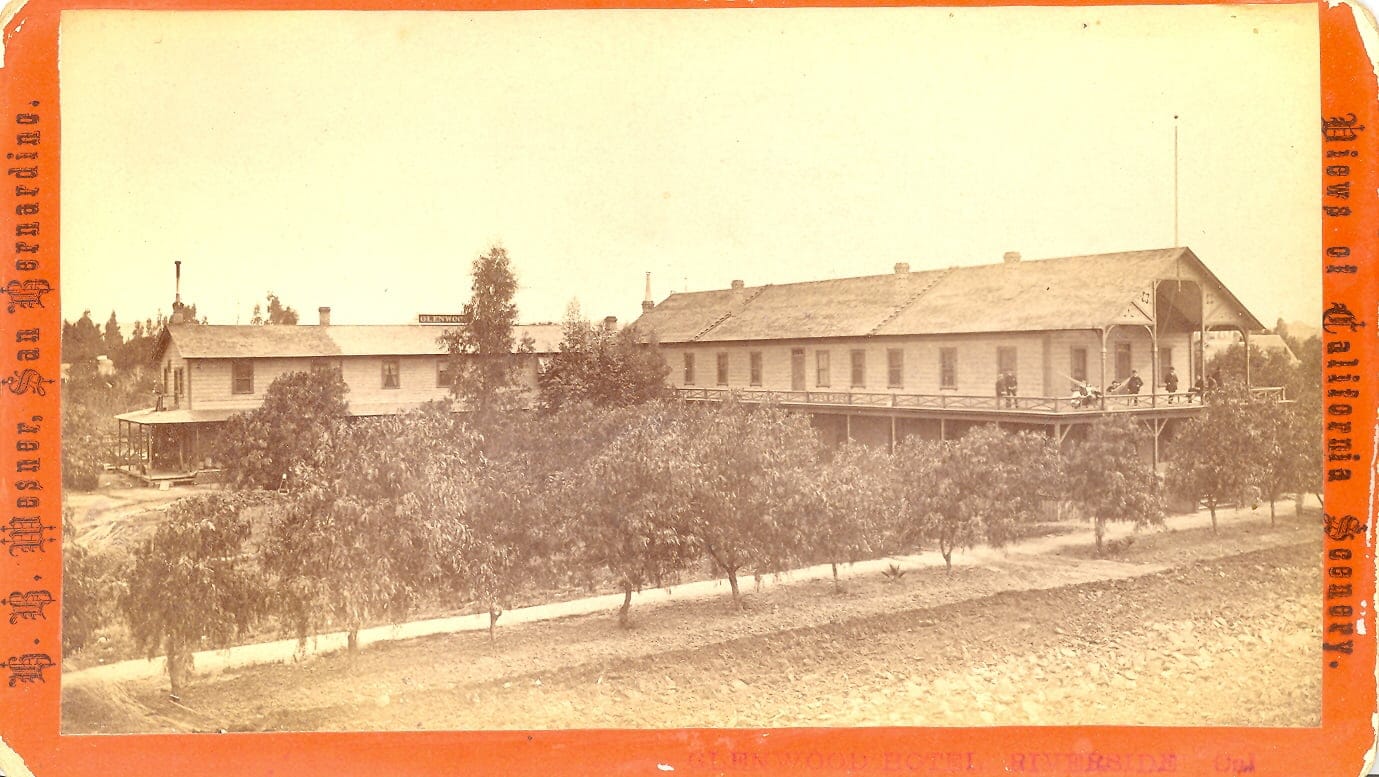
As their clientele grew, C.C. Miller and G.O. Newman built a wooden addition on the north side of the original adobe in December 1878, including a large dining room, kitchen, office and several more bedrooms.
About a year later, in February 1880, C.C. Miller sold the property and the Glenwood to his eldest son, Frank, for $5,000. For the next 55 years, until his death on June 15, 1935, Frank A. Miller owned and operated the hotel and was an important Riverside entrepreneur and promoter.
At this point in Riverside’s history, the closest railroad link was the Southern Pacific Railroad in Colton. The Glenwood Cottage provided transportation for arriving guests with a stagecoach that met the trains and brought passengers back to Riverside. Frank’s younger brother, Edward, drove this coach for several years.
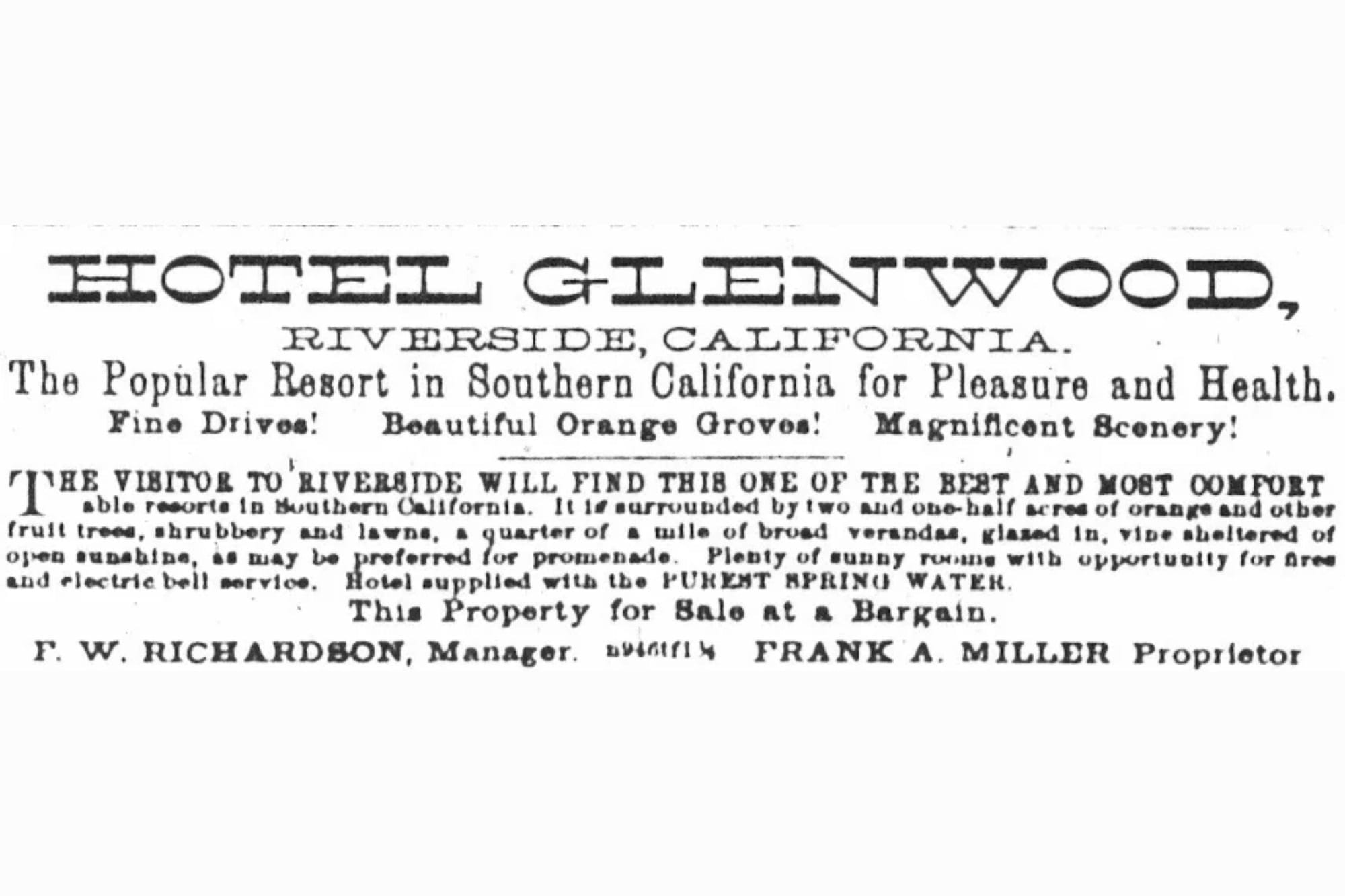
Frank Miller, with other business interests, almost left the hotel business. In 1887, Miller advertised that the Hotel Glenwood was for sale. At the time, his good friend, Albert White, was part of a group planning to build a resort hotel at the base of Mount Rubidoux called the Hotel Rubidoux. Fortunately for Riverside’s future, Miller changed his mind.
Deciding to stay in the hotel trade, Frank, like his father, kept expanding his establishment. In 1888, he hired contractor Charles T. Rice to erect a $3,500 addition that included a ladies’ parlor and a larger office, and doubled the size of the dining room.
Miller was always a major promoter. He promoted his hotel, the Riverside Arlington Railway (the trolley service he helped run), the city of Riverside and the orange industry.
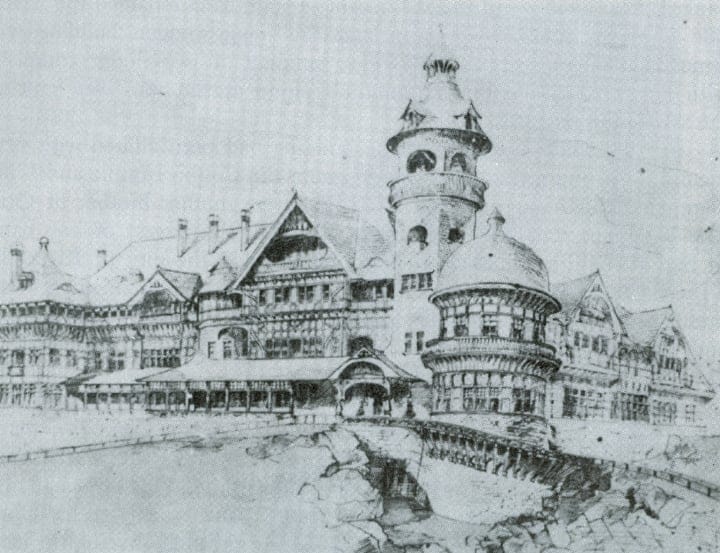
Frank Miller, a dreamer and planner, envisioned a first-class resort hotel for Riverside. By 1902, Miller and local merchant George Reynolds competed to raise funds to build such a hotel. Reynolds withdrew, and Miller obtained funding, much of it from his friend Henry E. Huntington. Miller hired Arthur Benton as his architect, and work began in June 1902. The last meal in the Glenwood Cottage dining room was May 16. Miller moved two older wooden buildings to the north side of the property to use as an electric plant, bakery, boiler room and employee housing. By January 1903, the new Glenwood Mission Inn was ready for opening.
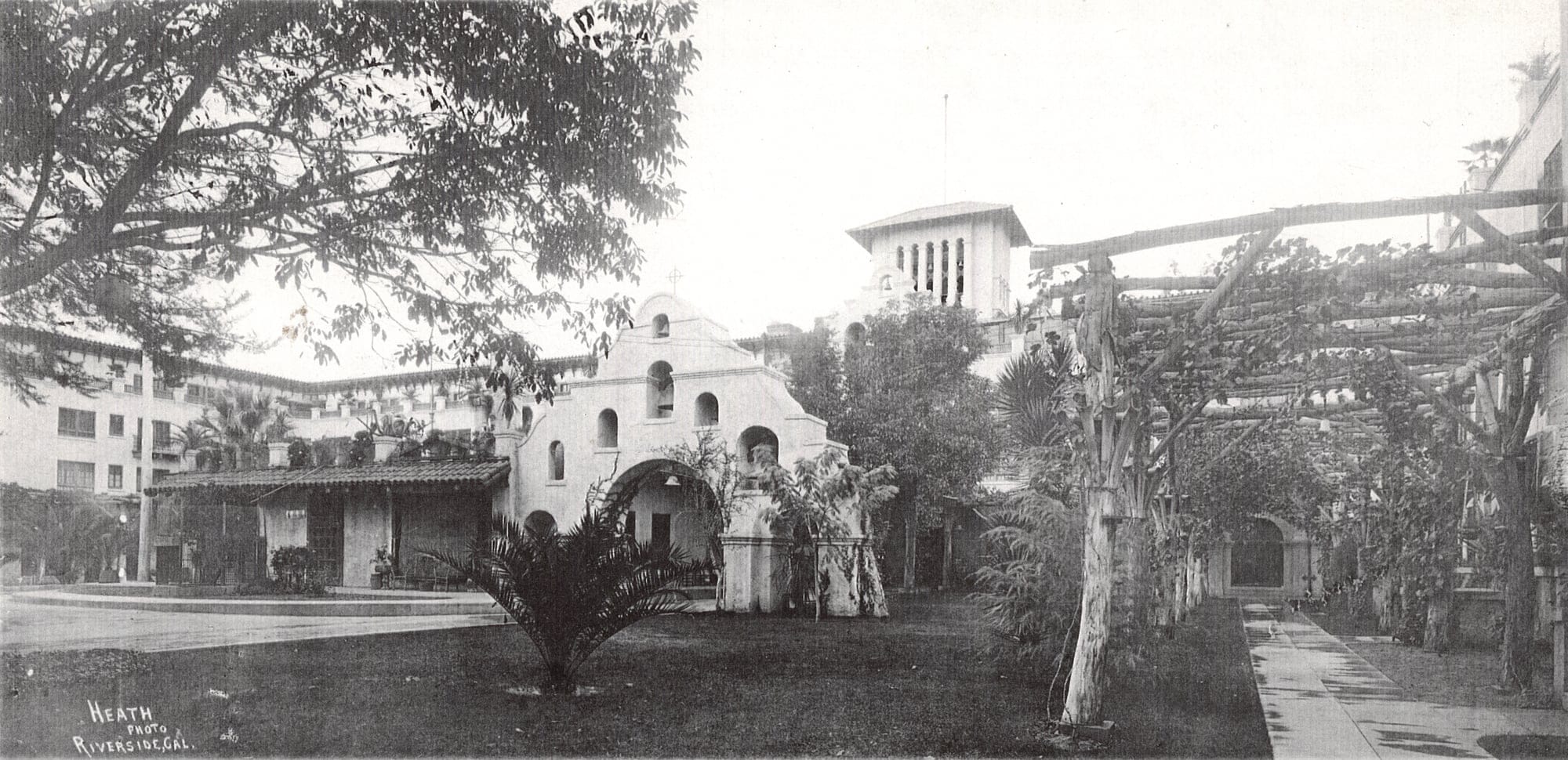
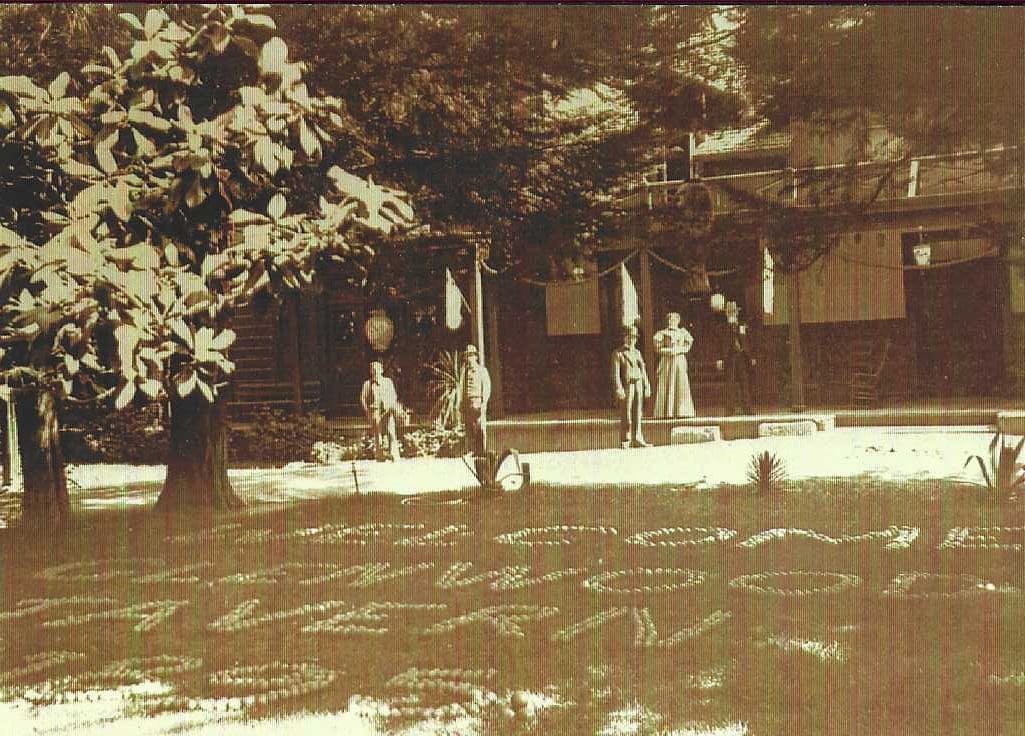
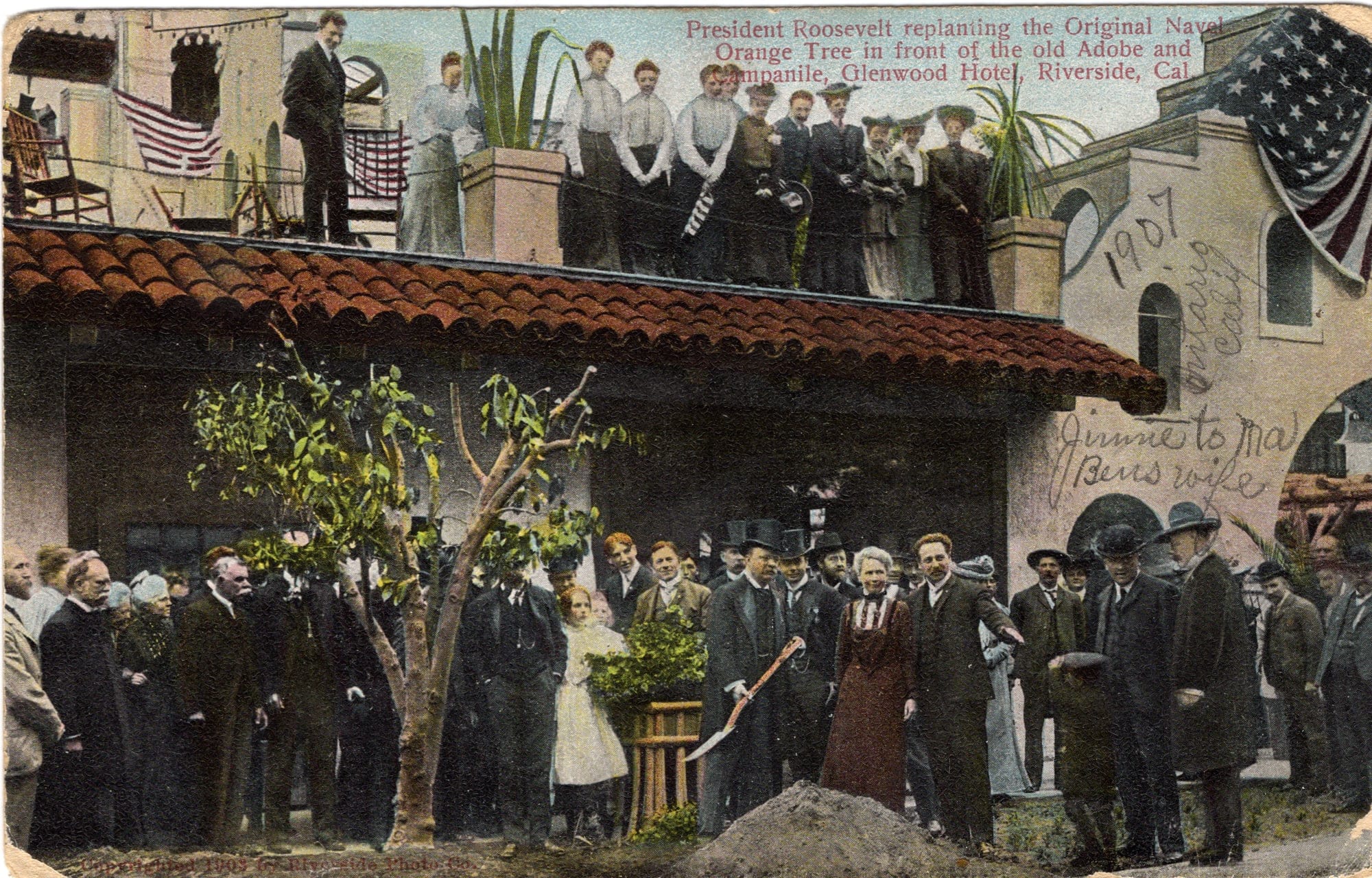
The original one-story adobe structure remained in its place. Zona Gale, in her biography of Miller, calls it a “tea-house.” Now labeled “The Old Adobe,” the structure served as a place for offices, meetings, teas and art exhibits, including several Indian baskets. One of the first major events at the new Glenwood Mission Inn in 1903 was President Teddy Roosevelt's visit and his planting of one of the original Parent Navel Orange Trees in front of the Old Adobe.
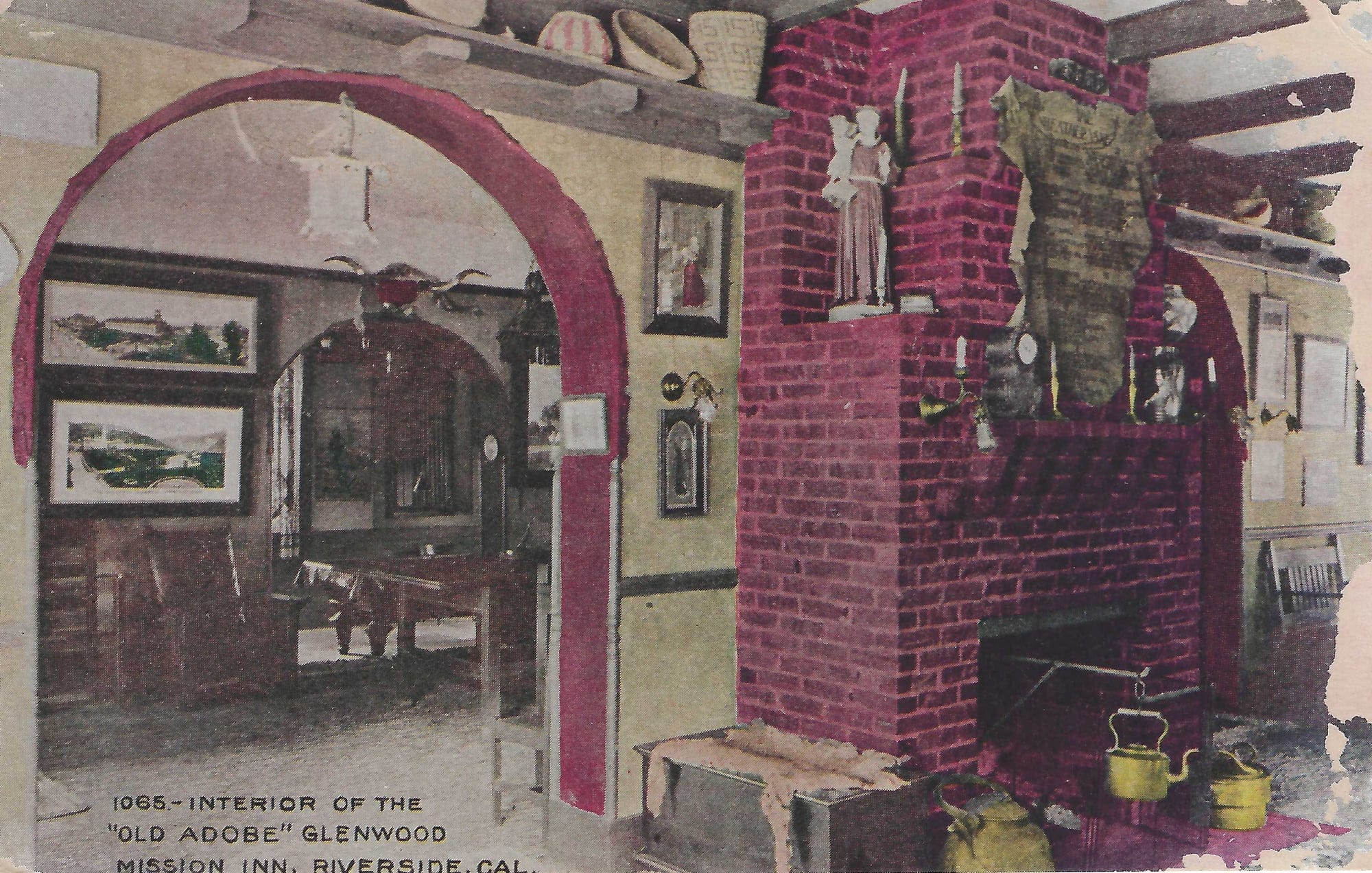
The Old Adobe stood until January 1948, when the management tore down the original remnant of the Miller home to make way for a large swimming pool. Seventy-three years after construction and seventy-two years after Albert White moved in as the first paying boarder, the landmark Miller home was no more. Yet today we can still look back 150 years to the start of what is now the Riverside Landmark, the Mission Inn, a Riverside hotel that still welcomes visitors and guests.