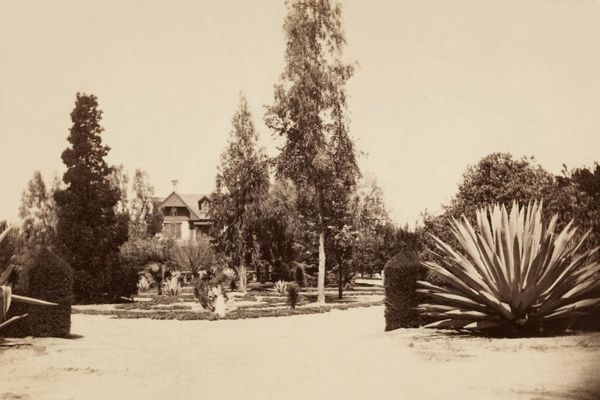

By 1895, Riverside was considered the wealthiest city per capita in the United States. Most of this wealth came from the growing citrus industry spearheaded by the development of the navel orange. Many of the orange growers built grand homes throughout the city on their citrus acreage. One area where several of these horticulturists were located was near and along the newly laid-out showcase street, Magnolia Avenue. Most of these houses were built away from the street, with trees and shrubs hiding the structures from view. Most of the early photographs and postcards of Magnolia Avenue do not show any of the homes, as they were set back from the street. In the 1893 Riverside Directory, 30 property owners along Magnolia Avenue were listed as horticulturists. Another four were in the citrus packing and shipping industry, and one was an official with the Riverside Water Company. Two more were bankers, handling the capital of these early entrepreneurs.
The first settler to build his home on Magnolia Avenue was George Crawford. Crawford arrived in Riverside in 1875 from Ontario, Canada, one of several family members who relocated from Canada. He built his home in the summer of 1876 on his property at 391 Magnolia. His home was described as one of the best in the area and a showplace for visitors. Situated on twenty acres with a thousand orange trees and a smaller number of lemons, the house was set on a spacious lawn with a semi-circular drive between the road and the house.
Unfortunately, a fire in the early morning of December 18, 1903, destroyed the house. While the family frantically attempted to rescue possessions and put out the fire, the streetcar along Magnolia Avenue came by. The conductor, motorman, and passengers "turned in and worked like beavers, getting furniture out of the house." The family must have rebuilt, as George Crawford passed away in this home on Magnolia Avenue on June 23, 1909. In addition to his occupation as a horticulturist, he served for several years as a director of the Riverside Water Company.
For health reasons, two related families traveled west from New York City to Riverside in 1878, seeking a warmer climate. In June, James Benedict, his wife and three of their sons arrived in Riverside and stayed at the Miller family's Glenwood Cottage. James purchased 20 acres on Magnolia Avenue between Jefferson and Madison and built his home, which became known as "Casa Grande," at 237 Magnolia Avenue (today 7651, now on the site of Ramona High School).
A few months later, Benedict's sister, Mrs. Louise Lockwood, and her son, Henry, arrived, also for health concerns. Mrs. Lockwood bought 160 acres, which extended from Magnolia Avenue to Indiana Avenue and from Washington to Madison. James was twenty-seven years old at that time and planted sixty acres of the property in oranges and a smaller section in olive trees. The Lockwoods built an adobe house on the northeast corner of Magnolia and Madison (190 Magnolia Avenue).
The Benedicts returned to New York in 1883, and in 1885, the property was purchased by Mrs. Lucy Gilliland, who managed the house and the citrus groves for the next 30 years. Meanwhile, Mrs. Lockwood, while visiting family in New York in the spring of 1882, died. Her son managed the property until selling it to investors in 1890.
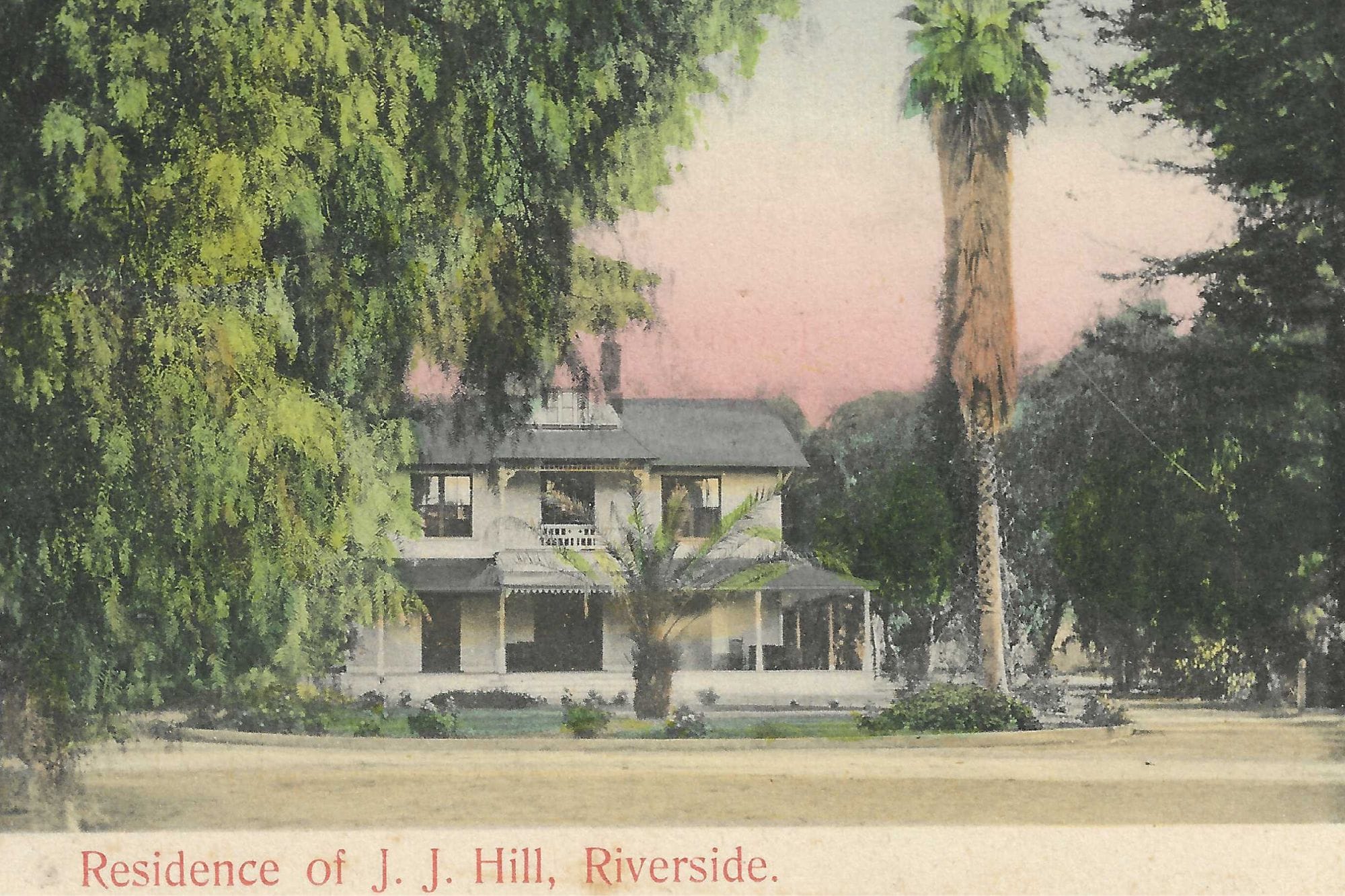
In 1899, John J. Hill bought Casa Blanca and the property, and continued as a horticulturist, growing citrus, and as a fruit packer at Casa Blanca Station. In December 1902, Hill shipped ten carloads of oranges.
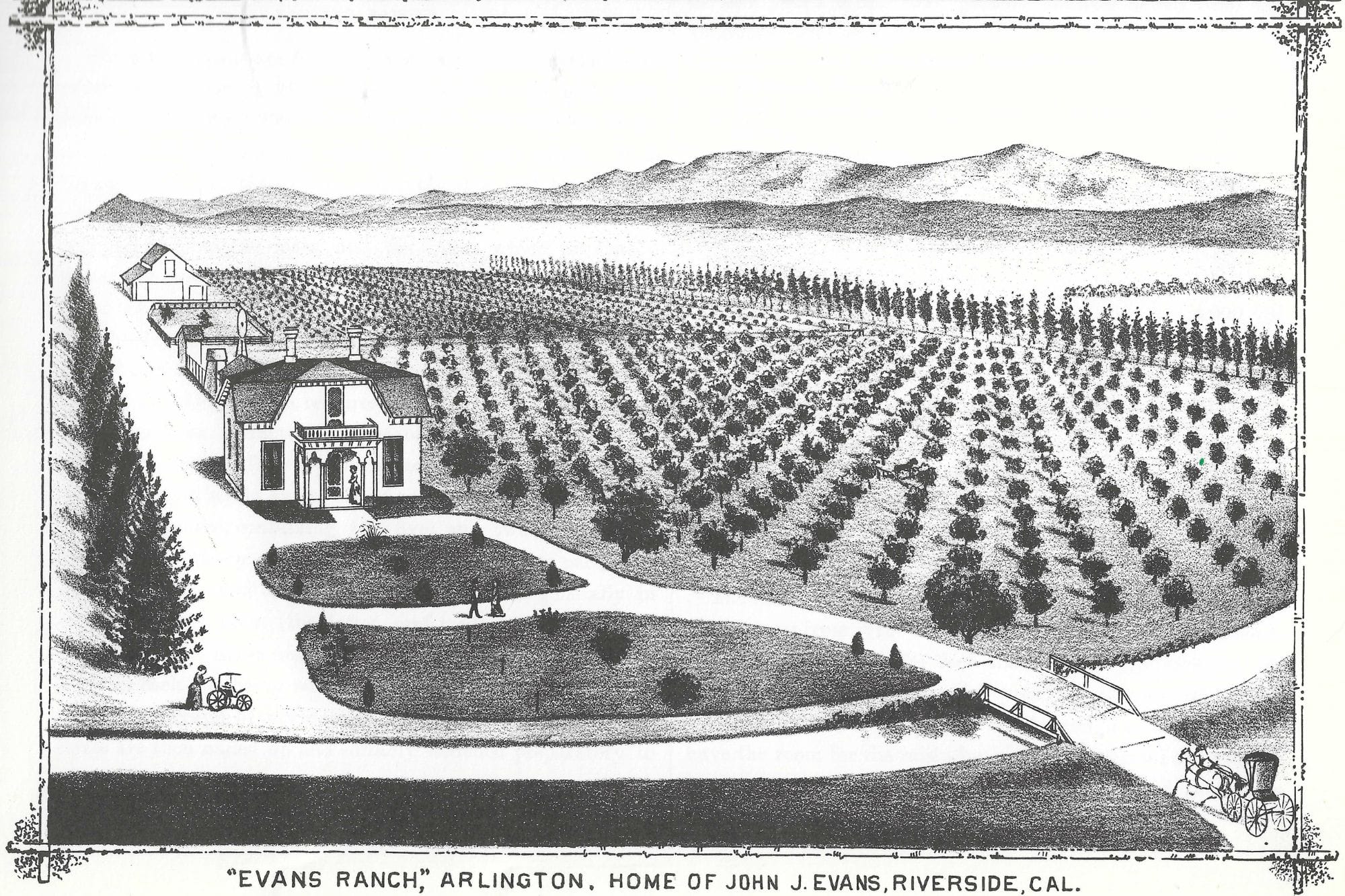
The man behind the development of the Arlington area through which Magnolia Avenue runs, Samuel C. Evans, Sr., built two homes along the avenue. The first was a two-story adobe built in 1879 just south of Madison Street on the southeast side of Magnolia. In July 1880, he deeded forty acres to each of his four sons. The eldest, John, received the acreage and the original Evans' Riverside house. In 1890, Evans built his second home on the avenue at 147 (later 7253) Magnolia. This grand house was a sixteen-room, two-story house with an attic and a basement. After the death of S. C. Evans, Sr., and his wife, S. C. Evans Jr. and the youngest son, Pliny, continued to live here, before they each built their own homes.
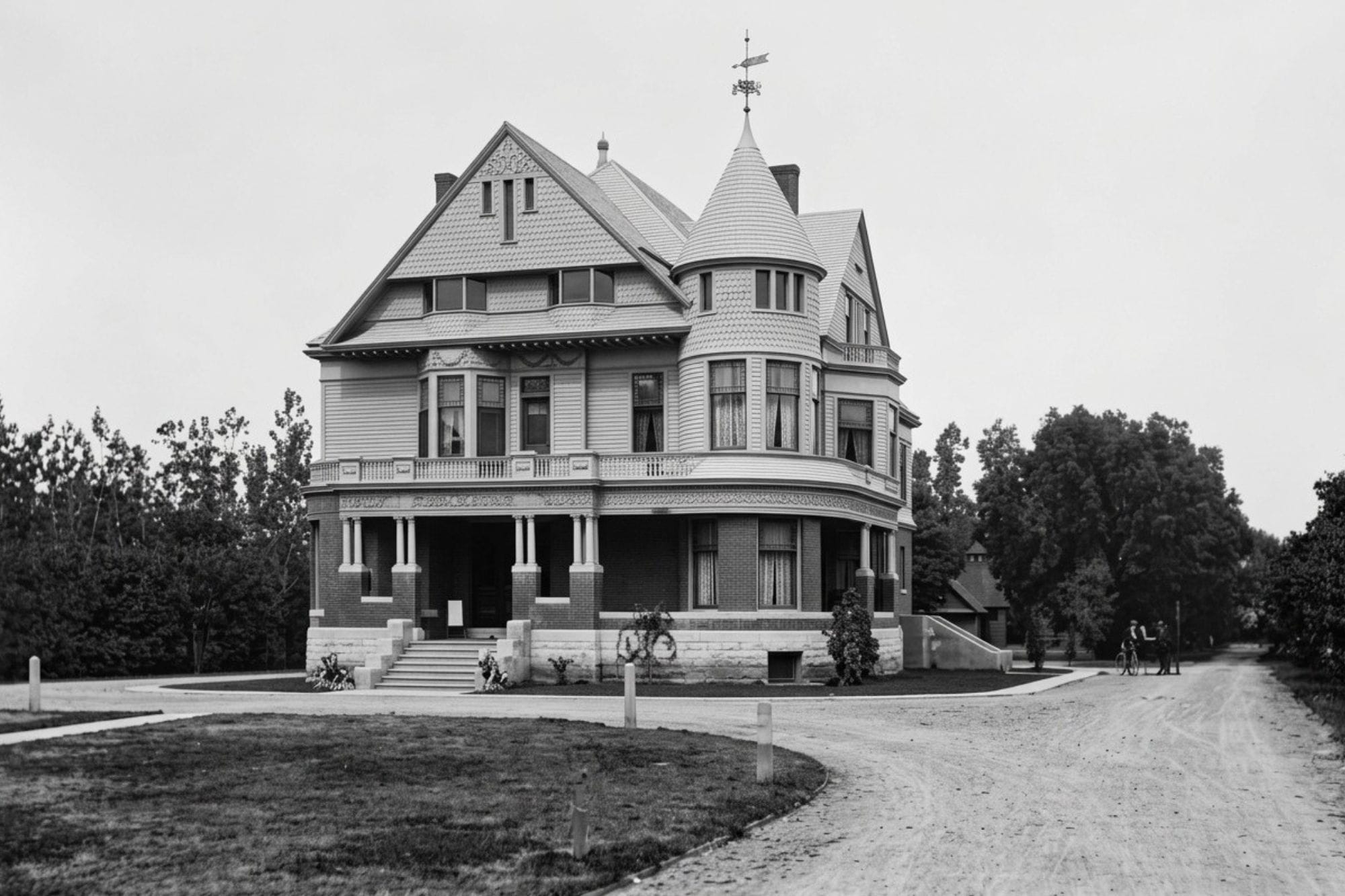
Adjacent to Casa Grande, Orson T. Johnson purchased twenty acres and built a mansion designed and built by Boggs and Ripley in 1881. Johnson, along with his brother, Alexander P. Johnson, and other families, moved to Riverside from Galesburg, Illinois, in early 1880. A.P. Johnson built his mansion on Arlington Avenue, east of Magnolia Avenue. The Johnson brothers invested in citrus property, banking houses, and other business ventures. In 1890, O. T. Johnson reported income of $11,350 from his twenty-two acres of citrus and $3000 from his seven acres of Muscat grapes.
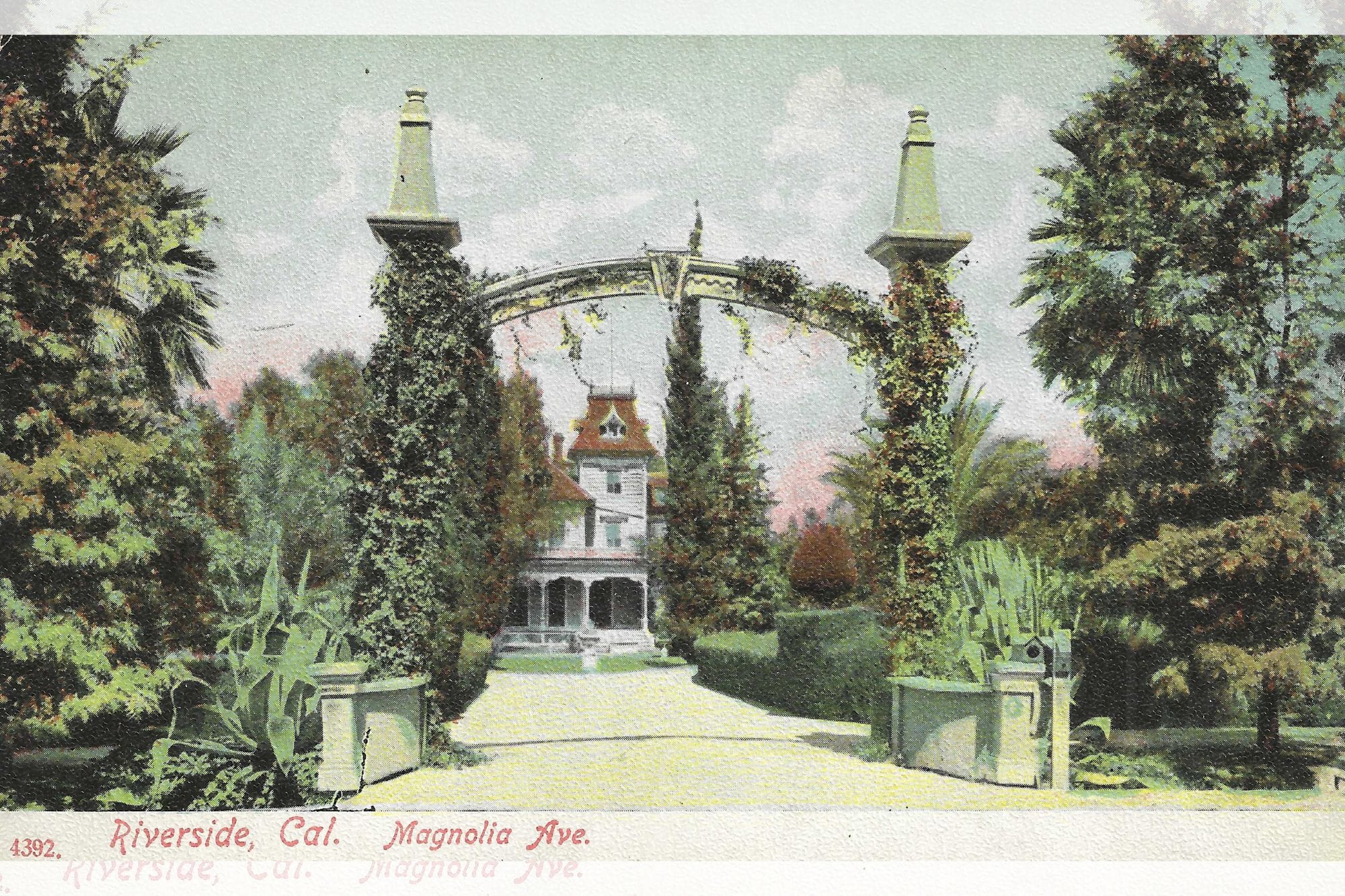
Arriving in Galesburg a year before the Johnson brothers was Sylvanus H. Ferris. He purchased forty acres on Magnolia Avenue before returning to Galesburg. In 1881, he moved his family to Riverside, settled on his Magnolia property, built his house at 183 Magnolia Avenue in 1883, and planted orange groves that yielded 10,000 boxes annually. S. H. Ferris died at home on Magnolia Avenue on January 22, 1902.
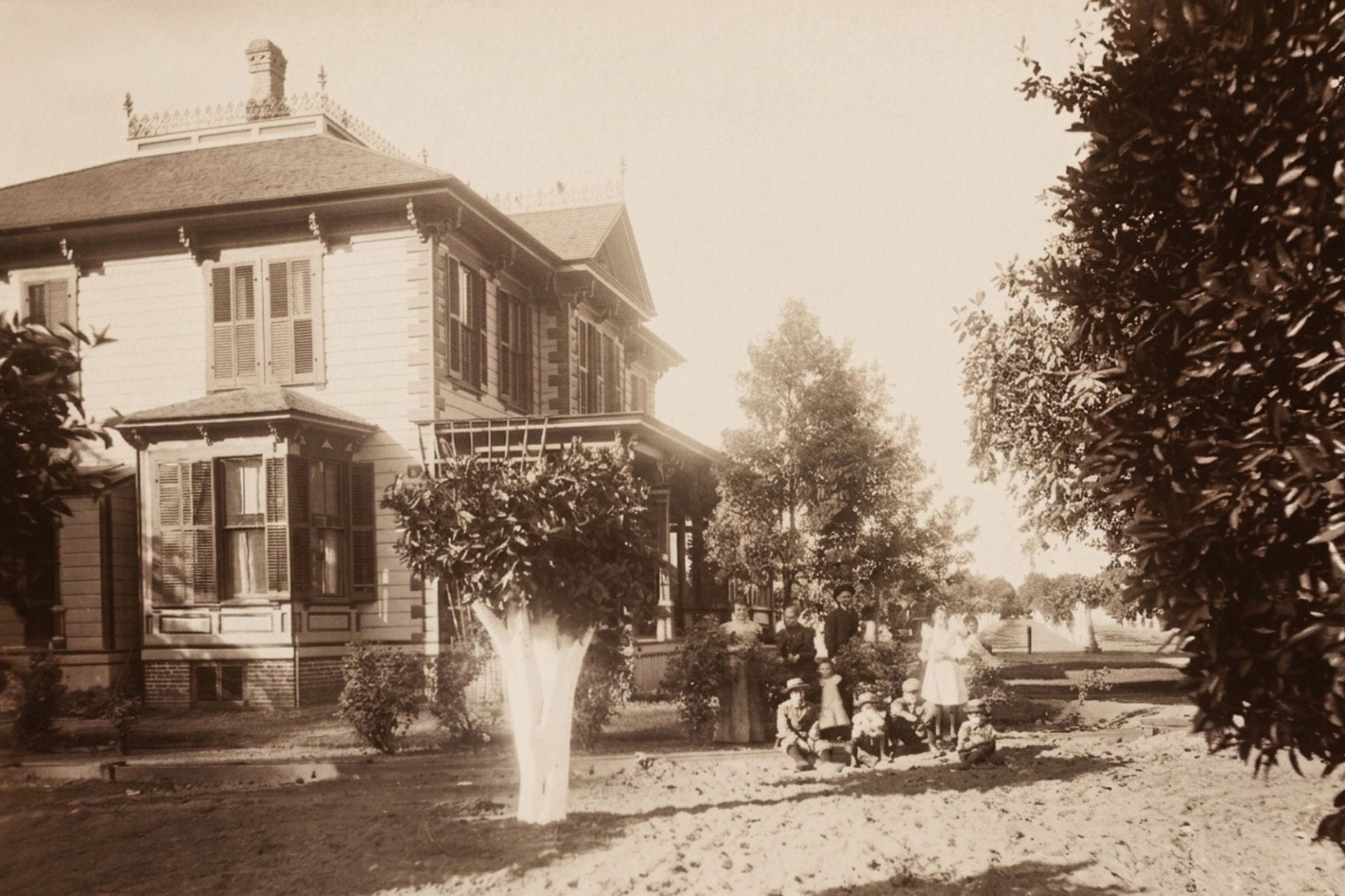
One of the others who arrived from Galesburg with O. T. Johnson was Sylvanus Ferris' father, George Washington Gale Ferris, Sr. G.W. G. Ferris arrived in 1880 and purchased property at the head of Magnolia Avenue (100 Magnolia, today 7000). There, he built a home and planted a citrus grove. George and his wife, Martha, had ten children, one of whom was George W. G. Ferris, Jr., the inventor and builder of the celebrated Ferris Wheel at the 1893 Chicago World's Fair. George Sr. lived in his home at the head of Magnolia until his death in 1895. His son, Benjamin, who arrived in 1894, took over the property's care.
Ernest Mouton arrived in Riverside in 1881 and became involved in the packing industry, later served as president of the First National Bank of Riverside. Two years after his arrival, on November 14, 1883, Ernest married Julia Ferris, the daughter of Sylvanus and Sabra Ferris. The couple initially lived with her parents at 183 Magnolia Avenue, but soon built their own home nearby at 175 Magnolia Avenue.
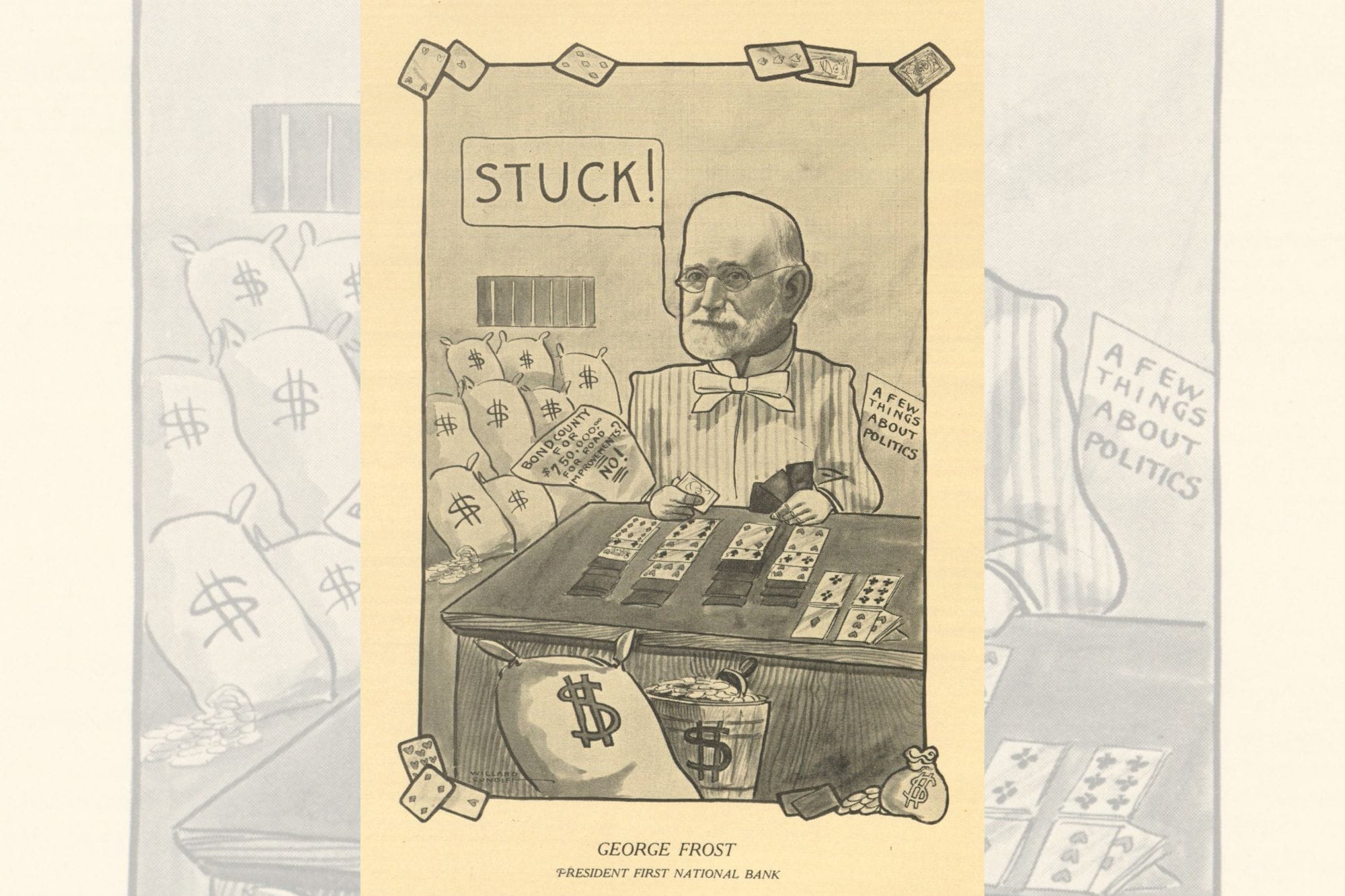
George Frost arrived in Riverside in the fall of 1882 from the Midwest. He settled at 406 Magnolia Avenue (8332), where he built an attractive house and planted orange groves. In addition to his horticultural interests, Frost became active in related enterprises. In 1887, he was on the board of the Riverside Water Company, serving as its president for eight years. He was also affiliated with the Riverside Fruit Exchange, the Riverside Electric Street Railway Company, and two banks: Orange Growers' Bank and the First National Bank.
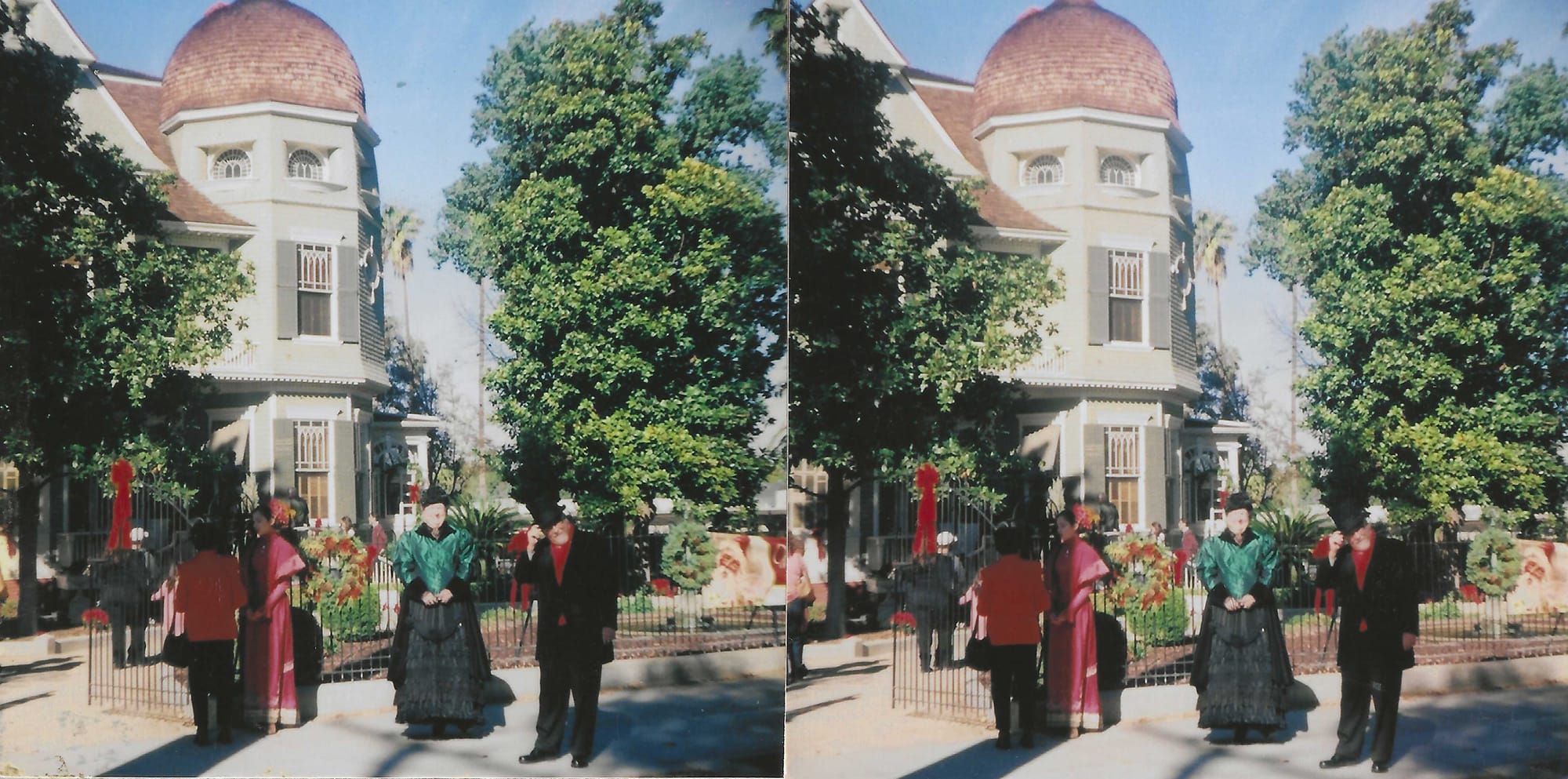
The last two of the early settlers along Magnolia Avenue we are examining are probably the most familiar to Riversiders today: Catherine and Robert Bettner. James and Catherine Bettner first visited Riverside in November 1876. Returning in 1877 with their family, the couple purchased thirty-eight acres at Indiana and Jefferson and planted citrus trees. James died in 1888. After deeding the family home to her son, Robert, Catherine bought a lot on Magnolia Avenue (375 Magnolia, now 8193) and built her new home in 1891. In 1969, the Riverside Municipal Museum (now the Museum of Riverside) purchased the house and restored it as the city's Heritage House.
Robert Bettner was twelve years old when he moved to Riverside, where he worked in the citrus industry alongside his father. In 1890, he eloped with Lucy Gilliland, who lived in the nearby Casa Grande house. After a year in New York, the couple returned to Riverside and the family home on Indiana Avenue. In 1892, Robert sold the property on Indiana and Jefferson and built a new home at 325 Magnolia Avenue (now 7995), close to his mother's new home. Robert and Lucy called their home "La Ventanilla," the house of little windows. Robert entered the real estate trade and opened an office in downtown Riverside.
This is just a brief overview of some of the grand old houses built along Magnolia Avenue in the last decades of the Nineteenth Century, which helped make the avenue a showcase of Riverside. Only the two Bettner houses and the original Evans adobe home remain today; the rest have been lost. For more details on some of these houses and their occupants, read Adobes, Bungalows, and Mansions by Joan Hall and Esther Klotz and Riverside's Invisible Past by Joan Hall.