

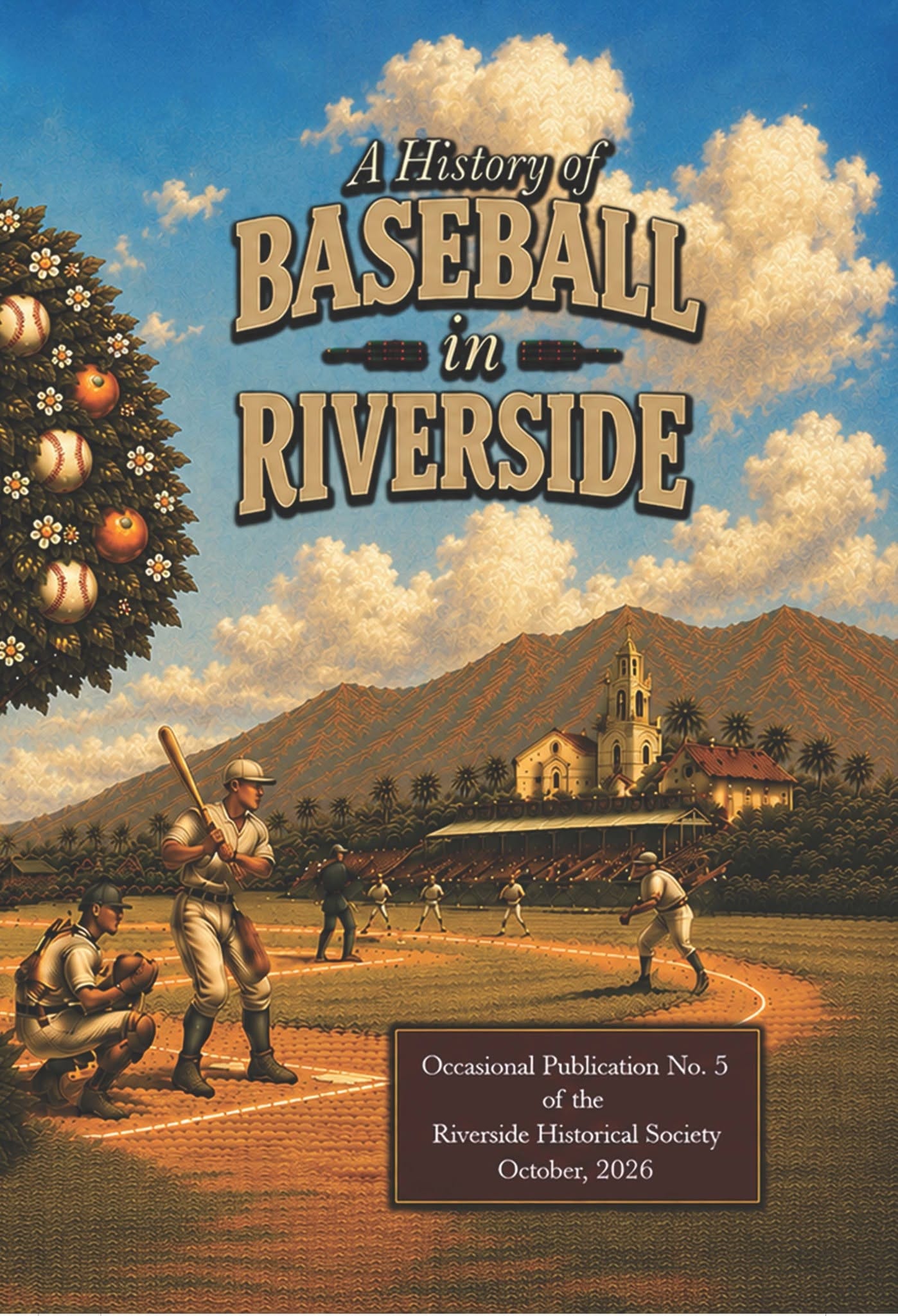
The beginning of October brings the time for the playoffs for Major League Baseball. By the end of the month, the World Series will be over, a new champion crowned, and baseball fans will have a good number of months before spring training. However, this year baseball fans have a treat to keep them into baseball in the months ahead. You can read all about baseball in Riverside thanks to the Riverside Historical Society (RHS). The latest occasional publication from RHS debuts on Sunday, October 4, at the 2026 Local History Book Fair and Talk. A History of Baseball in Riverside is an 838-page tome that will keep you entertained for hours. After consuming the wealth of information, you will know everything about baseball in the history of Riverside. From when Frank Miller of Mission Inn fame played the game in Riverside to today, our city has a rich baseball past. You'll learn about just about everything. As with any historical study, new facts always come to light. As one fellow historian once told me, “If you wait until you find everything, you will never publish.”
Just 24 hours after the RHS book went to press, Ruth McCormick, local history librarian extraordinaire at the Riverside Main Library, asked Claudia Rodriguez, the main RHS coordinator and driving force behind the baseball book, if she knew that a certain famous Hall of Famer started his professional career at Evans Park in Riverside. Claudia, knowing I planned to write an article to help introduce our new book, told me about this missing link.
The story begins with the old Brooklyn Dodgers, who ran a rookie camp at Evans Park in Riverside in 1953. Twenty-two rookie pitchers and catchers arrived first to begin their training. Then on Sunday, March 22, an additional twenty-five “flyhawks” (infielders and outfielders) reported. These forty-seven eager rookies were set to prove themselves to the Brooklyn Dodgers. One of them was a nineteen-year-old infielder named George Anderson.
George was born on February 22, 1934, in Bridgewater, South Dakota. The family moved to Southern California in 1942, where LeRoy Anderson found wartime employment in the shipyards. Young George soon played sandlot baseball, then high school ball at Dorsey High School in Los Angeles. His high school team won 42 consecutive games, and he was named all-city in both his junior and senior years. Anderson was offered a scholarship to USC but instead signed with the Brooklyn Dodgers for $250 a month.
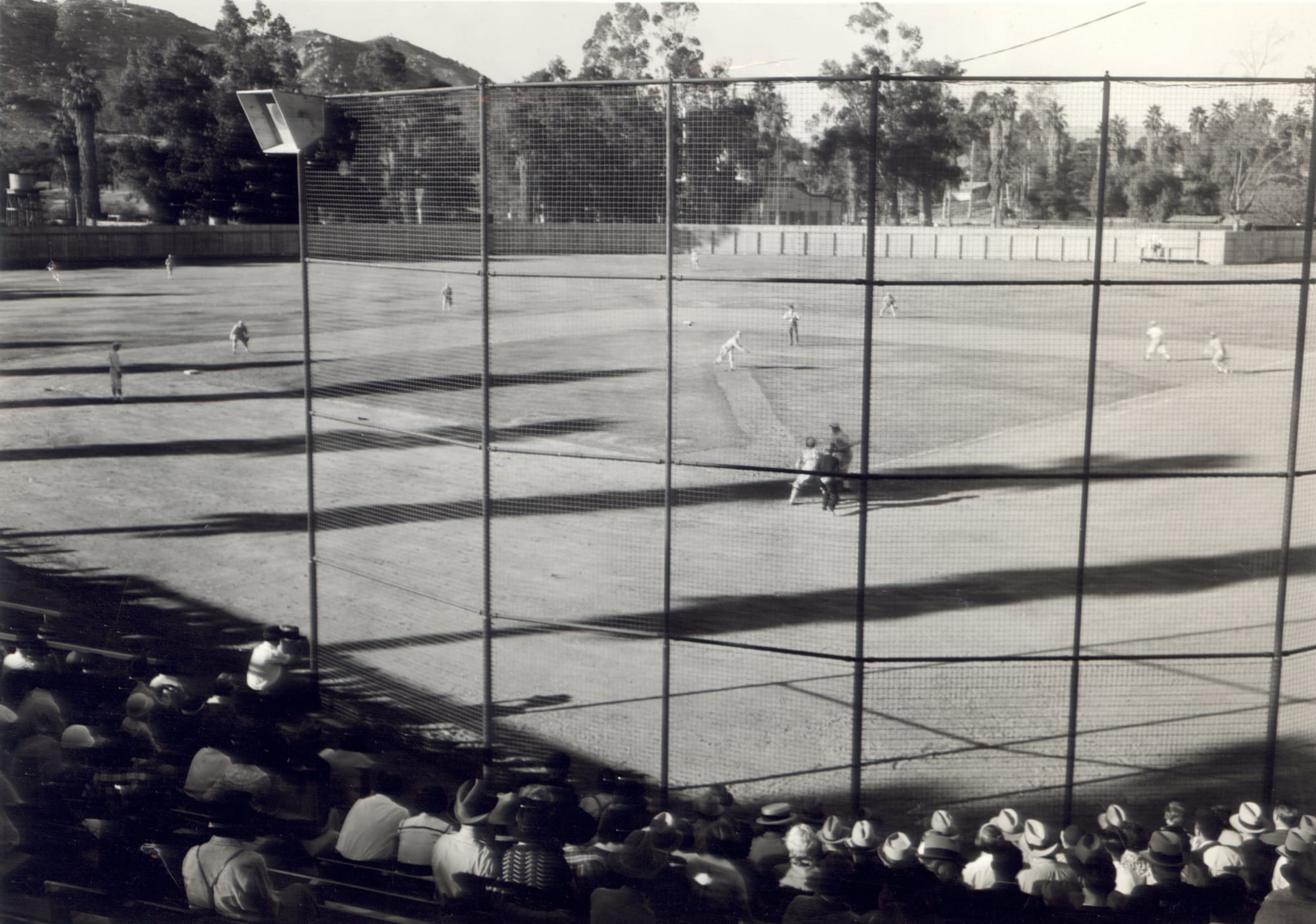
That is what brought young George Anderson to Riverside to play baseball in the spring of 1953 at Evans Park. The team set up a schedule of seven exhibition games, with intra-squad games on the off days. The team played five of the exhibition games at Riverside’s Evans Park.
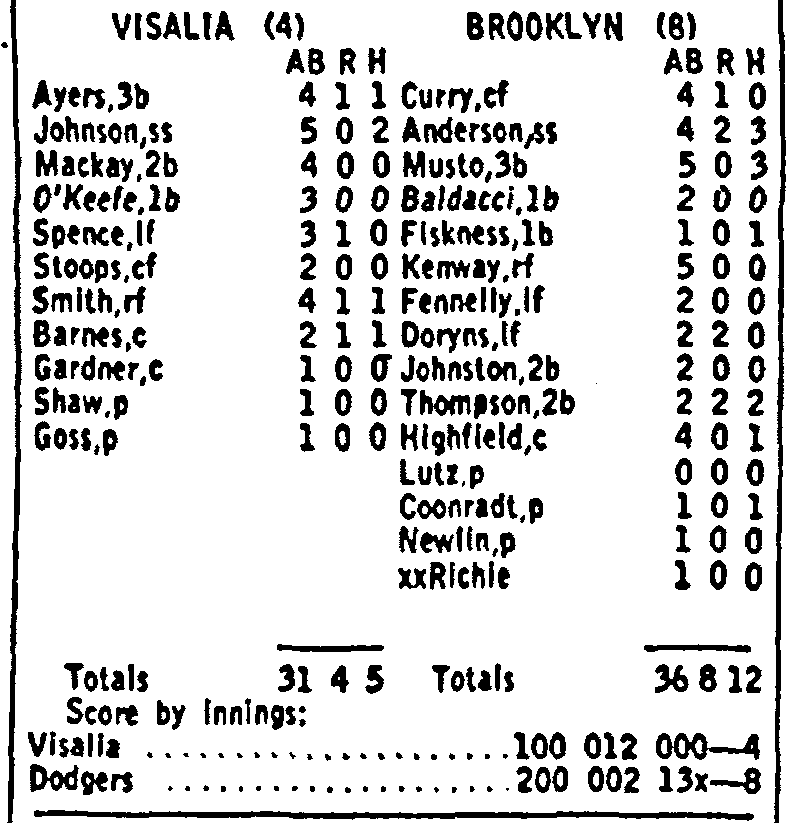
George did well in the training camp, and his name appears several times in the Riverside papers. In the first two intra-squad games on Sunday and Monday, shortstop George Anderson had three hits in each game. The next mention of George was after the game when the “Young Brooks” beat visiting Visalia from the California League by a score of 8 to 4. The Daily Press declared, “Shortstop George Anderson’s bat spoke with authority as he sprayed three hits in four trips.”
At the end of spring training, George Anderson was sent to play for the Santa Barbara Dodgers in Class C of the California League. George played 141 games and batted .263 with five home runs. Following this first season of professional baseball, he married Carol Valle in October. Carol and George had known each other since the fifth grade and dated throughout high school.
The next season, in 1954, George was promoted to the Class A team in Pueblo, Colorado. That was followed by a year with the AA Fort Worth Cats in the Texas League. During this year in Fort Worth, a radio announcer nicknamed George “Sparky” on account of his feistiness. This name and the traits that went with it followed “Sparky” for the rest of his life.
Over the next three years, Sparky went from Montreal to Los Angeles and back to Montreal. In the spring of 1958, he made the Dodgers' 40-man roster. That club had Gil Hodges, Charlie Neal, Don Zimmer, Junior Gilliam, Carl Furillo, Duke Snider, Norm Larker, Johnny Roseboro, Sandy Koufax, Don Drysdale, and Johnny Podres. At the end of spring training, Sparky admitted, “I simply didn't belong in that kind of company.” He was sent back to Montreal, where he played well enough to win the team’s MVP award and even finished second for the league MVP.
That good year caught the attention of the Philadelphia Phillies, who traded for the twenty-five-year-old second baseman. He made the opening day lineup in 1959 for the Phillies and singled in the winning run in the eighth inning. Sparky played 152 games that year for Philadelphia but only batted .218. That was his only year in the Majors.
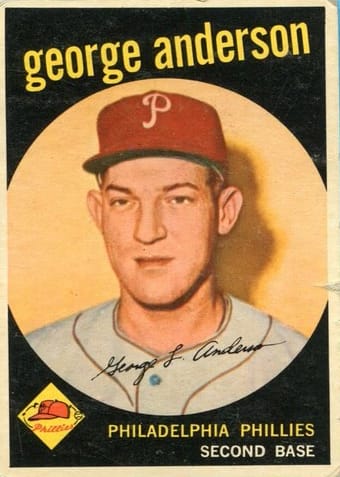
From 1960 through 1963, Anderson played for the Toronto Maple Leafs. Realizing he probably would not make it to the majors again, he began to study baseball strategies with the plan to one day become a manager. Following the 1963 season, Sparky was hired to manage the Toronto team. After five years as a minor league manager, the San Diego Padres hired him as a coach.
In a surprise move, the Cincinnati Reds hired the thirty-five-year-old Sparky Anderson as their manager for the 1970 season. The Cincinnati papers responded with “Sparky Who?” “Sparky Who?” managed the Reds to 102 wins that year and a World Series matchup with the Baltimore Orioles. The Reds lost to the Orioles in five games, but it was a strong first year for the young manager. Anderson went on to manage the Reds for nine seasons, then spent seventeen years with the Detroit Tigers.
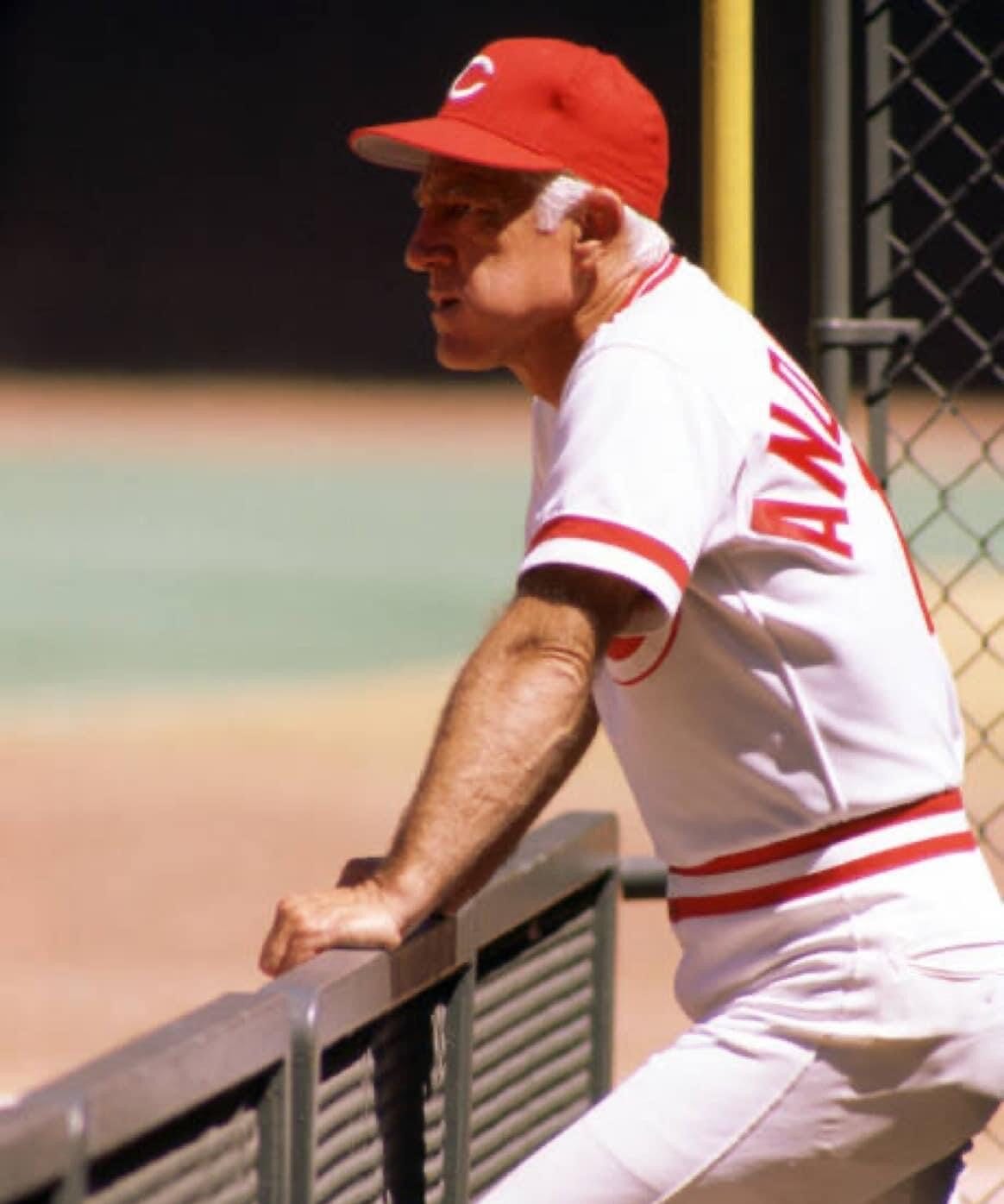
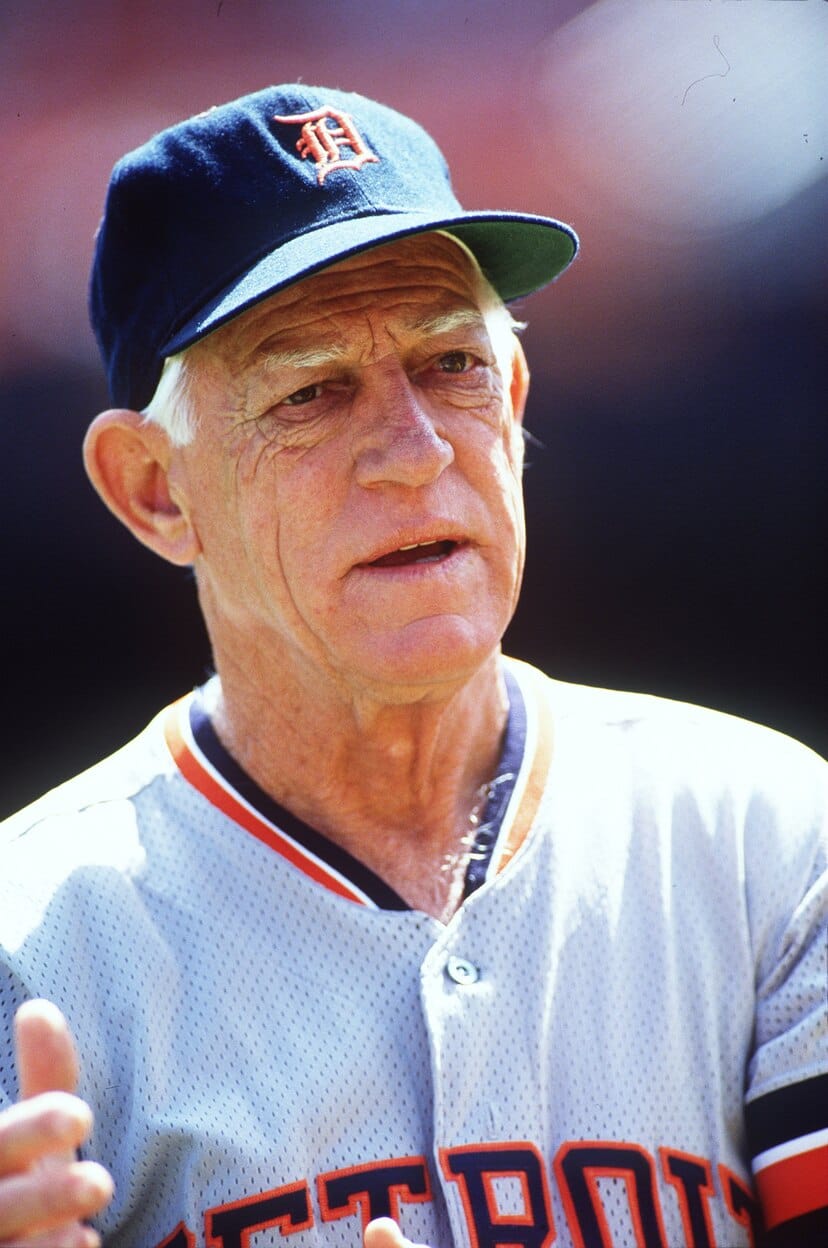
From left: Sparky Anderson as Reds’ Manager and as Tigers’ Manager. | Courtesy of the Riverside Historical Society
Over twenty-six seasons as a major league manager, Sparky won 2,194 games and lost 1,834. He won the World Series in 1975 and 1976 with the Reds and in 1984 with the Tigers. In 2000, he was elected to the Baseball Hall of Fame.
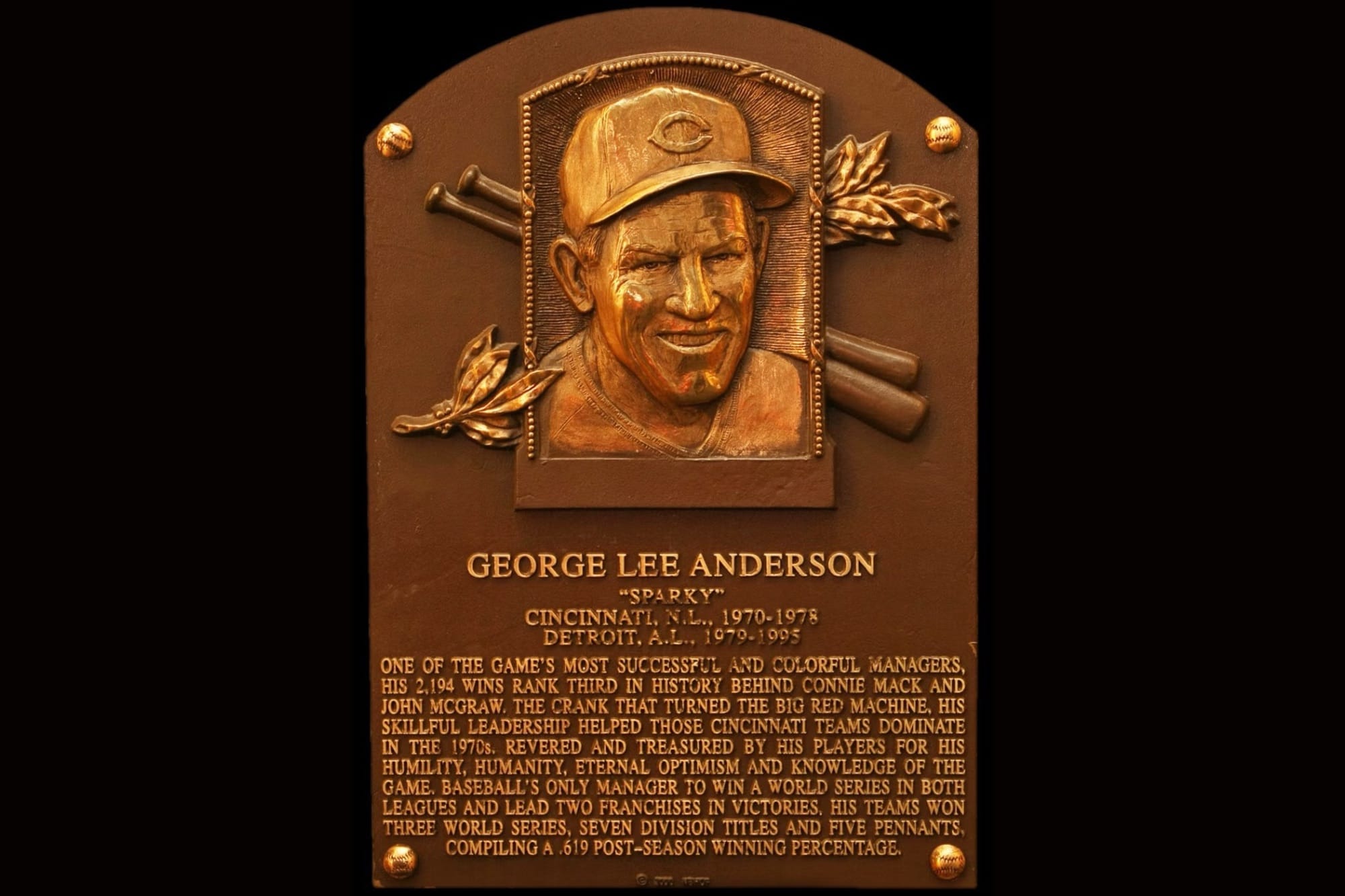
The young player who made his professional debut in the Brooklyn Dodgers training camp in 1953 at Evans Park returned to Riverside several times. In 1953, his parents, LeRoy and Shirley Anderson, moved to Riverside with some of their younger children. They resided at 3536 Hoover Street. Sparky often visited his family in Riverside and returned for both parents' funerals. LeRoy and Shirley Anderson are both buried at Olivewood Cemetery in Riverside. George “Sparky” Anderson died on November 4, 2010, after a long and illustrious career as a baseball player, manager, and sports announcer. He is an important figure in Riverside baseball history.
Join us today at the Villegas Community Center, 3091 Esperanza Street, for the 2026 RHS Local History Book Fair from 11 am to 1 pm and from 2 pm to 3 pm. At 1 pm, there will be a “History of Baseball in Riverside” talk. The new publication, A History of Baseball in Riverside, will be available for purchase!


