
La Sierra native Glenn Freeman visited Castle Park with his father not long after the attraction opened in the Spring of 1976.
The little boy was blown away by the sights, sounds and textures of the multi-dimensional family fun center.
Originally known as Castle Park Golf-n-Fun, the park was built just off the Polk Street Exit on the Riverside Freeway on land paid for in cash by Wendell "Bud" Hurlbut, a longtime amusement park veteran who developed some of Knott's Berry Farm's most popular attractions.
Castle Park was a passion project for Hurlbut which he financed privately and designed to his specifications. It was a 72-hole miniature golf hub with four, color-coded, multi-tiered, marvelously designed courses of differing levels of difficulty. The immaculately maintained holes featured dozens of themes—lakes, waterfalls, haunted houses and historical oddities. An exquisite sound system lent further drama to each hole.
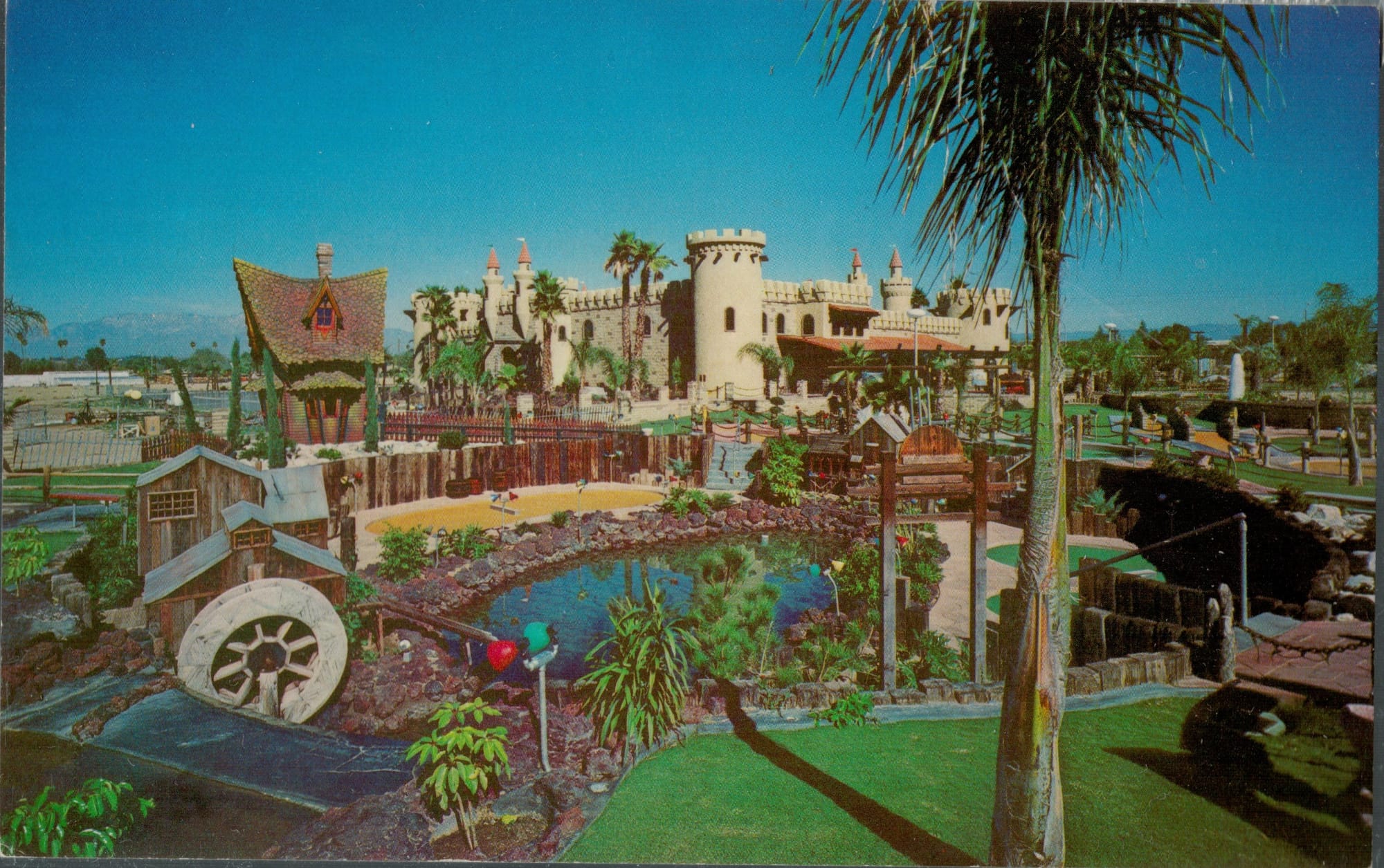
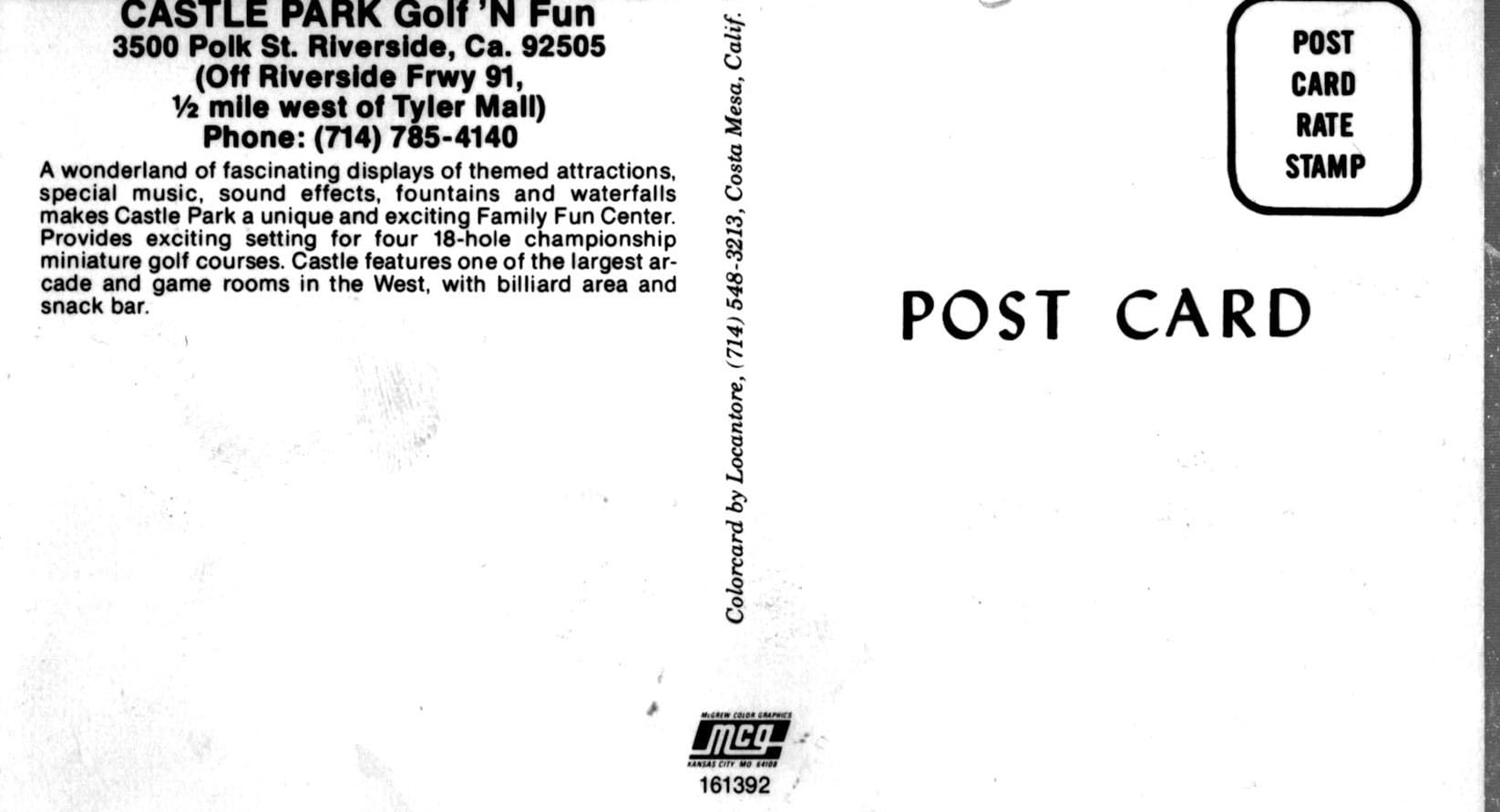
A vintage postcard advertises Castle Park Golf 'N Fun at 3500 Polk St. in Riverside. The front, left, shows the castle and golf courses; the back, right, lists the park's phone number, address and a description of its attractions. (Courtesy of the Riverside Public Library.)
"I remember thinking it was the Disneyland of miniature golf," said Freeman, who wrote a research article on the park's history for the October issue of the Journal of the Riverside County Historical Society.
Just as essential to the Castle Park story was the medieval castle that served as the attraction's center of gravity and housed its world class arcade—a three-level structure filled in the 1970s with games of skill like SkeeBall, Air Hockey, 21 and pinball, later to be augmented by video games.
"The castle itself was unusual. It was decorated like an early 1920s movie theater. It had crystal chandeliers, tile floors, and tapestries. It was a unique and special place. Over time, we had 400 various games in the arcade," said Tom Guagliardo, general manager of Castle Park from 1976 until 1988. Previously, Guagliardo worked for Golf-N-Stuff (GNS), the firm which Hurlbut hired to build the castle arcade and golf courses.
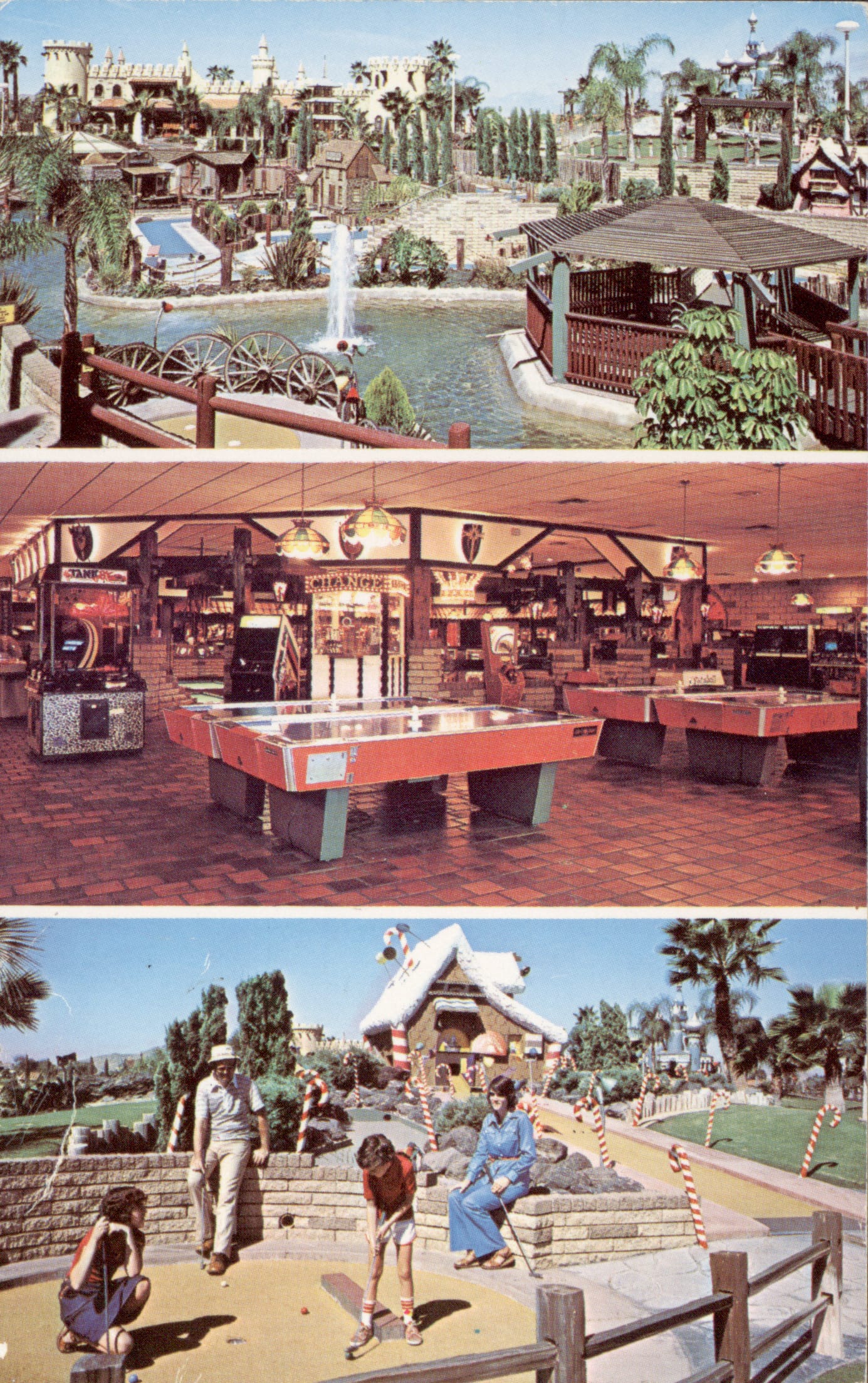
Castle Park was open all year and it was affordable. Admission and parking remained free for decades. Patrons paid as they played at the arcade, golfed, and, in later years, partook in its unique rides.
"It was affordable. It was clean. It was well maintained. And they catered to families," said Kent Lemasters, who managed Castle Park for Ogden in the late 1990s.
Fifty years later, Castle Park appears to have a new lease on life. Private equity firm Lucky Strike Entertainment purchased the park in 2025. After years of decline and a half-dozen ownership changes, Castle Park is getting a much-needed revitalization thanks to Lucky Strike, a company that has made its name trying to gentrify bowling alleys. Questions remain about who exactly Lucky Strike's target audience for this historically affordable family attraction is and if Lucky Strike's investment in Riverside will be a long-term one.
The story of Castle Park starts with Bud Hurlbut (1918-2011), a visionary and jack of all trades in the family entertainment business. Born in South Dakota but raised in Whittier, Hurlbut began his adult life as a tradesman, learning to make patterns for drill bits and locomotive parts. He became a skilled woodworker and built miniature trains for fun.
He started selling his scaled-down trains to small amusement parks in California and eventually made the acquaintance of Walter and Cordelia Knotts, who were looking to expand their farm/restaurant into a larger amusement center.
When it came to designers, Disneyland had Rolly Crump ("It's a Small World") and Tony Baxter ("Space Mountain"). Knott's Berry Farm had Bud Hurlbut. During the 1960s, Hurlbut and his Buena Park-based firm created the Calico Mine Train and the Timber Mountain Log Ride—a pair of immersive, multi-sensory experiences that rivaled anything in Anaheim. Additionally, he created the attractions of Fiesta Village, which highlighted the region's Mexican cultural heritage.
Hurlbut continued to work with Knott's until 1983 while pursuing his passion project at 3500 Polk Street in Riverside. He spent every Tuesday at Castle Park, overseeing its operation and his plans for expansion.
Meticulous was the word for the maintenance of Castle Park.
"All the landscaping had to be perfect, the place had to be clean. Everything had to work. Everything had to look good," said Robert Quezada, one of the park's original employees. While in college, he worked on the miniature golf courses before going on to a long career in journalism for the Press Enterprise.
As a teenager, Freeman remembers "cruising the Castle" on weekend evenings during the 1980s, then an adolescent rite of Riverside County Saturday nights. Castle Park became the focal point of many date nights and extended hangs in the arcade. Freeman recalls the arcade peaking in popularity during the early 1980s just as the arcade craze hit its zenith.
At the time of its opening, the Press Enterprise referred to the space as an "electronic teen Mecca."
"There was an absolute change in the customer base as the evening came on. The families tended to leave and then the single adults and teenagers would show up," said Guagliardo.
To keep youthful exuberance from turning into disorder, Guagliardo hired a highly trained security staff that included many off-duty law enforcement officers or recent graduates of the police academy.
After leaving Knott's, Hurlbut turned his attention to building a full-scale amusement park at Castle Park, which had been his intention since the beginning.
"He intended to bring the Knott's Berry farm experience to Castle Park. That's why he bought so much extra land," Guagliardo said.
In 1985, Hurlbut opened an amusement area at Castle Park, just west of the arcade and golf courses. It was the culmination of two years of construction, millions of dollars in investment and a decade's worth of forethought.
Initially, the amusement park consisted of 17 well-planned and constructed rides. The primary attractions included two different gauged trains and a vintage carousel, which combined elements of two century-old merry-go-rounds. Fifty-two hand-painted and hand-carved animals served as the steeds on the dreamlike ride. In 1991, Hurlbut added a version of the log ride, long his Knott's signature, to Castle Park. Castle Park added a water park known as "Buccaneer Cove" in later years as well.
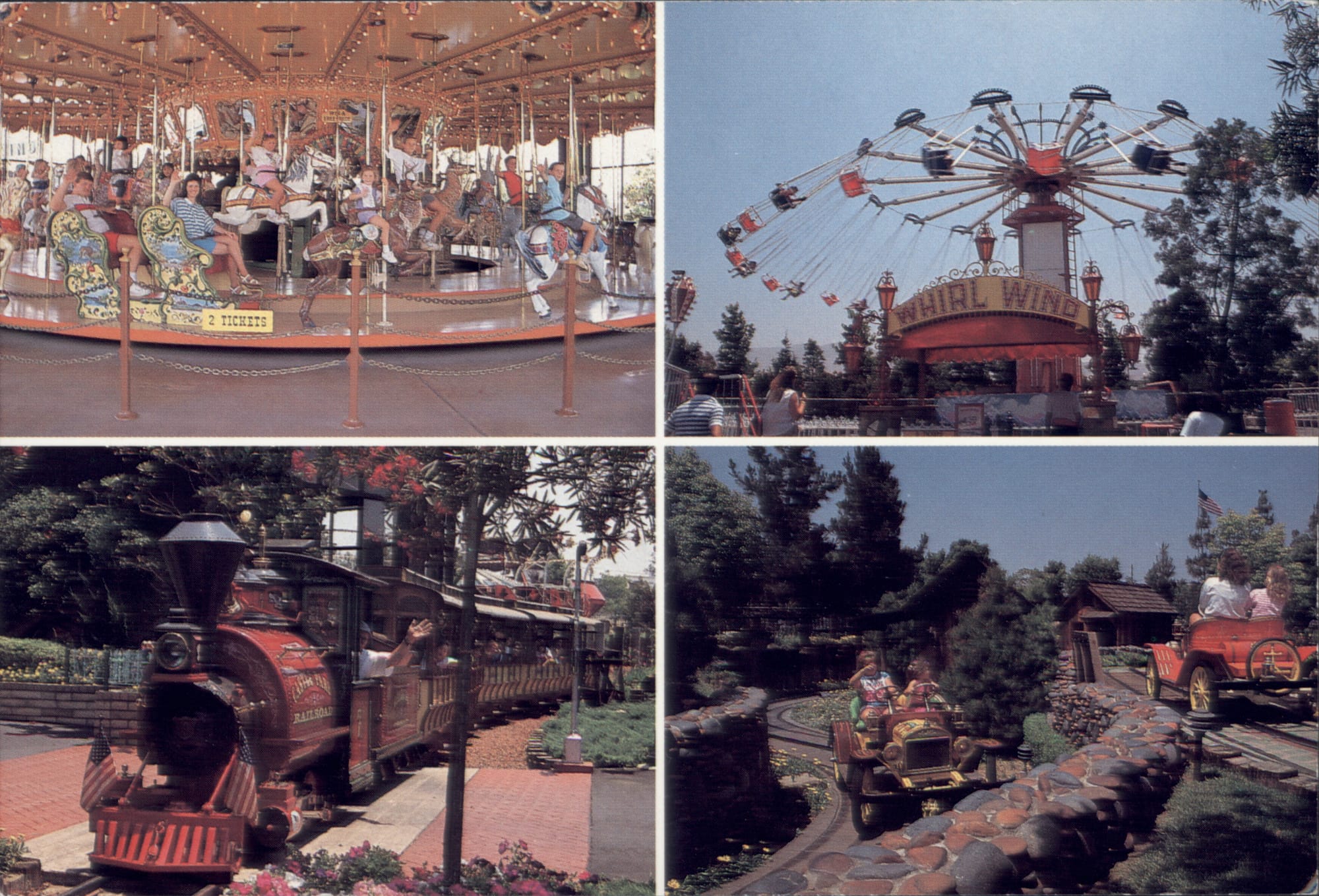
During the period of amusement park building, Guagliardo recalls that Hurlbut brought many employees over from Knott's, which changed the environment of Castle Park and reflected a change of focus toward the amusement area.
"Since then, I guess most have considered Castle Park primarily as a small amusement park," said Freeman.
After years of success in the 1970s and 1980s, the expanded Castle Park faced new challenges in the 1990s.
Competition from other miniature golf courses and amusement centers in the Southland almost certainly cut into the park's business. By the mid-1990s, the likes of Scandia in Ontario and Upland Family Fun Center provided serious challenges to Castle Park's "putt putt" business.
Nevertheless, an afternoon at Castle Park remained an affordable family outing—admission remained free into the 2000s and parking cost just a couple of dollars. A family of four could enjoy an afternoon of games, golf, rides and concessions for well under $50 well into the 21st century.
The problems became more evident after Hurlbut sold the park in 1999.
Ogden became the first of six different firms to purchase Castle Park. Ogden was a conglomerate that owned everything from airports to water parks to dinner theaters. They provided food and management for sports and entertainment venues as well.
Kent Lemasters, who managed the park for Ogden, was a veteran of the water park and amusement park business. At the time he took over at Castle Park, Lemasters was serving simultaneously as the manager of Raging Waters in San Dimas.
Lemasters recalls the degree of interest Hurlbut maintained in the park even after he sold it to Ogden.
"Bud and I would walk the park and talk about the park, what needed improving," Lemasters said.
The problem wasn't Ogden. It was the inattention of a parade of subsequent firms which bought the park over the past quarter century. Maintenance was continually kicked down the road. Visitors in the past 20 years have seen a deteriorating arcade, collection of golf courses, and a less-thoughtfully curated selection of rides.
"When the new park owners came in. They didn't have the pride of ownership. And they were looking at the bottom line," Guagliardo said. "As the different ownerships took over, more and more of the rundown look appeared," he continued.
"Most of the later additions [to the amusement park]—including some installed by Bud—seemed less permanent and a bit more carnival-like," Freeman said.
Over time, Guagliardo says the sense of security in the park changed for the worse, particularly at night as new management relied on "kids with security shirts on" to maintain order.
Recently, that declension has faced off with a worthy adversary in Lucky Strike Entertainment, who purchased Castle Park in July 2025.
Despite repeated efforts to reach Castle Park or Lucky Strike for comment, no representative of either entity could be reached for this story.
Previously known as Bowlero, Lucky Strike owns more than 350 alleys across the United States. The company's approach to managing bowling alleys appears to be an effort to de-emphasize bowling and to remake these spaces into loud, flashy and pricey entertainment venues replete with craft food and (alcoholic) beverages. Rather than winning over blue-collar bowling league regulars, Lucky Strike-owned properties emphasize corporate events, lavish parties, and they employ surge pricing (similar to Uber) at busy times such as weekend nights.
Recently, Lucky Strike has expanded into water parks and other family-oriented entertainment centers. The degree to which Lucky Strike employs its existing revitalization model at Castle Park remains to be seen. Nevertheless, early reviews of Lucky Strike's investment in Castle Park are exceedingly positive.
"I was impressed with how clean and updated the arcade looked," Quezada said after visiting the park in June. Guagliardo echoed Quezada's sentiments.
"[Lucky Strike]'s putting a lot of money into bringing the park back up to speed. They reimagined the arcade and it looked extremely well done," Guagliardo said.
"Initially, it appears Lucky Strike is willing to get back some of Castle Park's original sparkle and shine. I have high hopes based upon what I've seen thus far," Freeman said, noting that he's hoping for a revitalization of the golf courses and a return to the theming that made each course such a unique playing experience.
Freeman believes the coincidence of a new ownership group and a milestone anniversary provides residents with a chance to rediscover Castle Park.
"I think the marketers at Lucky Strike would do well in better connecting, conveying, and advertising the park's history and Bud's connection with Knott's Berry Farm," Freeman said.
The tradeoff for all the improvements appears to be significantly higher prices. Single-day Ride Park tickets are regularly $49.99, though a variety of savings options appear to be available. Parking starts at $20 on six days of the week. Unlimited mini-golf costs $14.99. An afternoon of golf, rides and arcade play will cost a family significantly more than in the 1970s or 1980s, even when adjusted for inflation. While these prices are clearly cheaper than the region's major amusement parks, the idea that Castle Park offers an affordable family outing is merely nostalgia.


