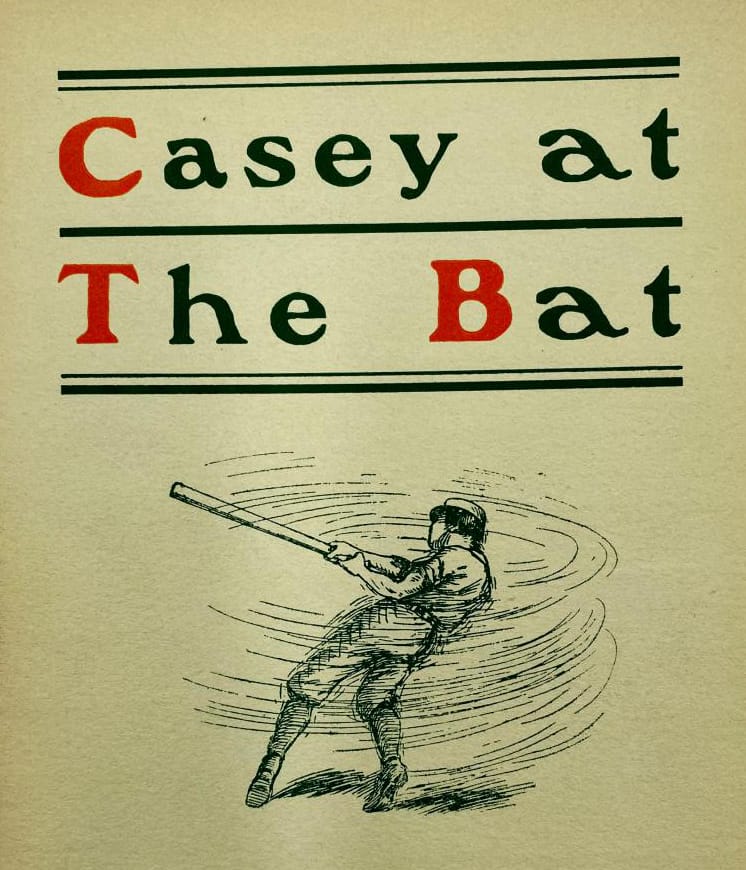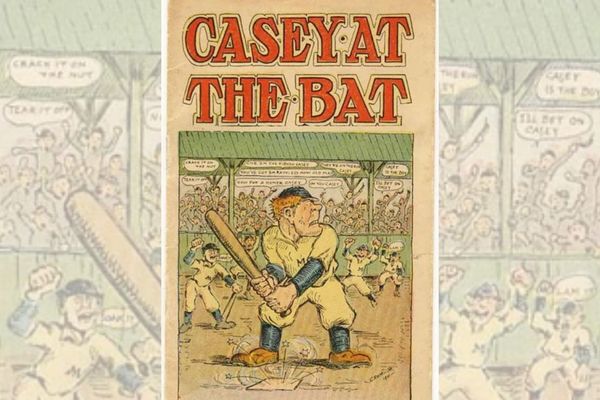

When this article comes out, the League Championship Series will either be over or end today or tomorrow. The World Series begins on Friday. Another baseball season is almost over. How sad for baseball fans, but not as sad as the fans in a famous baseball poem, “Casey at Bat.”
Ernest Lawrence Thayer wrote this famous poem. He graduated from Harvard in 1885 with a degree in philosophy. He was a member of the Hasty Pudding Club and editor of the Harvard Lampoon. At Harvard, he met William Randolph Hearst, who later hired him to write a humorous column for his newspaper, the San Francisco Examiner. On June 3, 1883, Thayer, writing as Phin, published “Casey at Bat.” Originally, the poem circulated little beyond the Examiner'sreadership.
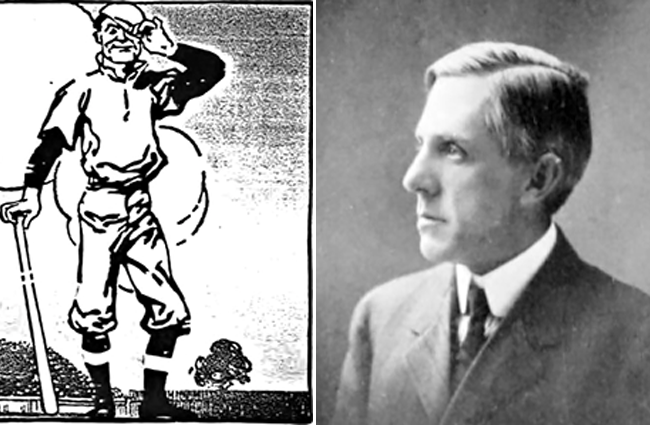
Then along came William D’Wolf Hopper. Born in 1858 in New York, Hopper chose acting for his career. He adopted the stage name DeWolf Hopper. He had a booming bass voice, but at 6 feet 5 inches, he was too tall for many roles, so he made his mark in musicals. He appeared in Panjandrum, Sousa’s El Capitan, Castles in the Air and several Gilbert and Sullivan hits, including The Mikado, Patience and H.M.S. Pinafore.
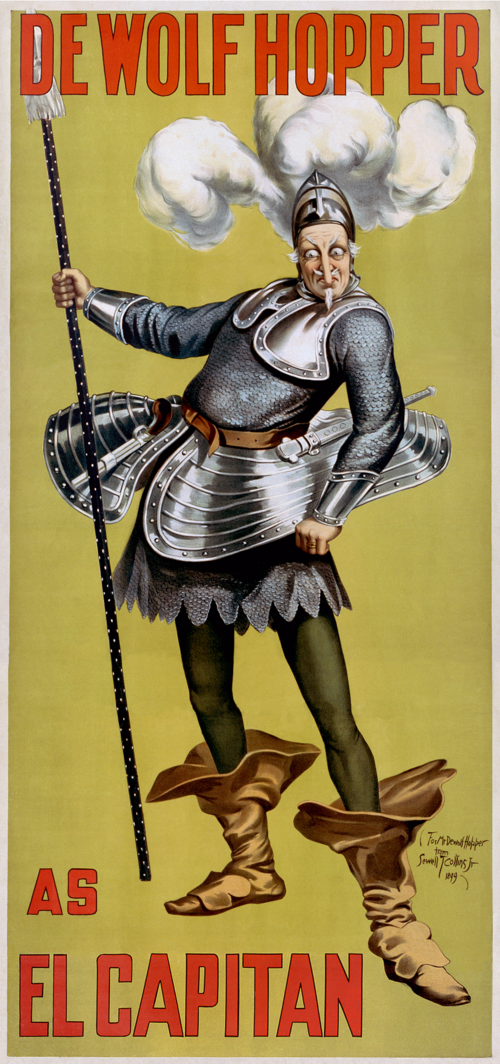
DeWolf Thayer was a lifelong New York Giants fan. He first read the poem “Casey at Bat” on Aug. 14, 1888, at a game between the Giants and the Chicago Cubs. Unfortunately, the Cubs won, but it marked the start of Thayer's long career as the poem's reader. Thanks to him, the poem became famous and still lives on in baseball lore.
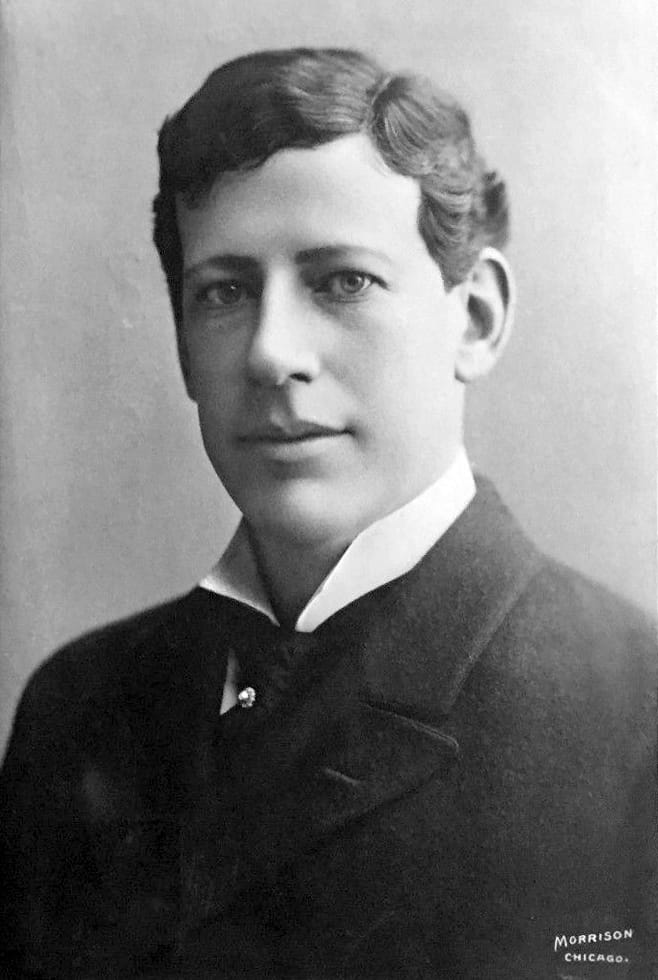
Over the course of the rest of his life, Thayer recited the poem over 10,000 times. With his booming bass voice and melodramatic style, he performed the poem at curtain calls, on the radio, and even recorded a phonograph record of the recitation in 1906.
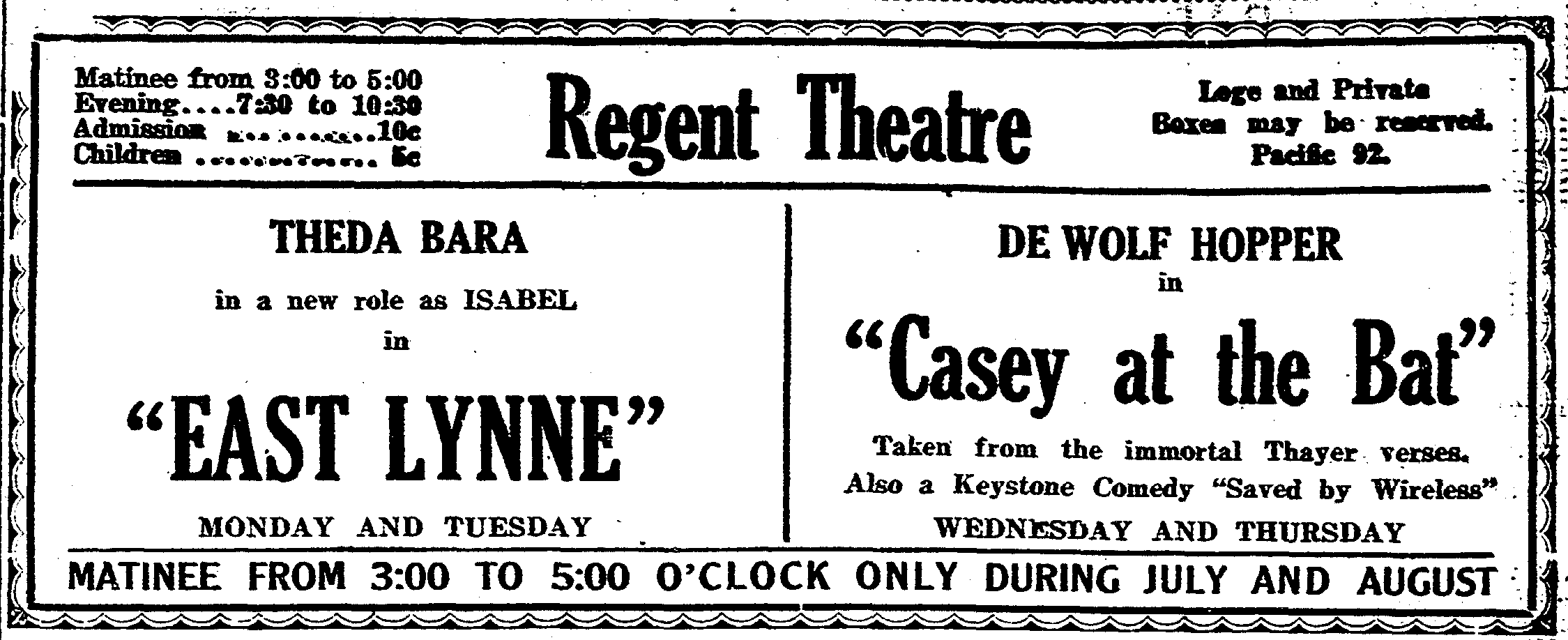
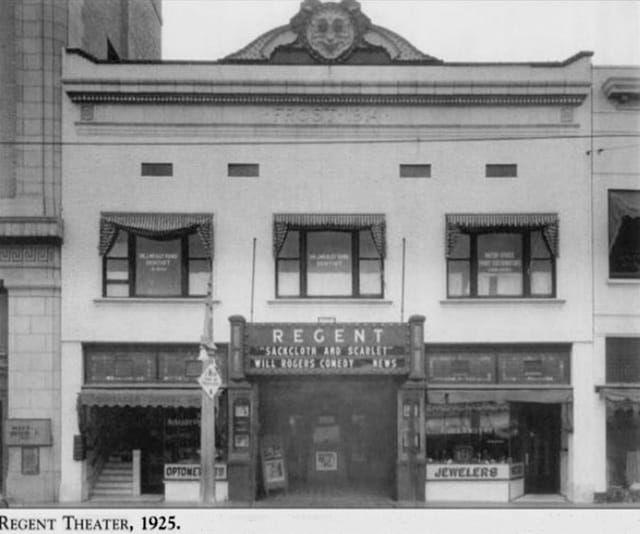
How do Thayer and “Casey at Bat” fit into Exploring Riverside’s Past? Thayer loved staying at the Mission Inn and was a frequent guest, sometimes just coming for lunch. He performed several times at a local theater in Riverside. In August 1916, he performed at the Regent Theater on Main Street between Eighth and Ninth streets. In 1928, the Kress Dime Store opened on this site, and in 1988 the UCR California Museum of Photography took over the building for its museum and archives.
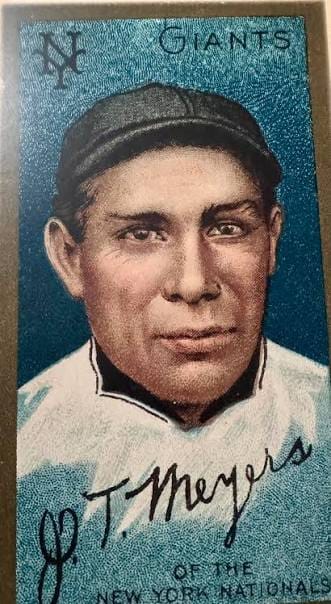
Another connection to “Casey at Bat” and Riverside is with John Tortes Meyers. Born in Riverside, “Chief” Meyers went on to play professional baseball as a catcher with the New York Giants, Brooklyn Robins and the Boston Braves. Like Hopper, he enjoyed reciting the poem, though not nearly as often. He even recited it on the Today show in 1967.
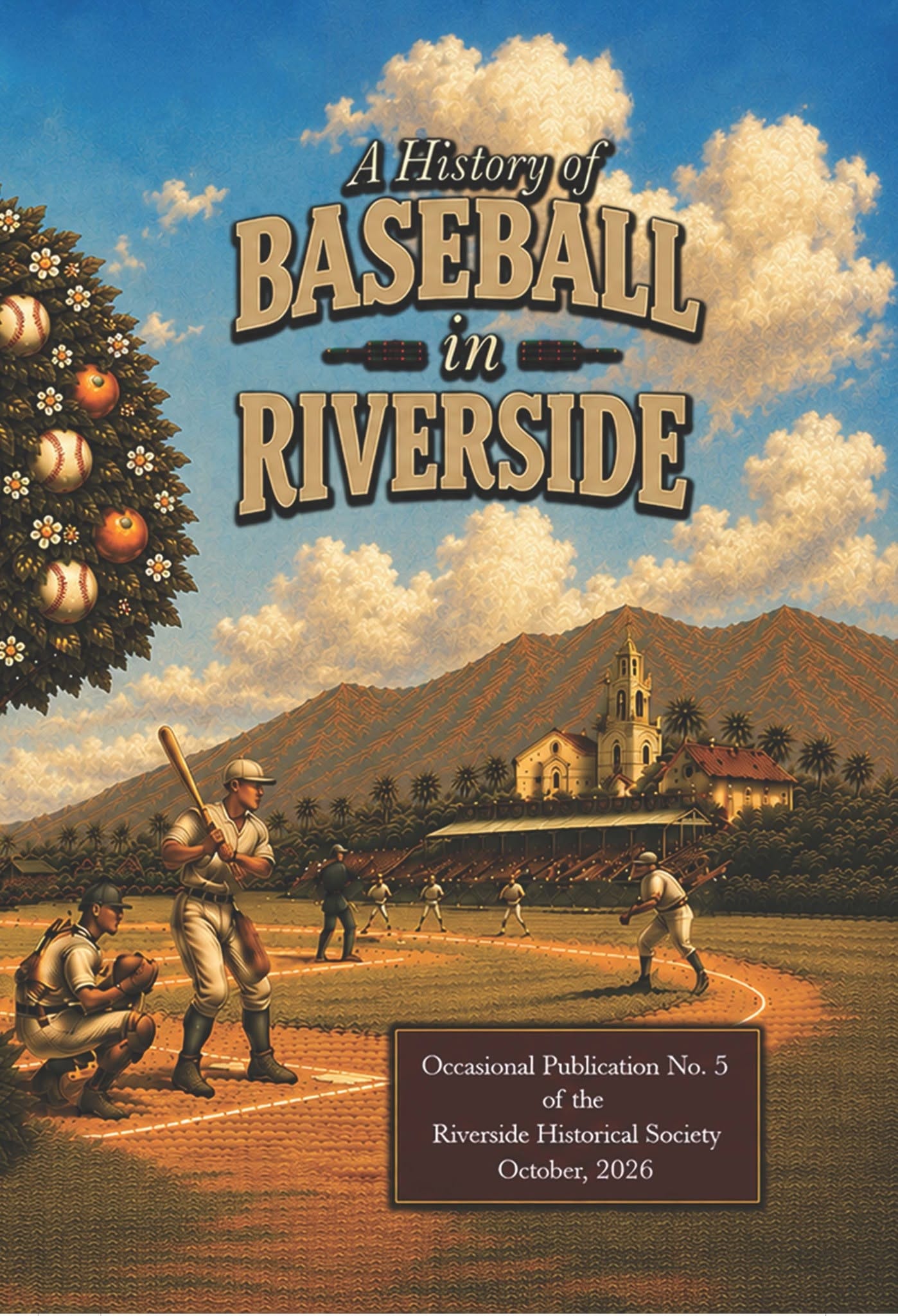
This October, as baseball comes to an end, the Riverside Historical Society lets you keep enjoying baseball, at least its history. The Society just published A History of Baseball in Riverside, an extensive account of baseball in Riverside. The book includes stories of major league players with connections to Riverside, the minor league teams, softball, Evans Field and much, much more. If you missed out at the opening, you can get a copy at Muse Market (5225 Canyon Crest Dr., No. 23), the Mission Inn Foundation Gift Store (Sixth and Main streets) or by emailing the Riverside Historical Society at riversidehistoricalsociety@gmail.com.
Thank you to Ruth McCormick, local history librarian at Main Library, for suggesting this topic and pointing me in the right direction.
And if you haven’t lately read the classic baseball poem, here it is:
Casey at Bat
The outlook wasn't brilliant for the Mudville nine that day:
The score stood four to two, with but one inning more to play,
And then when Cooney died at first, and Barrows did the same,
A pall-like silence fell upon the patrons of the game.
A straggling few got up to go in deep despair. The rest
Clung to the hope which springs eternal in the human breast;
They thought, "If only Casey could but get a whack at that—
We'd put up even money now, with Casey at the bat."
But Flynn preceded Casey, as did also Jimmy Blake,
And the former was a hoodoo, while the latter was a cake;
So upon that stricken multitude grim melancholy sat,
For there seemed but little chance of Casey getting to the bat.
But Flynn let drive a single, to the wonderment of all,
And Blake, the much despisèd, tore the cover off the ball;
And when the dust had lifted, and men saw what had occurred,
There was Jimmy safe at second and Flynn a-hugging third.
Then from five thousand throats and more there rose a lusty yell;
It rumbled through the valley, it rattled in the dell;
It pounded on the mountain and recoiled upon the flat,
For Casey, mighty Casey, was advancing to the bat.
There was ease in Casey's manner as he stepped into his place;
There was pride in Casey's bearing and a smile lit Casey's face.
And when, responding to the cheers, he lightly doffed his hat,
No stranger in the crowd could doubt 'twas Casey at the bat.
Ten thousand eyes were on him as he rubbed his hands with dirt;
Five thousand tongues applauded when he wiped them on his shirt;
Then while the writhing pitcher ground the ball into his hip,
Defiance flashed in Casey's eye, a sneer curled Casey's lip.
And now the leather-covered sphere came hurtling through the air,
And Casey stood a-watching it in haughty grandeur there.
Close by the sturdy batsman the ball unheeded sped—
"That ain't my style," said Casey. "Strike one!" the umpire said.
From the benches, black with people, there went up a muffled roar,
Like the beating of the storm-waves on a stern and distant shore;
"Kill him! Kill the umpire!" shouted someone on the stand;
And it's likely they'd have killed him had not Casey raised his hand.
With a smile of Christian charity great Casey's visage shone;
He stilled the rising tumult; he bade the game go on;
He signaled to the pitcher, and once more the dun sphere flew;
But Casey still ignored it and the umpire said, "Strike two!"
"Fraud!" cried the maddened thousands, and echo answered "Fraud!"
But one scornful look from Casey and the audience was awed.
They saw his face grow stern and cold, they saw his muscles strain,
And they knew that Casey wouldn't let that ball go by again.
The sneer is gone from Casey's lip, his teeth are clenched in hate,
He pounds with cruel violence his bat upon the plate;
And now the pitcher holds the ball, and now he lets it go,
And now the air is shattered by the force of Casey's blow.
Oh, somewhere in this favored land the sun is shining bright,
The band is playing somewhere, and somewhere hearts are light;
And somewhere men are laughing, and somewhere children shout,
But there is no joy in Mudville—mighty Casey has struck out.