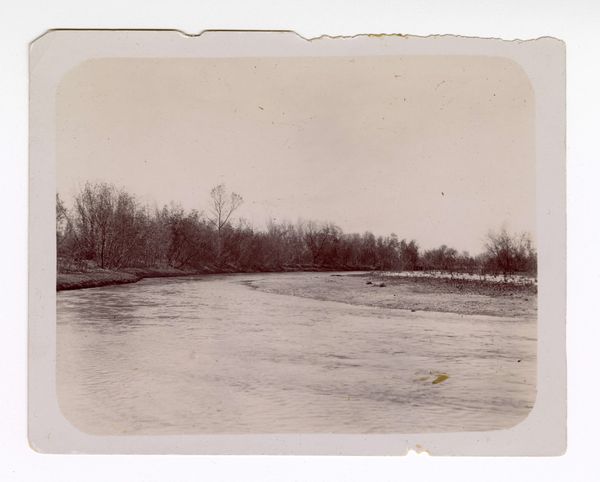
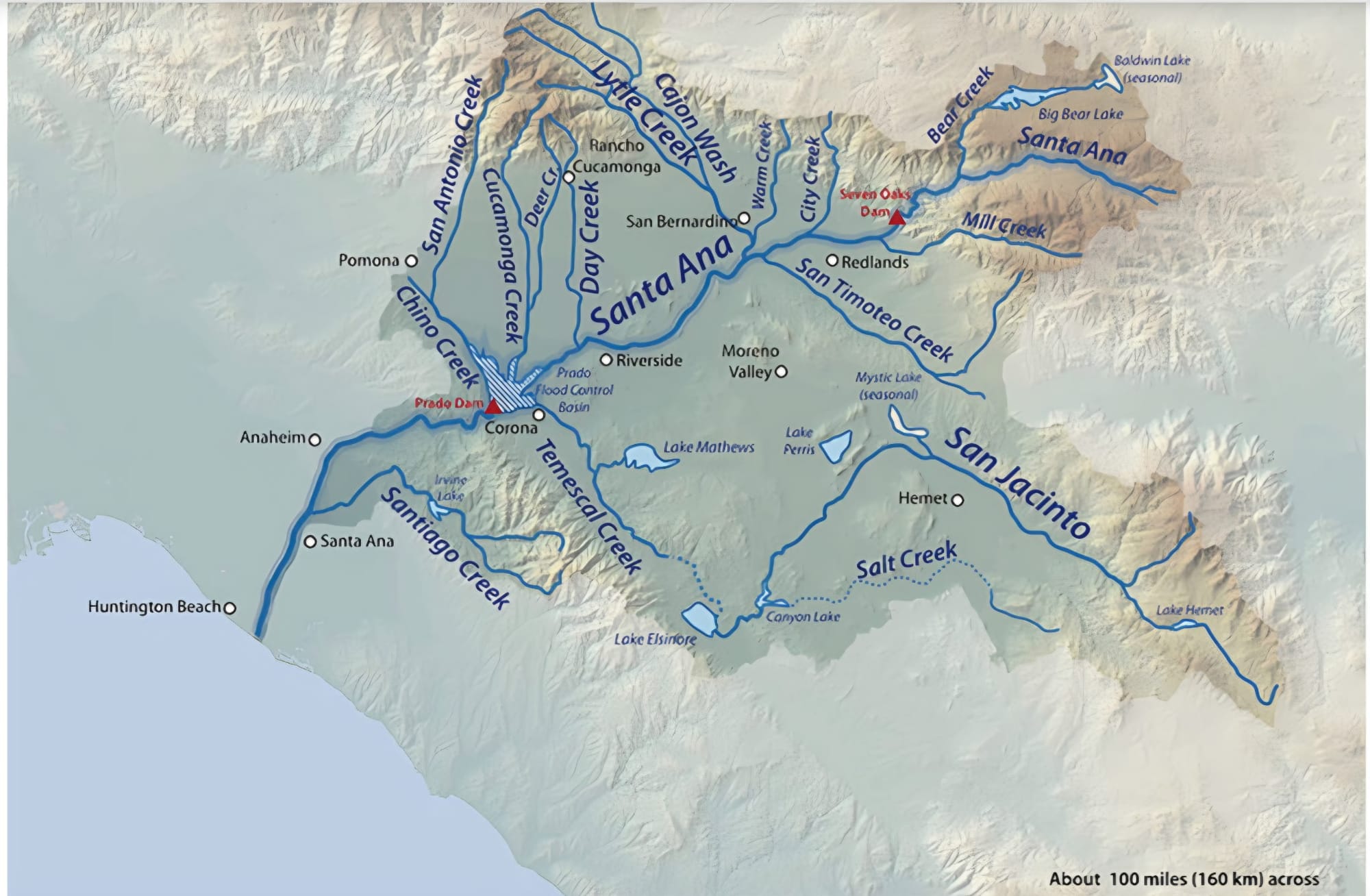
I find it curious when I hear "people in Riverside don't know we have a river." After all, it is the largest riparian ecosystem in Southern California, flowing nearly 100 miles beginning in the San Bernardino Mountains to the ocean at Newport Beach. Winding its way through 2/3rds of the state's population under bridges and alongside freeways. For those paying attention, the river is a sustainer of life. An ecology that has been at the mercy of the dominant culture for over two centuries. This begs the questions; what does it mean to live alongside a river, what is our role in its caretaking and how do we balance infrastructure with restoration?
Before the Spanish expedition of 1769 led by Gaspar de Portolá, when the first known recording of the river was made in writing, before Rio de Santa Ana became the familiar name, and before it was used to support colonial ambitions, the river had a different name to local tribes. Serrano people near Highland, California know it as Qota'inat. Cahuilla people near Riverside call it Wanish. As a child, the river and the mountain were a big part of my life. I know the river well. As does my mom, and her mom knew it and her mom before her knew it and so on and so forth for generations. We inherited its existence before the establishment of the city of Riverside because our ancestors had a relationship with the land and the water. A reciprocity that sustained their lifeways. Its use did not involve massive extraction, exploitation, or monetary gain. However, to the Spanish, water meant wealth and power. For them to maintain legitimacy in their territorial claims, they needed people living in California. Those people became the Native population.
The process of depopulation involved coercion, kidnappings, violent dispossession and required a network of encampments, facilities, and military posts to observe, patrol, and enforce Spanish claims and jurisdiction over areas that the Native population could escape to. The missions served to restrict indigenous movement and although Mission Indians were never legally considered slaves, in many cases they worked in slavery-like conditions. The first infrastructure of the Santa Ana River included these settlements, all part of a larger project to claim ownership of the river and its lands, as Cooper Crane wrote in "The Unseen River: The Santa Ana River and Infrastructural Silences."
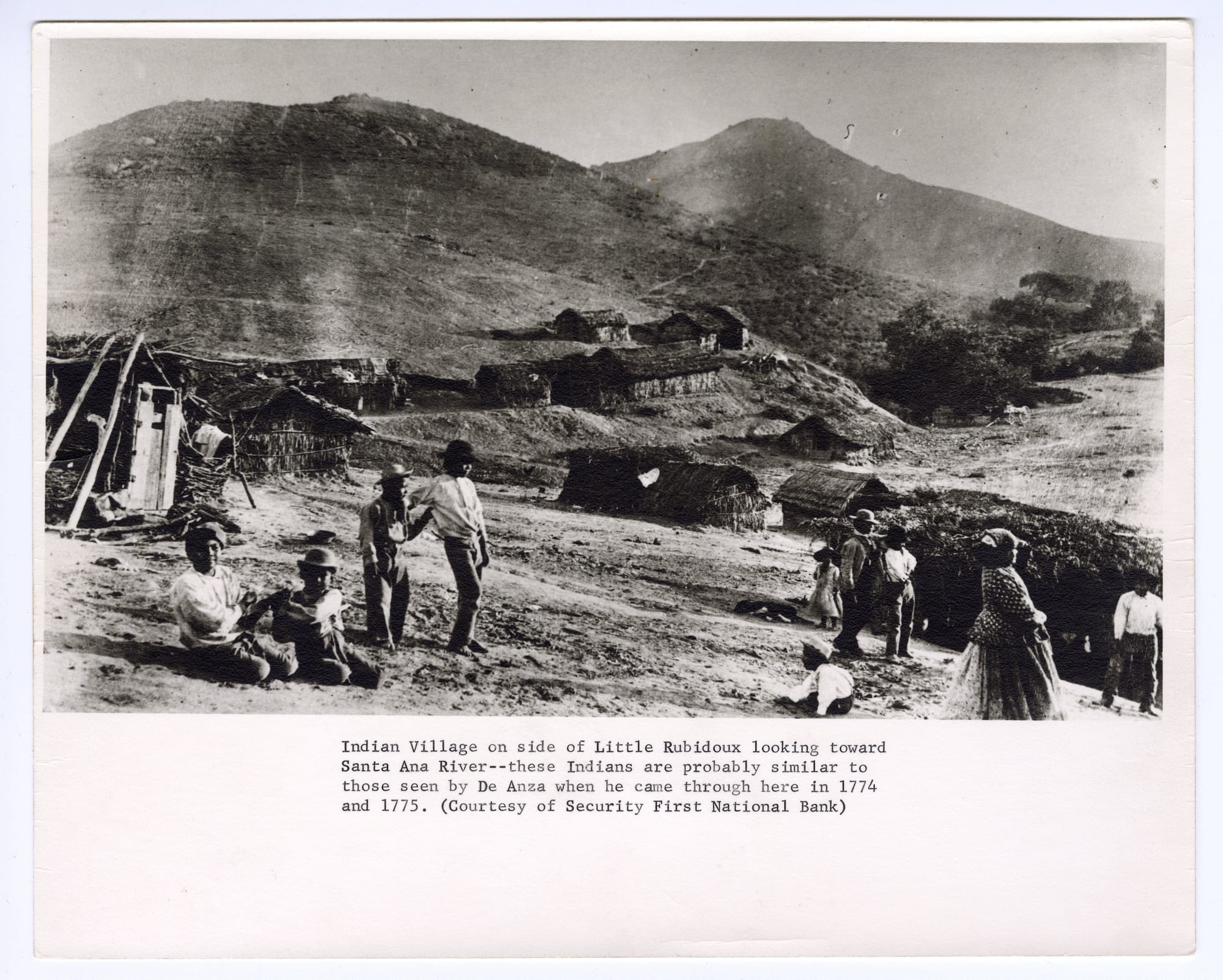
Colonial settlement fundamentally changed the natural fabric of Southern California. The way we interact with man-made infrastructure versus our relationship with land and water resources is slowly moving away from a once organic instinct to a foreign entity that leaves our river virtually unnoticed. Going down to the "river bottom" with my maternal grandmother, she would take us through Spring Rancheria and while we cooled off in the shallow water, she would be off picking nearby. Once she had her small bundle of, willow, tulle or whatever she gathered that day, she would call us back to head home. This memory of the river is one of many from my childhood. My memories are of water shallow enough that we did not worry about drowning. However, the river did not always stay shallow. In fact, there have been documented floodings with devastating outcomes as far back as 1862. For this reason, the river has been dammed up, channelized, reconfigured and desecrated with man-made alterations for the purpose of protecting urban landscape and capital.
Water diversions began with Mexican settlements in the 1840s to support their ranches. It was delivered either by hand or irrigation ditches called zanjas. Native people continued to be the primary labor force, further dispossessing them from their traditional ways. Then, after the Mexican-American War, American ranchers began arriving. They would litigate the land and water claims held by the Spanish in order to take control for their own agricultural ambitions. Unfortunately, the Spanish and later Mexican land grants were so vague and not clearly defined it became expensive and ultimately financially ruinous for them to defend their claims. In cases where they did win, Spanish ranchers ended up selling their land to the Americans to pay insurmountable legal fees. However, it was the arrival of the citrus industry that created construction of major irrigation canals in the 1870s. At the same time, The Southern California Colony Association and Riverside Land and Irrigating Company, along with the founding of the City of Riverside, accelerated suburban development. Water rights and greedy claims to who had the authority to harness the rivers flow progressed. Developers bought land between Prado and Riverside not because they needed it, but because they wanted the rights to the water. In 1886, litigations carried on, Crane writes, with some arguing in favor of a riparian doctrine, which permitted equal access to water. Others argued in favor of prior appropriation: first in line and first in right. Either way you spin it, water was a symbol of wealth and prestige, and the Santa Ana River turned into a commodity that only rich elites could benefit. This can be seen as a reason for the river's invisibility. Evidence of Man's obsession to dominate nature.
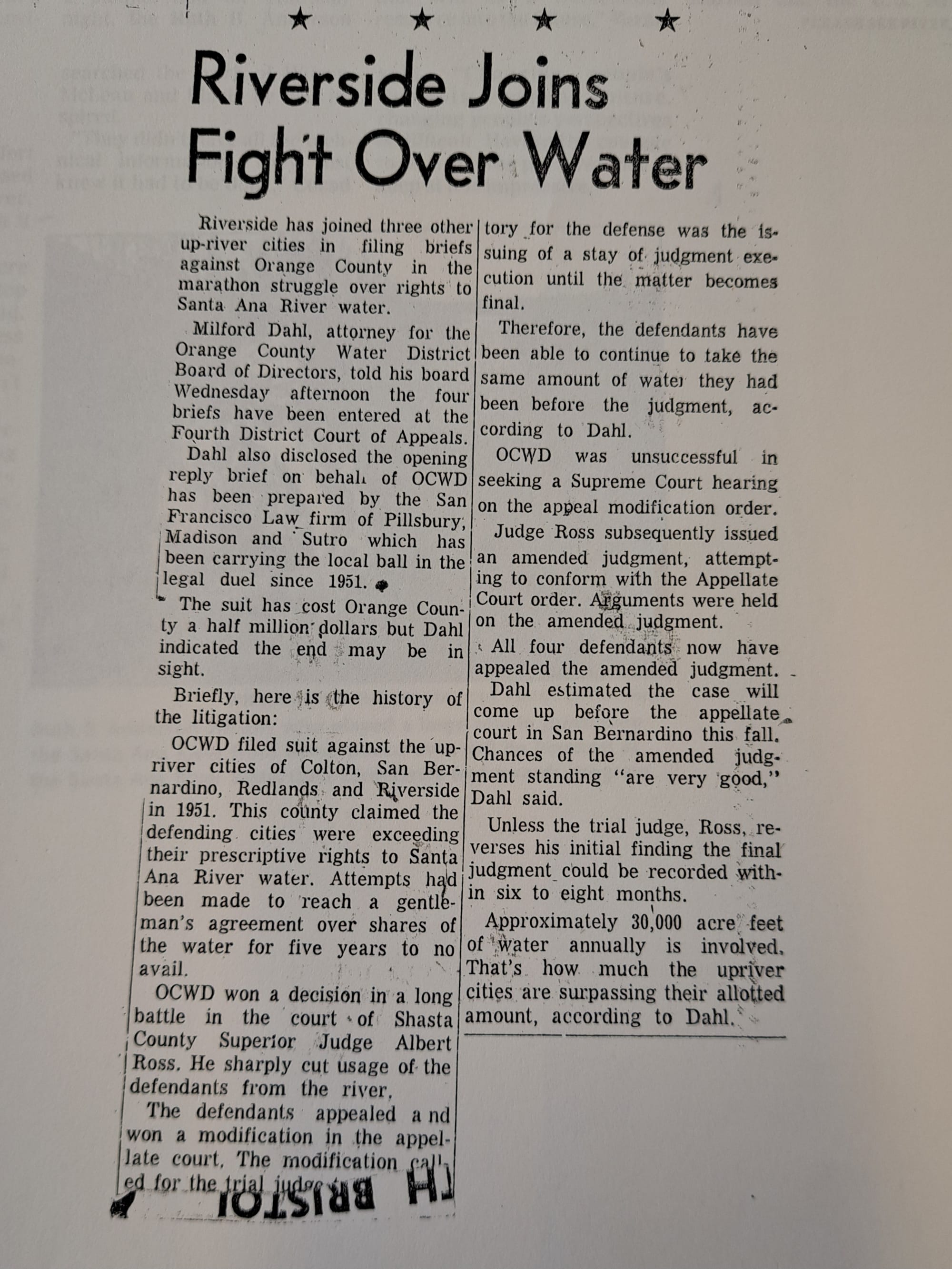
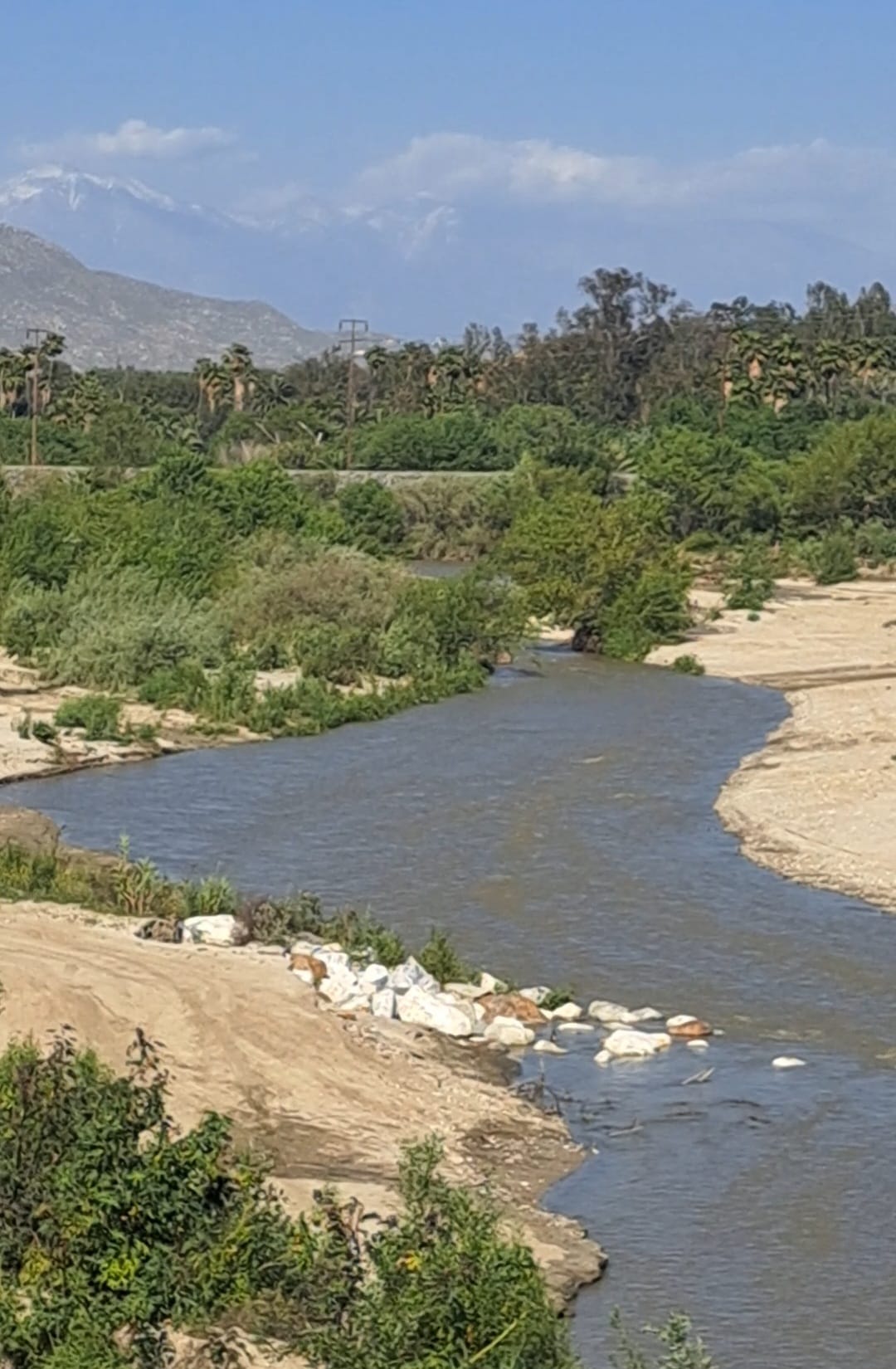
The topic of water and who can control its access continues today and has disconnected generations to our own stretch of the Santa Ana. Throughout the decades, the river has fought for its existence despite excessive water diversion, large-scale irrigation projects, dams for flood control, and drought. Even demands for this natural resource from lawsuits between counties cannot revoke the beauty it continues to display. The plant and animal life that resides along the river may not be as bountiful as before when Native people were the only stewards, but they have not abandoned it. Nor should Riversiders. We are fortunate to be able to access it right now if we so choose. During the writing process for this story, a friend and I took a trip to Anza Narrows to visit. What we found was a river quietly making its way West. The sound of birds vocalizing added to the tranquil ambience while willow, cottonwood, wild grape, water cress and tulle among other plant life flanked the water, supporting its defiance to still exist. These plants and many others are still used today in tribal communities for the same reasons our ancestors used them. Change is as inevitable as the river riparian community itself, but we keep our culture and traditional ways alive regardless of urbanization. There are more changes the river has endured:
- Santa Ana was one of the first rivers to be tapped for a hydro-electric power line to Los Angeles 51 miles away.
- In Sacramento, the courts hear more than 6,000 water rights cases every month.
- The river provides drinking water for more than 5 million Californians and passes through a region that is home to 15 million.
- Building the Prado Dam controlled the floods along the Santa Ana River but also marked the beginning of a much larger endeavor. A project of managing nature itself.
- German settlers gave Anaheim its name, meaning "home on the Santa Ana River."
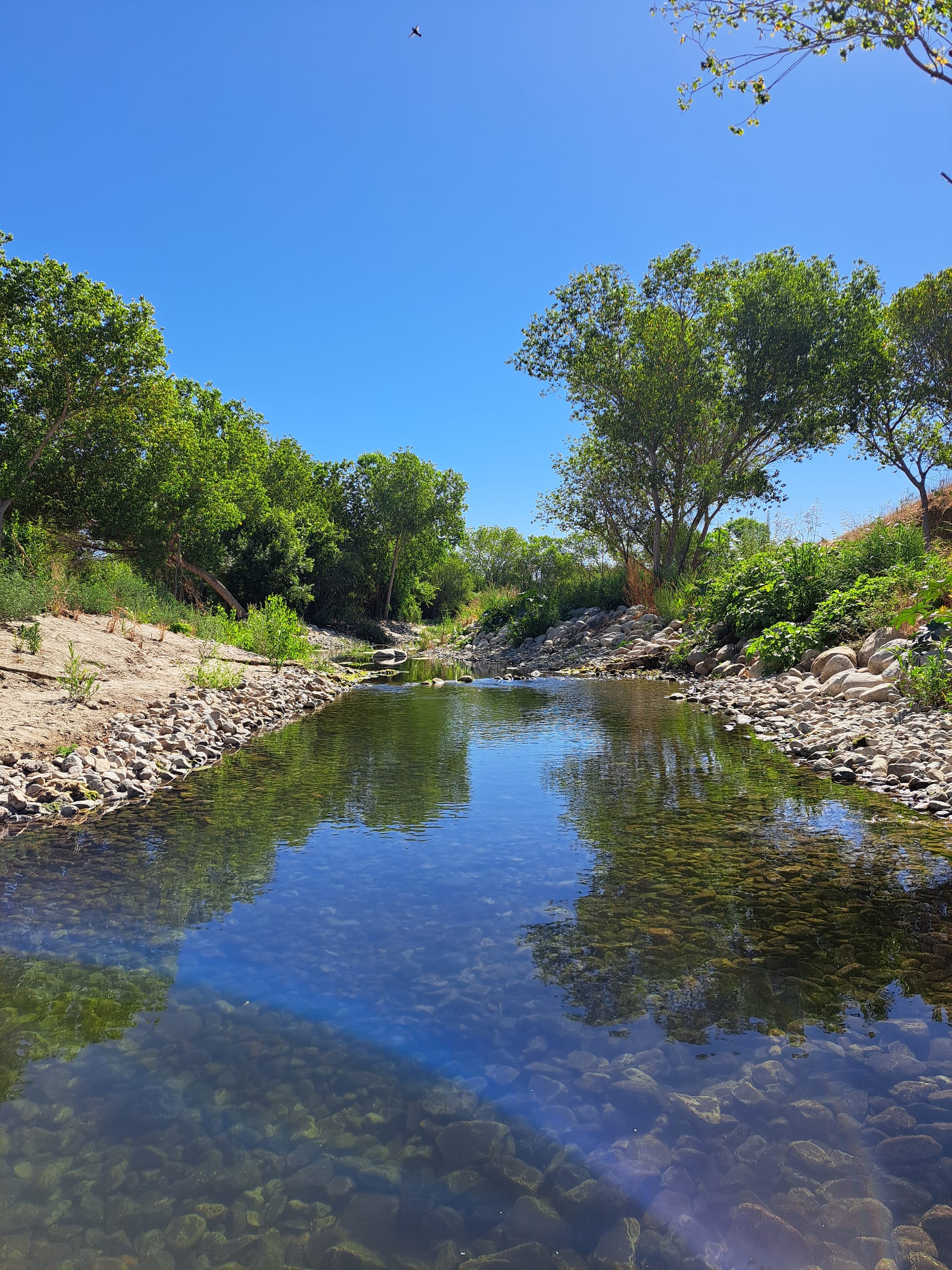
I have heard "put the river back in Riverside." What does that look like to you? Is it private development of land and property, or is it respecting what is already there and tending to its needs? While the river goes unnoticed to many Riversiders, it is not without reason. It is a direct result of those who came before us capitalizing on a great body of water. Some may argue that it had to be done to accommodate growth and maintain sustainable water management. History teaches us about the motivations of the people that came to Southern California seeking land ownership and progress. It is human nature to cherish our history, but somewhere along the way, water inevitably became a public good beginning with the Santa Ana River. Is that the route we want to continue? The struggles of Native people during the Spanish Missions, Mexican ranches and American settlement makes me grateful to my mother and my grandmother for having raised me to know and understand the river and all the life that thrives alongside it. We cannot undo what has been done, nor is it ideal, but we can consider the kinds of changes we make for the future of Riverside, its residents and most importantly, for the River.
The Unseen River: The Santa Ana River and Infrastructural Silences
Cooper Crane
Decolonization: Indigeneity, Education & Society, vol. 7, November 1, 2018, pp. 40-58
Reconnecting Riverside with its River: Integrating Historical and Urban Ecology for a Healthier Future
San Francisco Estuary Institute, October 2023
Riverside Press, Santa Ana River, January 18, 1967