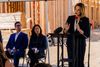
California’s big-city mayors gathered in Riverside last week to press for a lasting state commitment to homelessness programs, faster access to mental health treatment and limits on lawsuit costs they say are squeezing services residents depend on.
Riverside Mayor Patricia Lock Dawson, who chairs the bipartisan California Big City Mayors coalition, called for at least $1 billion annually for the state’s Homeless Housing, Assistance and Prevention program, with sustained funding cities can count on beyond one year.
The coalition represents California’s 13 largest cities and nearly 11 million residents. At an Oct. 30 press conference during its annual summit, mayors outlined priorities for the next governor and the 2027 legislative session, arguing that local progress depends on state resources and stronger coordination with counties.
“We’re doing the work together to solve these issues, but local leadership alone cannot overcome gaps in state policy, insufficient resources, or a system that makes it harder and more expensive to achieve results,” Lock Dawson said.
The state provided approximately $890 million for the program’s seventh funding round after the coalition pushed to restore it, according to the coalition’s press release. The money supports shelters, outreach, interim housing and permanent housing programs.
But mayors said the annual fight to preserve that funding makes it difficult to maintain programs and plan ahead.
“We cannot operate year to year with the uncertainty of funding in the state budget,” Fresno Mayor Jerry Dyer, the coalition’s vice chair, said. “And that’s why we need consistency.”
He said mayors support accountability requirements, provided they are practical, measurable and reflect differences among cities.
When asked how cities balance encampment enforcement with housing needs, Lock Dawson said connecting people with services should come first.
Asked how Riverside would address gaps in very-low-income housing production that limit options for people leaving shelter programs, Lock Dawson pointed to working with developers, using available housing tools and changing zoning policies.
“We can make the road easier for developers,” she said.
The coalition also endorsed Proposition 1, the $10.25 billion state housing bond on the Nov. 2 ballot, which Dyer said would help finance affordable housing.
San Jose Mayor Matt Mahan said housing investments must be accompanied by a treatment system that can serve people with serious behavioral health needs. He called for clearer information about what happens after someone is referred to CARE Court or drug court, including where delays occur and whether treatment is available.
“That means having mental health assessment on demand in person in the Hall of Justice,” Mahan said. “It means having a treatment bed or a sober living environment available.”
Mayors said they want greater transparency about when facilities funded through the 2024 Proposition 1 will open and how cities and counties will track results. Dyer also called for changes to CARE Court and state funding for drug courts.
Asked whether the coalition would seek an audit, Lock Dawson said that remained a possibility, but the specific approach had not been determined.
“I think that we want dashboards, we want to see accountability,” she said.
The mayors also sought changes to California’s civil liability laws, arguing that rising insurance costs, settlements and judgments leave less money for streets, libraries, public safety and housing.
An August 2026 analysis by Pepperdine University’s School of Public Policy and Beacon Economics found that public-entity liability costs tripled over seven years, according to the coalition’s press release.
The coalition’s proposals include limits on noneconomic damages, tying cities’ liability to their share of responsibility and greater transparency and limits on attorneys’ contingency fees, according to the press release.
San Diego Mayor Todd Gloria said the group was still developing its approach and wanted to negotiate legislation that balances compensation for injured people with cities’ ability to provide services.
“Cities must be accountable when we cause harm and injured people deserve fair compensation and true access to justice,” Gloria said.
Lock Dawson said the coalition would decide in the coming weeks whether to sponsor legislation, seek policy changes through the governor or pursue other strategies.