

On the roasting floor of Arcade Coffee Roasters' production facility, Monday and Tuesday are the most important days of the week. That's when head roaster Westin Mills and lead roaster Gabe Beltran work through a schedule of single-origin coffees, blends, and wholesale orders — roasting, bagging, and getting everything on shelves by Wednesday.
Everything on those shelves was roasted the day before you buy it.
"You are the last line of defense to make sure this coffee is good," co-founder Stevie Hasemeyer tells his team. "This coffee started at a farm in Colombia. That guy worked hard to make sure the soil was good, that there was enough water. Then it got processed, dried, shipped here. There's so much work that went into getting it to that point — don't mess it up."
That sense of accountability — to the coffee, to the farmer, and to the customer — is what has made Arcade Coffee Roasters the benchmark for specialty coffee in Riverside and across the Inland Empire. Co-founders Stevie Hasemeyer and Shane Levario started roasting out of a small home roaster in the early 2010s. Today, Arcade operates three Riverside locations: Downtown, the Tasting Room in the University neighborhood, and the Bakehouse in Canyon Crest. The obsession that built those locations hasn't changed.
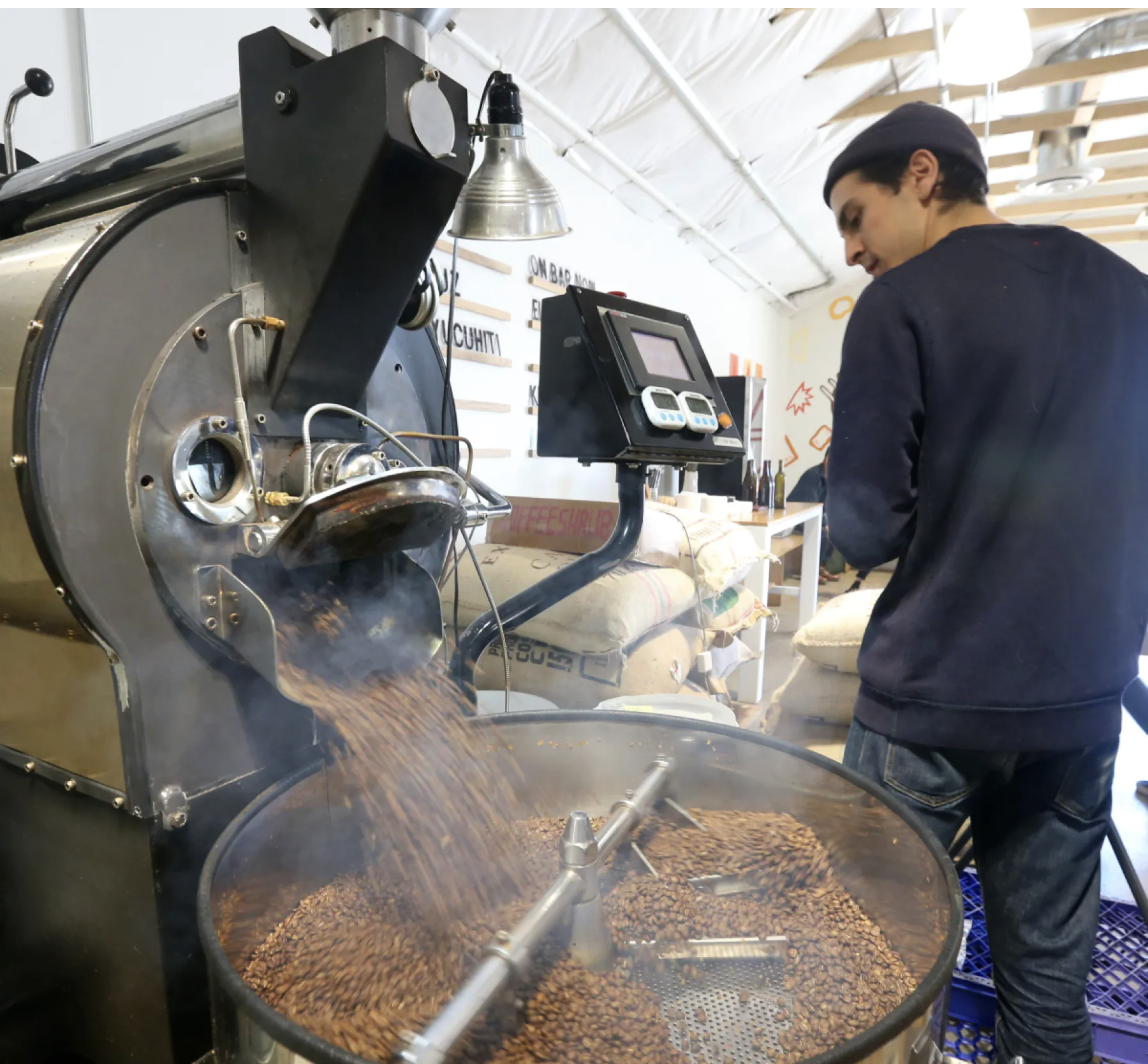
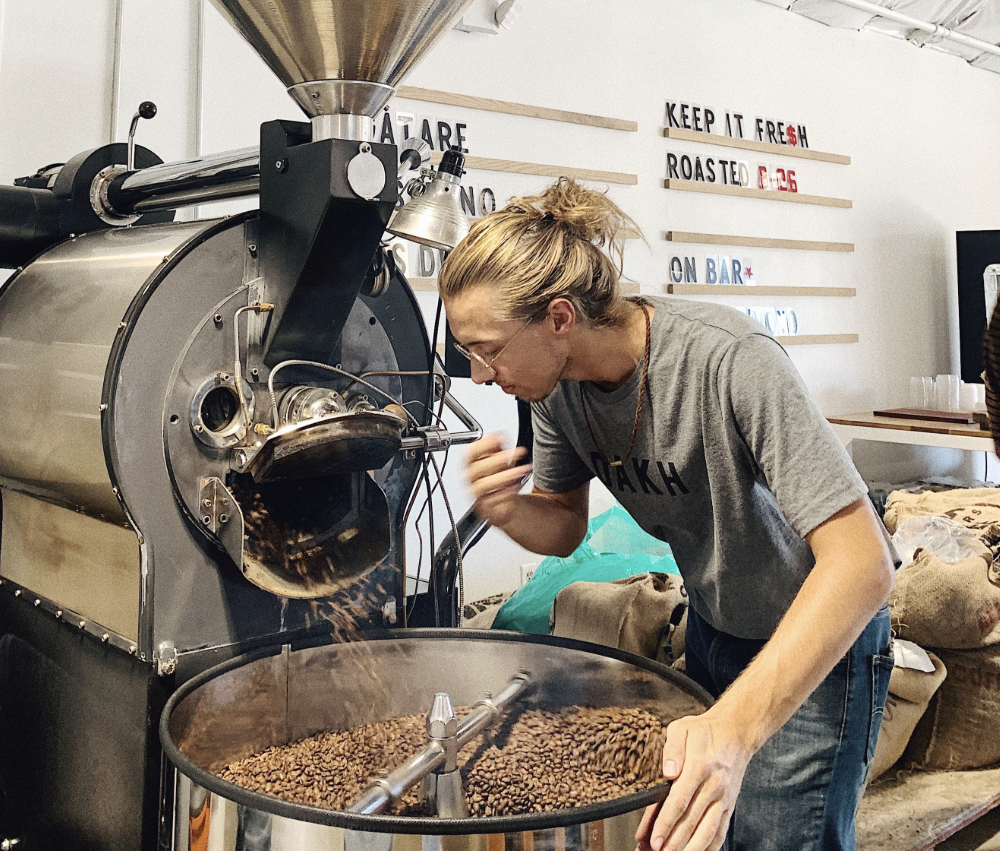
Arcade roasts on Mondays and Tuesdays so everything on shelves by Wednesday was roasted the day before. (Courtesy of Arcade Coffee Roasters)
From a Fishing Trip and a Tibetan Plateau
Stevie traces his first real memory of coffee to a fishing trip at Lake Perris with his dad. Black coffee out of a thermos on the boat, just the two of them. He spent his college years as a self-described Starbucks fanatic before a stint living in China changed everything.
"I found this really awesome coffee shop, and we went up on the Tibetan Plateau and the owner was teaching someone how to roast coffee," Stevie said. "We were eating fresh coffee beans out of the roaster. That's where the whole vision for Arcade came from — he'd get there crazy early in the morning to roast coffee, and the shop would just fill with the smell of it."
That shop had blind baristas who had developed exceptional palates precisely because they couldn't rely on sight, and an ethos of building something meaningful somewhere unexpected. Stevie came home motivated to do the same thing in Riverside.
Shane's path started earlier — childhood mornings drinking coffee heavily laced with hazelnut Coffee-mate with his mom — and eventually ran through the Los Angeles Arts District, where a specialty roaster called Handsome Coffee had opened around 2010 with a vintage 1950s Probat roaster.
"I remember driving all the way out to LA all the time just to get coffee," Shane said. "It got me excited to go find other places like that."
The two were already connected — meeting regularly at Starbucks — when Stevie proposed teaching Shane to roast. The catch: he'd have to fix a broken home roaster called the HotTop first. Shane took it home, and he and his dad repaired the motherboard.
"My dad was like, 'please don't burn down the house,'" Shane recalled.
Their first batch on the repaired machine was, by their own admission, badly burned. But they kept going, eventually doing their first cupping together, and Stevie informally announced on Instagram that Shane was their new coffee roaster. "I was like, wait — what?" Shane said. "I guess I'm a coffee roaster."
The Science Behind a Better Cup
The question of what separates Arcade's specialty coffee from a chain — or even from a café buying quality pre-roasted beans — comes down to Shane's palate and what a decade-plus of deliberate training has made possible.
Shane is a certified Q grader, the international standard for objectively scoring coffee on a 100-point scale. Specialty coffee starts at 80; Arcade typically looks for coffees scoring 85 and above. The certification process is rigorous — tasters work in red-lit rooms so they can't see the color of what they're drinking, and they're asked to identify specific acid compounds present in each cup.
"Coffee contains acids like citric, malic, and phosphoric that contribute to flavors we associate with citrus and fruit," Shane explained. "Citric acid is the same acid found in citrus — when you taste an orange and think 'citrus,' you're literally tasting the same thing. Malic acid is found in apples. When you say a coffee tastes like fruit, you're not imagining it. You're tasting those exact compounds."
The certification requires not just identifying those acids, but distinguishing between coffees that have been spiked with different concentrations of each — a taste-based blind test that demands both technical knowledge and what Shane calls palate calibration.
"Technical knowledge is a little bit easier to learn than the palate," he said. "Understanding what a coffee tastes like and then knowing what to do about it — that's the hard part."
That sensory precision gets applied every Tuesday, when the Arcade team gathers for quality control cuppings. Every coffee roasted the previous day gets brewed the same way: ground coffee in an open cup, hot water poured directly over it, a four-minute steep, the crust broken and skimmed, then tasted blind.
"We flip the coins at the end so everyone knows which coffee is which," Shane said. "Then we talk about it. If something's tasting underdeveloped, we look at the roast profile and make adjustments — maybe develop it a couple extra degrees, or address something in the middle of the roast."
Baristas from the tasting room rotate through the Tuesday cuppings alongside the roasters. It's intentional — Stevie wants everyone serving coffee to understand what's in the cup.
Sourcing: Relationships Over Transactions
Arcade's coffee menu operates on a consistent structure: an espresso blend (the 3672), a filter-forward blend (the Third Street), a decaf, and four rotating single origins — two from the Americas, two from Africa or Asia — that cycle in and out every couple of months to keep things fresh and seasonally accurate.
In the early days, Stevie recalls buying from whoever had good coffee, including an importer who'd show up in an Astro van with contacts in Ethiopia.
"He had amazing coffee," Stevie said. "But he was terrible to work with."
Now, Arcade's sourcing is built around long-term relationships with importers who are calibrated to exactly what they're looking for. Shane has worked with one importer, Joel from Red Fox, for about a decade — without ever meeting in person.
"He knows what we like," Shane said. "He'll say, 'you guys will like this coffee.' And he's right, like 90 percent of the time."
Current single-origin offerings include an El Salvador called Los Pirineos — described by Shane as "the perfect coffee," sweet and well-rounded — and the Misty Valley, from Ethiopia, which head roaster Westin lists as his personal favorite. The lineup also features Kenyan coffees, which Shane has championed since the early days, to Stevie's perpetual skepticism.
"Two weeks ago I had drip at the tasting room and I was like, 'guys, what is this?'" Stevie said. "And Shane goes and tries it and says, 'No, it's good — it's just a Kenya.' That's just been a thing since the beginning. Shane's always been into Kenyas."
On the experimental end, Arcade has featured co-fermented coffees inoculated with cultures from fruit — including one that genuinely tastes like watermelon tea. And looking further ahead, Arcade is actively pursuing a direct-trade relationship with a coffee farmer in Indonesia, working to have samples scored and, if quality holds, to build a year-over-year buying relationship.
"That's been a dream forever," Stevie said. "If that farmer is currently getting three grand a year from his crop and we can help him get five, and he can reinvest in his farm — that means something."
Training Everyone to Not Mess It Up
Arcade's commitment to quality in sourcing and roasting would mean nothing if it fell apart at the espresso machine — so the brand has invested heavily in training to make sure it doesn't.
"We tell our team: you are the last line of defense," Stevie said. "Everything from the farmer who managed the soil, to the person who processed and dried the beans, to the importer who got it here, to us roasting it — all of that work is in your hands. Nine months of effort could be undone in the final 30 seconds."
Baristas at Arcade complete a tiered certification track before they're cleared to work independently — starting with general barista skills, then espresso, then milk. The process is overseen by Valeria Salgado, a dedicated training coordinator whose sole job is to run classes and conduct one-on-one sessions with new team members.
That philosophy — passing knowledge forward — is now embedded across the whole organization. Roasters like Westin and Gabe are expected to develop the people below them, not just master the craft themselves.
"If you want to move up, you have to train the person underneath you," Stevie said. "That's always been the expectation."
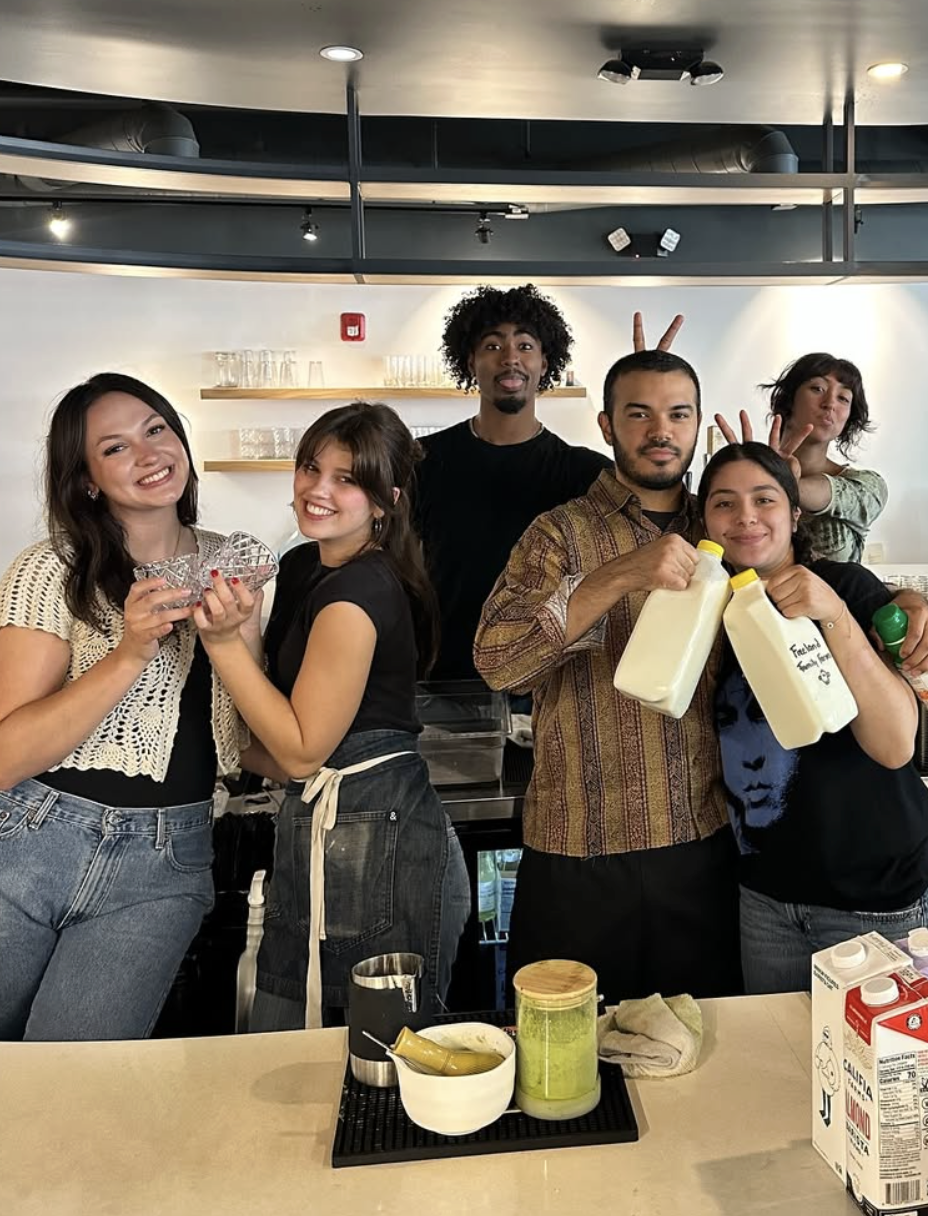
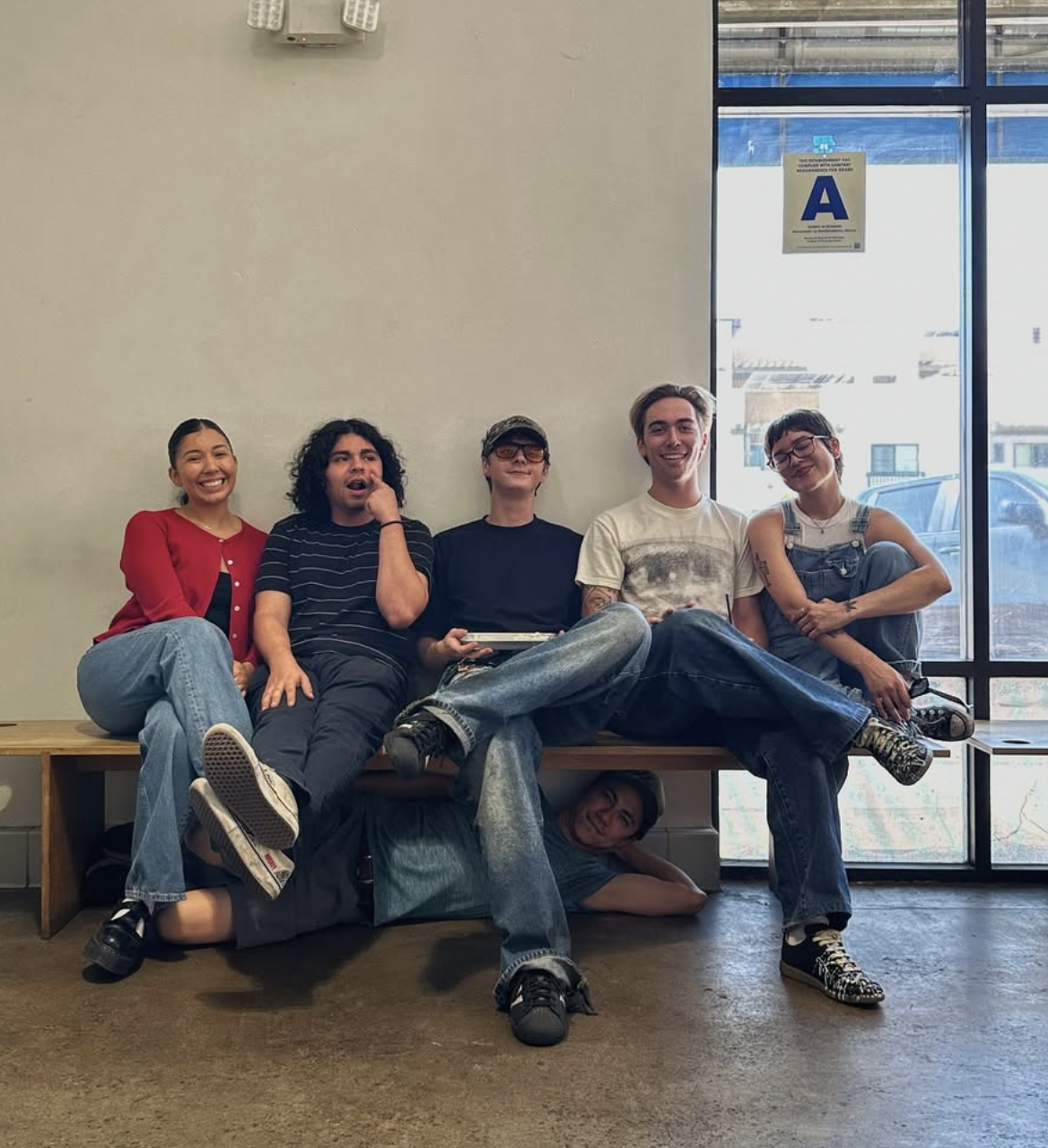
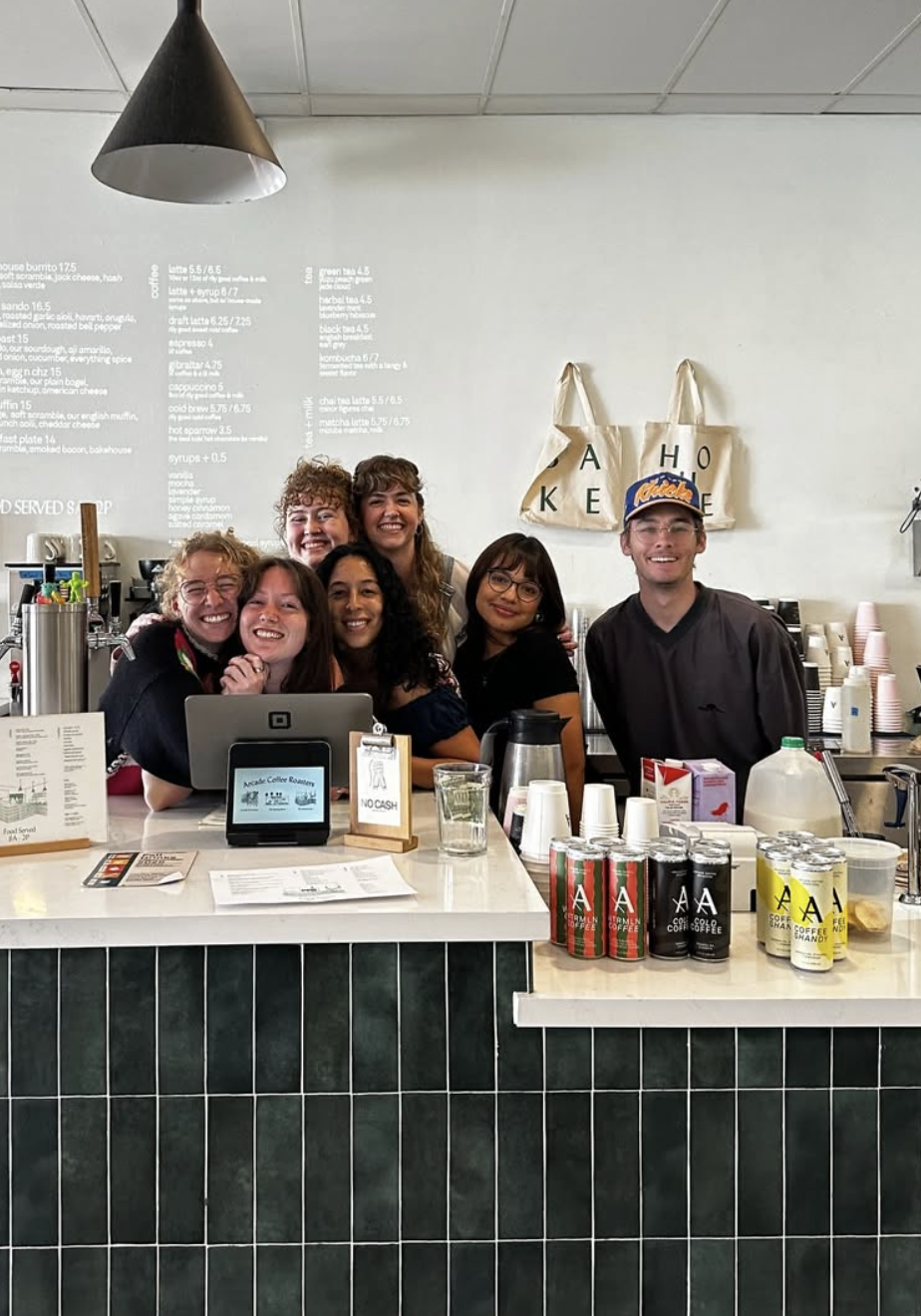
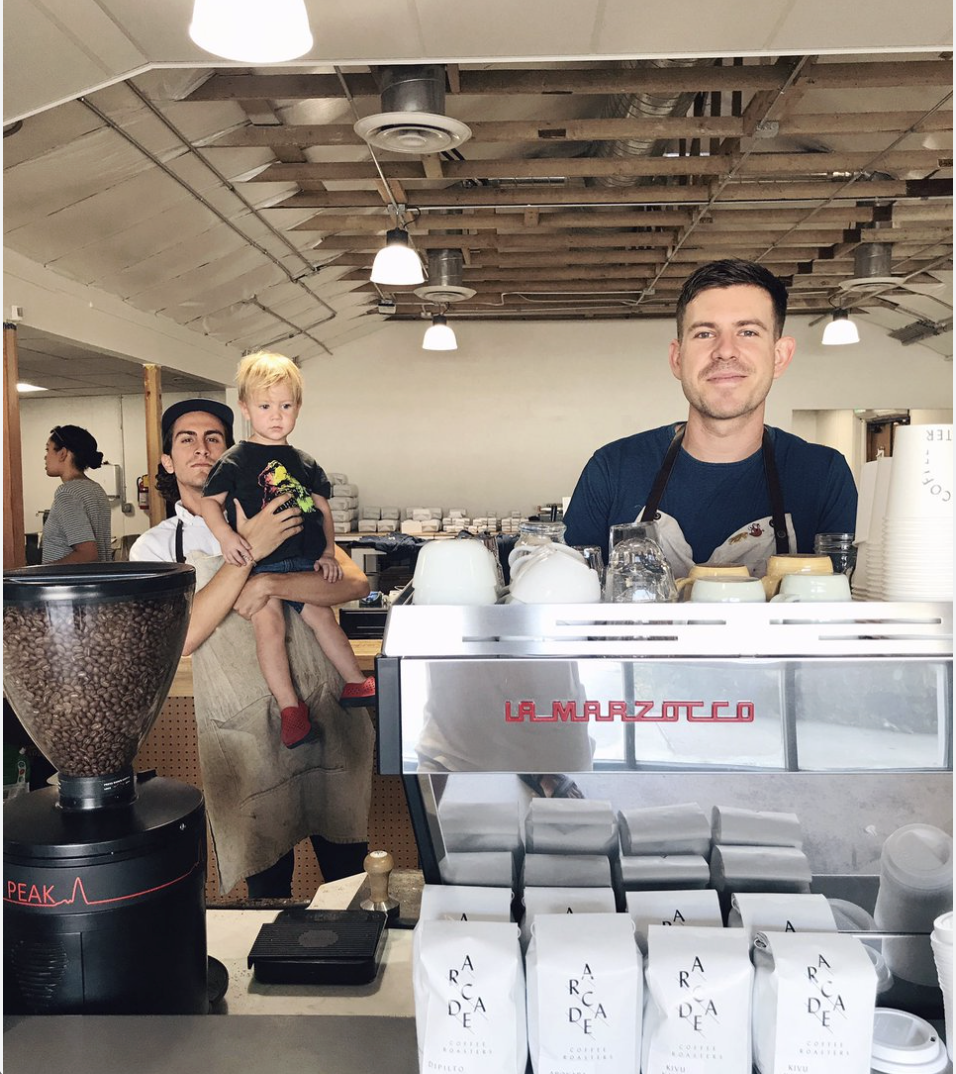
The Arcade team across its three Riverside locations — Downtown, the University neighborhood Tasting Room, and the Canyon Crest Bakehouse. (Courtesy of Arcade Coffee Roasters)
Why Riverside — and the Inland Empire — Should Care
When Stevie was going to college in Riverside, the city's specialty coffee options were nearly nonexistent. The vision Arcade carried from the start was that Riverside deserved what places like Portland and Seattle had: a genuine coffee culture, built by people who cared about the craft.
Thirteen years in, they've helped make that happen. The Riverside coffee scene has grown dramatically, and Arcade has been a consistent anchor of quality throughout — a place that set the standard for what specialty coffee in Riverside looks and tastes like, and one that coffee lovers from across the Inland Empire make the trip for.
"We've always wanted to help be the start of good food and good things happening out here," Stevie said. "And it's happening."
Stevie and Shane still roast here, still source with this community in mind, and still hold their team to the same standard every week. The 13 years of work behind every cup is why, when someone asks where to find the best coffee in Riverside, the answer keeps coming back to Arcade.
Arcade Coffee Roasters has locations in Downtown Riverside, the University neighborhood Tasting Room, and the Canyon Crest Bakehouse. For current coffee offerings, locations, and hours, visit arcadecoffeeroasters.com.
☕ Level Up Your Coffee
We asked Arcade's team — the people who source, roast, and serve the coffee every day — three questions: What drink best showcases what Arcade is about? What's your personal favorite right now? And how would you tell someone to start tasting coffee differently?
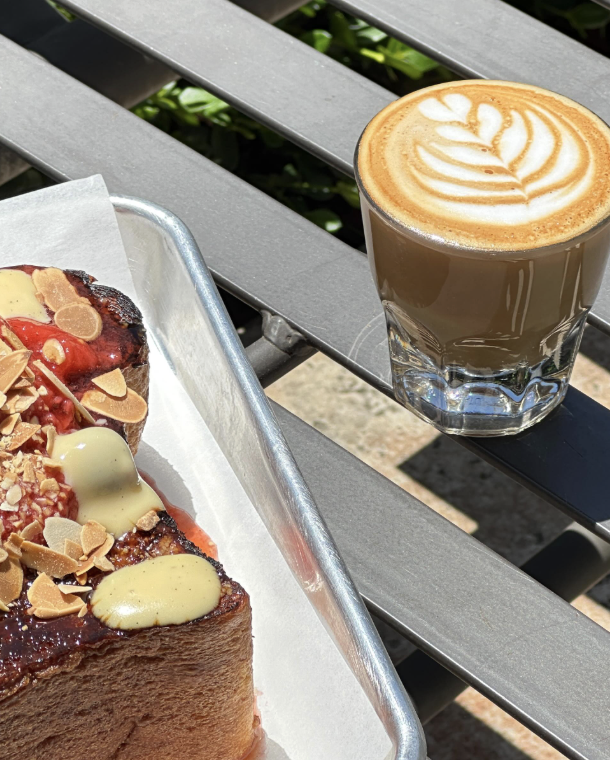
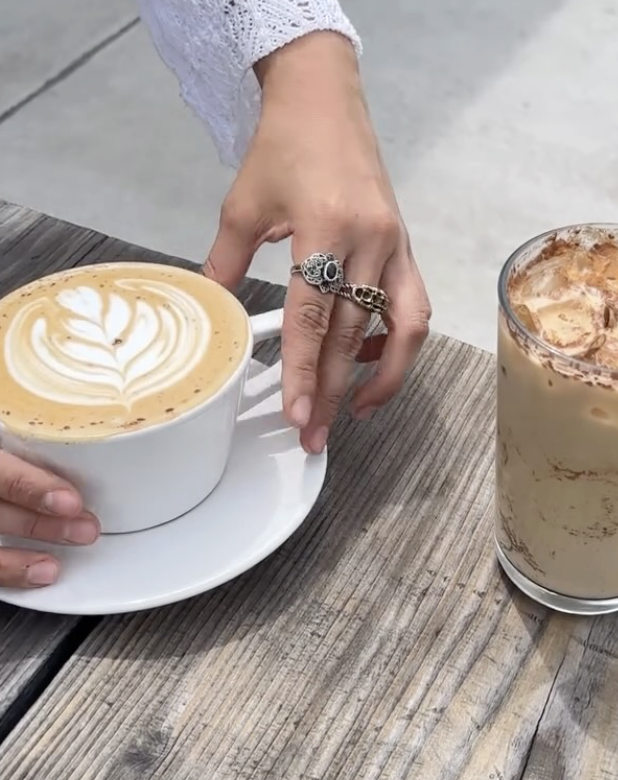
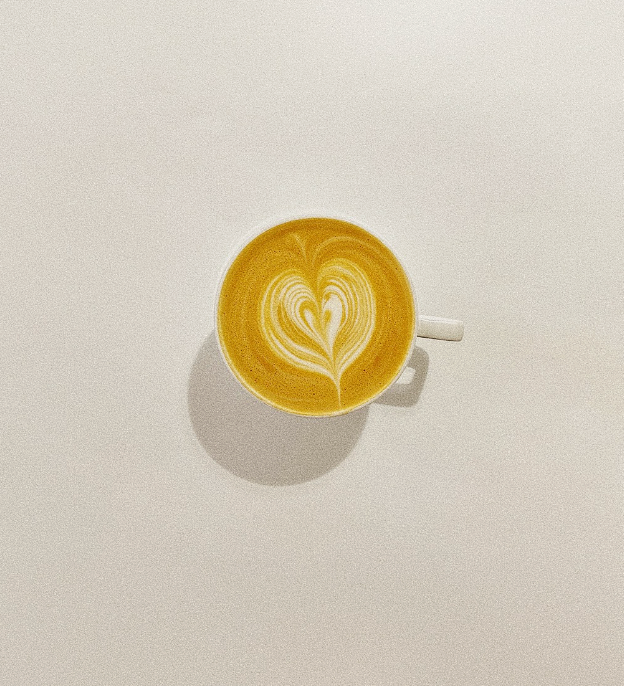
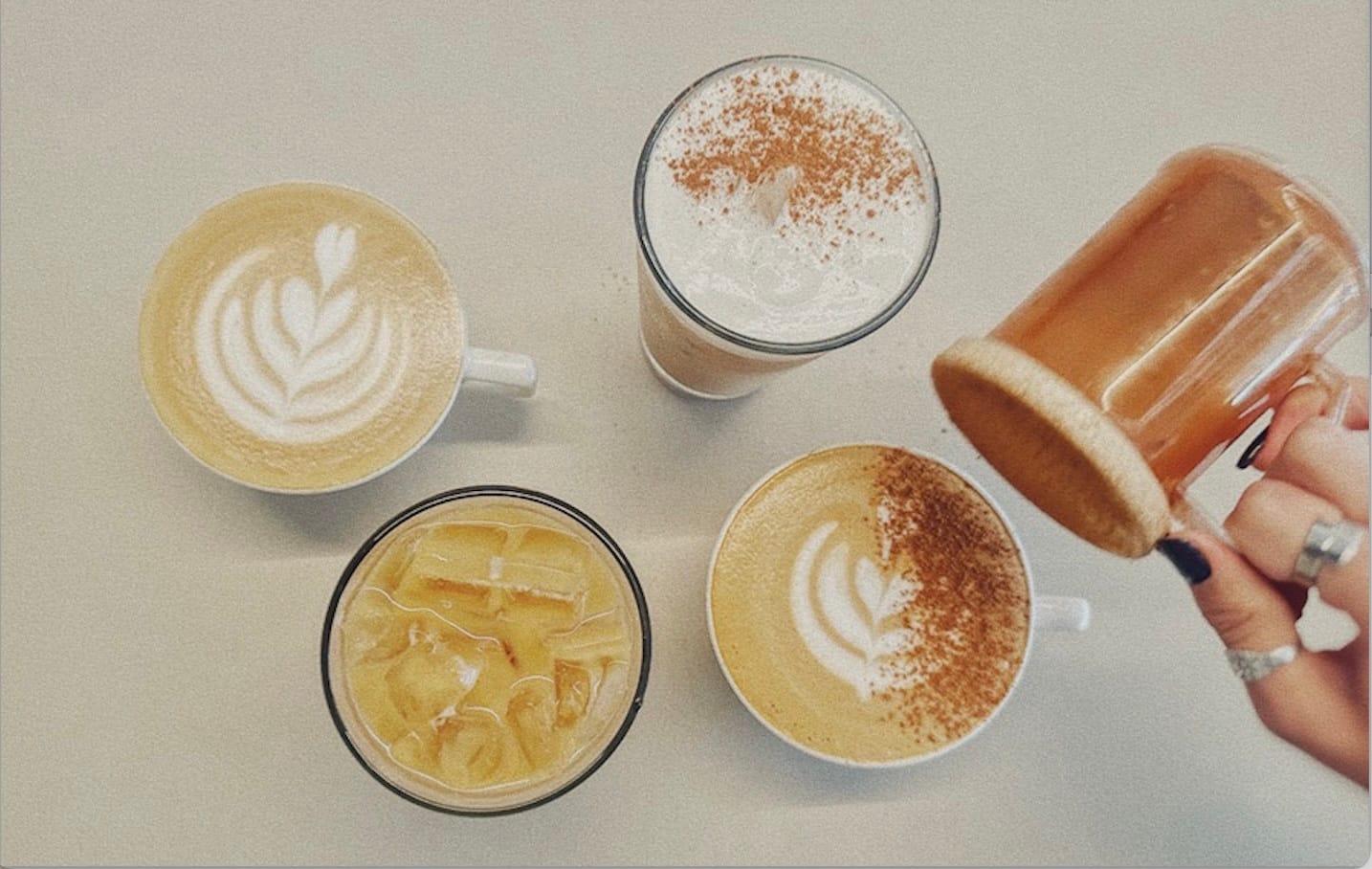
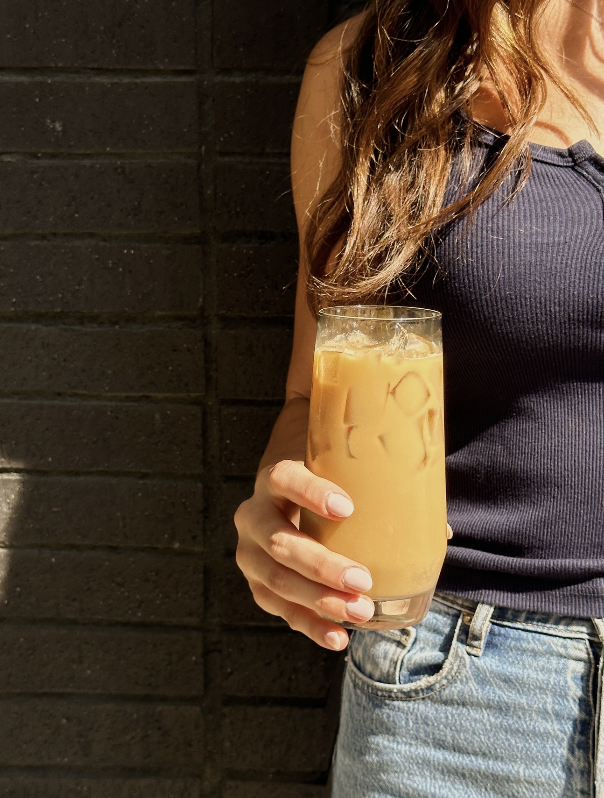
From Gibraltar to draft latte, Arcade's menu has something for every kind of coffee drinker. (Courtesy of Arcade Coffee Roasters)
Shane Levario, Co-Founder
Drink that showcases Arcade: Espresso. It's highly technical and reveals mistakes quickly. If straight espresso is too much, try it with a little milk as a Gibraltar — always served in a glass when you're drinking it here.
Current favorite: Los Pirineos — El Salvador. It's the perfect coffee. Sweet, well-rounded, something you could have every day.
Tip for tasting differently: Try coffees next to each other. Cupping or brewing two or three coffees side by side is one of the best ways to develop your palate.
Stevie Hasemeyer, Co-Founder
Drink that showcases Arcade: The draft latte — cold brew, agave, and milk on nitro, served on tap. It's always delicious, it's quick, and it hits 200 mg of caffeine. It's the first thing I recommend to someone visiting for the first time.
Current favorite: A Gibraltar — equal parts espresso and milk. The 3672 Blend on drip is also really good right now.
Tip for tasting differently: Drink it black. We've converted a lot of people that way. You start to taste the nuances and appreciate all the work that went into the cup. And honestly, black coffee is really good — and healthy for you.
Westin Mills, Head Roaster
Drink that showcases Arcade: A cappuccino. Arcade is about creating shared moments, and the cappuccino facilitates exactly that — the perfect combination of milk and espresso, something you can dress up or down, that offers a sense of belonging for everyone.
Current favorite: Misty Valley from Ethiopia. My preference is always a cup of filtered coffee.
Tip for tasting differently: Taste different coffees side by side, blindly — without looking at the tasting notes first. It forces you to notice differences on your own. Then discuss what you tasted with someone else. Do both of those things a lot.
Gabe Beltran, Lead Roaster
Drink that showcases Arcade: The latte. Whether you like complex specialty coffees or house-made syrups, there's something for everyone — and that's what Arcade is about. Everyone is welcomed into this space.
Current favorite: A "one and one" — espresso and a Gibraltar side by side. The best of both worlds if you want to taste the coffee straight and also satisfy the milk craving.
Tip for tasting differently: Try coffees with an open mind. Every bean is different — some funky, some rich, some fruity. The beauty of coffee is finding appreciation for the many different flavor profiles out there and sharing that with others.


