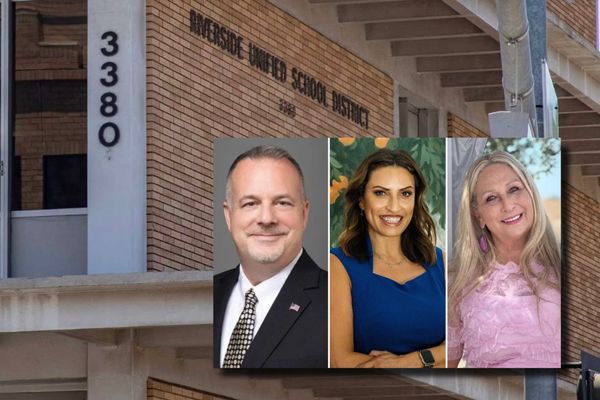

How should Riverside Unified earn taxpayers’ trust before asking them to fund more school construction? And how should families and teachers help shape the district’s decisions?
In the second installment of the Gazette’s Trustee Area 1 election questionnaire, candidates were asked about Measure O bond oversight, future facilities spending, public participation at board meetings and instructional coaching for teachers.
Jinane Annous and Duffy Atkinson, who are challenging incumbent Noemi Hernandez Alexander, responded. Hernandez Alexander did not submit her answers by press deadline.
Readers can find the candidates’ responses on district finances in the first installment of this series.
The questions and each responding candidate’s full answers appear verbatim below.
1. Bond accountability
A state audit found RUSD used Measure O funds appropriately but fell short on transparency. What should the board have done differently, and what specific oversight changes would you support?
Jinane Annous: "I believe the board should have done a better job keeping the community informed about how Measure O money was being spent. Taxpayers trusted the district with their money, and they deserve to know where every dollar goes.
Even though the audit found the money was used appropriately, transparency was still a problem. I would support regular public updates on spending, project costs, and timelines. I also believe the board should ask more questions and make sure there is proper oversight before approving major decisions.
To me, accountability means being open with the community, keeping promises, and making sure our students benefit from the money being spent."
Duffy Atkinson: "The Auditor identified serious transparency failures. Legal compliance does not automatically make every spending decision appropriate. Marketing materials emphasized repairing and upgrading all schools without clearly emphasizing plans to acquire land and construct new schools.
The combined construction cost of Casa Blanca and Eastside is approximately $210 million—and counting. Although other funding sources contributed, this raises legitimate questions about how these schools were chosen as priorities with no public discussion prior to bond passage. Meanwhile, aging existing schools still face pressing facility needs.
Having attended multiple Citizens’ Bond Oversight Committee meetings, clearly meaningful reform must include real independent oversight. The CBOC cannot fulfill its intended purpose if district staff/attorneys control the process, steer discussions, or influence which information receives attention. The board should ensure the committee independently sets its agenda, conducts its deliberations, and communicates its findings to the public, with district staff serving in support—not directing the proceedings."
2. Future facilities bond
Would you support another facilities bond? What transparency or accountability improvements, if any, would you require first?
Jinane Annous: "I wouldn’t automatically support or oppose another facilities bond without first understanding what our schools really need and how the money would be used.
Before asking taxpayers for more money, I believe the district needs to show that it has learned from the Measure O audit. That means being honest about project costs, having a clear spending plan, and keeping the public informed from beginning to end.
I would want independent oversight, regular financial reports, and a clear list of projects so families know exactly what they are being asked to support.
We need to earn the community’s trust before asking them to make another financial commitment."
Duffy Atkinson: "Not at this time. I wouldn’t seek another facilities bond without fundamental improvements in accountability. I don’t believe voters would support it anyway.
Ballot language must include a specific project list and estimates for each project. Funds allocated to each project must remain dedicated to that project, with substantive changes or reallocations requiring Bond Oversight Committee approval. I would also require full public disclosure of ongoing project costs and funding sources.
The Project Workforce Agreement associated with Measure O will terminate with the completion of all O-funded projects. I will vote against entering into any future PWA/Labor Agreement(s). It has done nothing but raise project costs.
The district must earn public trust through these guarantees and abiding by commitments before asking taxpayers to take on debt. Any future bond proposal should be built around clearly defined facility needs, transparent costs, open communication, and a commitment to deliver what voters approved."
3. Facilities priorities
With the STEM Academy expansion shelved, how would you prioritize repairs at existing schools versus new construction?
Jinane Annous: "My first priority would be taking care of the schools we already have. Our students and teachers deserve safe, clean classrooms, working air conditioning, updated bathrooms, and buildings that are properly maintained.
I support STEM education and giving students more opportunities, but I also believe we need to look at what is needed most across the district before spending money on new construction.
I would want a clear assessment of every school’s needs and prioritize projects based on safety, urgency, and how many students are affected.
New buildings can be exciting, but we should not overlook the schools where our children are learning every day."
Duffy Atkinson: "Students and staff deserve a safe, functional learning environment. Capital spending should be driven by documented needs and student priorities, not an indiscriminate approach influenced by political considerations or special interests.
Let’s start with a comprehensive review of an updated Deferred Maintenance Project List and Long-Range Facilities Plan. We need a campus-by-campus assessment of deficiencies, safety concerns, repair costs, and urgency. Needs overlooked, under-funded, or left completely unfunded under the original Measure O plan should receive priority. That means addressing deteriorating campuses and essential facility repairs, specifically replacing all remaining portables with permanent classrooms.
Project evaluation should use objective criteria: student/staff safety, deficiency severity, instructional impact, and cost. Staff should present a prioritized list, realistic cost projections, relevant funding sources, and an implementation schedule.
Also, declining enrollment impacts and the tapering off of the COVID-era grant pipeline almost guarantee that we are looking at K-6 school consolidations, probably next year."
4. Public participation
Should public comment come before or after staff presentations? How would you let residents respond to new information before a vote?
Jinane Annous: "I believe public comment should come after staff presentations so parents and community members have a chance to hear the information before sharing their concerns.
It is difficult for people to give meaningful feedback when they haven’t heard all the facts. If new information comes up during a meeting, residents should have an opportunity to respond before the board votes.
For major decisions, I would also support giving the public more time to review the information instead of rushing into a vote.
Parents, teachers, and taxpayers deserve to feel heard. Public meetings should be about listening to the community, not just checking a box before making a decision."
Duffy Atkinson: "The board and staff should welcome informed public scrutiny and structure its meetings so residents can respond meaningfully to the information presented before decisions are made. When significant new information emerges during a presentation, residents should have a reasonable opportunity to weigh in before the board votes.
Therefore, public comment should immediately follow district staff presentations and board questions. Residents deserve to hear the complete presentation, supporting information, and staff explanations before being expected to comment on a proposal.
That’s how it used to be. The current acting board president changed that order. Following negative public outcry, two responsive board members recently made a motion to restore the previous order, but it failed 3–2. That’s deliberately “voting to avoid criticism”.
I will work to restore public comment after staff presentations. Meaningful participation requires more than allowing people to speak; it requires giving them the information necessary to participate effectively."
5. Teaching practices
Would you require teachers to participate in RUSD’s instructional coaching? Would you support continued district funding after the program ends in 2028?
Jinane Annous: "I believe teachers should have access to instructional coaching because it can help them grow and improve student learning. However, I would want to hear directly from teachers before making coaching mandatory.
Our teachers are in the classroom every day, and their experience and feedback matter. Coaching should be supportive, not something that adds unnecessary stress or takes away valuable teaching time.
As far as continuing funding after 2028, I would want to see the results first. Is the program helping teachers? Are students improving? Is the money being used effectively?
If the program is making a real difference, I would consider supporting continued funding. But we need to make decisions based on results, teacher feedback, and what our district can afford."
Duffy Atkinson: "I believe every employee can benefit from effective, targeted coaching. Teachers should have available a continual program of continuous improvement: direct instructional method support, curriculum implementation, differentiation assistance, and collaboration with department/grade-level teams to leverage best practices.
I favor a work culture where coaching is a positive, rewarding Professional Development experience, not a compliance requirement. The goal should be to support teachers to become more effective, to better engage students, and improve academic outcomes, particularly for our most at-risk students: English-Learners, Foster Youth, Low-Income, and Students with Disabilities.
Regarding funding beyond 2028, I would first evaluate the grant’s effectiveness, costs, and demonstrated impact on student achievement. The expiration of the Learning Recovery Emergency Block Grant shouldn’t necessarily imply the elimination of programs. If evidence demonstrates meaningful benefits, I will consider ongoing funding consistent with the district’s financial capacity, while ensuring that coaching resources do not displace other higher-priority student needs."
This is the second installment in the Gazette’s questionnaire series for RUSD Trustee Area 1 candidates. Read the first installment on budget priorities, revenue and possible school consolidations.
Editor’s note: An earlier version of this story included an introductory statement from one candidate that was not in response to a question. It has been removed so that all candidates’ responses are presented in the same format.