Wednesday Gazette: June 4, 2026
Hello Riverside, and Happy Thursday! Measure Z was rejected by voters on Tuesday. As of June 3 at 6:15 p.m., 18.54% of the vote was counted and 58.43% voted no on the sales tax increase. However you voted, we want to hear from you. How are you feeling about the result? Reply to this email and let us know.
See you tomorrow!
Advertisement (Become an advertiser)

2026 ELECTION
Day 2 Riverside Election Results June 2026 Primary: Wards 2, 4, 6 and Measure Z
One day into election ballot counting, results remain largely the same — with Measure Z projected to fail and Torres, Conder and Hernandez leading their respective council races.
Early returns show Measure Z failing decisively, while all three council races appear headed to November runoffs.
Driving the news: With about 19% of votes counted as of Wednesday evening, Measure Z trails 58–42%. No council candidate in any of the three wards has cleared the 50% threshold needed to win outright.
By the numbers:
- Ward 2 — Gracie Torres leads at 37%, followed by Aram Ayra at 33% and Mike Vahl at 26% with 23% of votes counted
- Ward 4 — Incumbent Chuck Conder leads at 48%, just shy of outright victory, over Rich Vandenberg (29%) and Jessica Qattawi (23%), with 24% counted
- Ward 6 — Luis Hernandez leads at 48% over Oz Puerta (27%) and Norma Berrellez (25%), with 13% counted
What's next: The county counts ballots — including vote-by-mail and provisional ballots — through June 9. Any race without a majority winner sends its top two finishers to a Nov. 3 runoff.
Read and share the complete story...
2026 ELECTION
Measure Z Appears Headed for Defeat as Voters Reject Sales Tax Increase
Early returns show nearly 60% of voters opposing the city's proposed sales tax increase, which would have raised the rate from 1% to 1.25% and removed its 2036 expiration date.
Early results show Riverside voters rejecting the proposed sales tax increase by a nearly 20-point margin.
Why it matters: If the result holds, the city faces a budget reckoning — fire staffing needs that prompted the measure remain unmet, and officials will have to find cuts elsewhere to compensate.
Driving the news: With 17.6% of ballots counted as of early Wednesday, 58.5% of voters opposed Measure Z and 41.5% supported it. The measure needed a simple majority to pass.
The backstory: Measure Z would have raised Riverside's existing sales tax from 1% to 1.25% and eliminated its 2036 sunset clause — pushing annual revenue from $80 million to $106 million. Fire Chief Steve McKinster put the measure in motion in January, warning the department couldn't keep pace with growing call volume without new funding.
Yes, but: Critics argued the general-tax structure meant revenue wasn't legally restricted to fire services — and pointed to years of Measure Z funds flowing to pension bonds and employee raises instead. A judge ordered ballot language changes in April after a resident sued over the wording.
What's next: Fire Chief McKinster was scheduled to present fire staffing options to the Safety, Wellness and Youth Committee on May 20; that presentation was postponed due to the Bain fire and has yet to be rescheduled. Expect that conversation to move quickly now.
Read and share the complete story...
Advertisement (Become an advertiser)

LETTERS TO THE EDITOR
Opinion: A Former Councilmember's Case Against Riverside's VMT Bank
A former councilmember argues the program lets developers pay fees instead of fixing dangerous intersections.
The VMT (Vehicle Miles Traveled) Bank makes traffic dangers worse, harming our residents and drivers.
It is a fraud. VMT is designed to deceive us into thinking that new housing, by paying a nominal fee into a regional program [Note: Buster's letter refers to "a regional program" — the VMT Bank is a City of Riverside program recognized regionally by SCAG], is also reducing local traffic hazards.
VMT's engineering mumbo-jumbo makes it impossible for the average person to understand or contest. Its rating numbers are easily slanted to produce the desired approval. This forces future residents and drivers to deal with the even higher risks and costs of going back to remediate poorly planned projects.
It allowed developers and the City to avoid responsibility to correct already existing severe traffic hazards that the high density housing project on Victoria Avenue at La Sierra will make much worse.
Read and share the complete letter...
Advertisement (Become an advertiser)

HIGHER EDUCATION
La Sierra University Tops Forbes Financial Rankings Among Adventist Schools
The Riverside university earned the top financial grade among Adventist schools on a Forbes list of more than 900 private institutions nationwide.
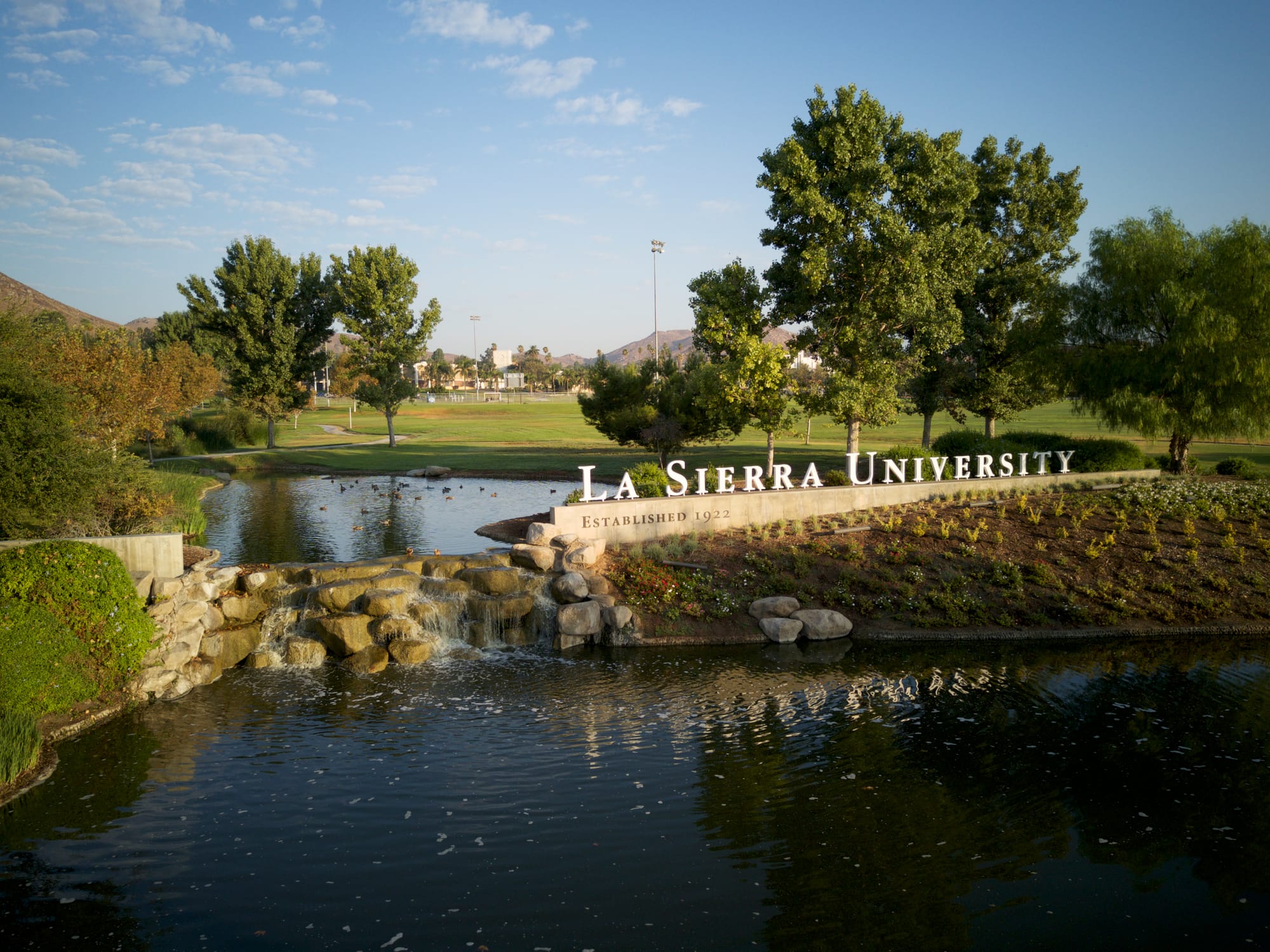
La Sierra University earned the highest financial health grade among Seventh-day Adventist colleges in North America, outscoring dozens of California peers in Forbes' annual rankings.
Why it matters: With nearly half of graded schools nationally scoring C or lower, La Sierra's B+ signals the Riverside university is on solid financial footing — a rare distinction in a sector under significant stress.
By the numbers: Of 53 California schools assessed, La Sierra outranked USC, Biola, University of Redlands, Point Loma Nazarene, and Cal Baptist. Only two other California schools matched its B+ grade.
- Nationally, 27% of graded schools received the lowest grade of D.
What they're saying: President Christon Arthur called the result a milestone while acknowledging sector-wide pressure.
- "La Sierra is not merely surviving. We are deeply rooted and rising," Arthur said.
Read and share the complete story...
What's Happening in Riverside
Today
- Board of Ethics at Riverside City Hall
- Lincoln Park Community Group at Lincoln Park Community Center
- Planning Commission at Riverside City Hall
- FREE ADMISSION - First Thursday of every month during Riverside ArtsWalk at Riverside Art Museum
- History on the Rocks! Presented by The Mission Inn Foundation at Mission Inn Foundation ($71.21)
- Inlandia's Indie Author Fair @ Arts Walk! at Riverside Main Library-Community Room
- Palabra at The Cheech at The Cheech Center for Chicano Art & Culture
- Pour Decisions a Comedy Wine Tasting Summer Edition at Canyon Crest Winery ($39.19)
- UCR Jazz Ensembles at Culver Center of the Arts
- Whose Live Anyway? at Fox Performing Arts Center
Tomorrow
- Riverside Sunrise Rotary Club Meeting at Zacatecas Café
- R'Hours at the R'Garden at R'Garden
- Courthouse, Murals and Heroes Walking Tour at Mission Inn Foundation ($23.18)
- Painting Pets Night, a Comedy Paint and Sip at Carbon Nation Brewing ($28.52)
Save the Date
- June 7: FREE ASHTANGA VINYASA YOGA at Riverside
- June 7: Riverside Historical Society June Meeting at Riverside Medical Clinic - Basement Conference Room
- June 8: Interfaith Prayer Meeting at Riverside Baha'i Center
- June 8: Vacation Bible School: Snowball Mountain Challenge at First United Methodist Church ($15- $25)
- June 8: Wild about Animals Camp at Ameal Moore Nature Center
- June 12: Riverside Sunrise Rotary Club Meeting at Zacatecas Café
- June 15: Wildlife Encounters- IE Kids Outdoors summer camp at California State Citrus Historic Park ($175)
- July 13: River Camp with IE Kids Outdoors at Martha McLean Park ($235)
- July 20: Camp Riverside with IE Kids Outdoors at California State Citrus Heritage Park ($200)
🗓️ See More Events 📝 Submit Your Event
📸 Submit a photo to be featured in our newsletters and social media accounts.
🏆 Nominate a remarkable Riversider as Neighbor of the Week.