An interview follows with Bill Wilkman of Wilkman Historical Services about Charles Montagu Dammers, known as Riverside’s Butterfly Man. Charles Dammers was a British sailor who eventually made Riverside his home in the 1920s. He became an accomplished scientist, naturalist, author, and scientific illustrator, particularly of butterflies. He has fourteen species named in his honor and has greatly influenced butterfly science throughout the decades into modern times.
Please introduce yourself. What is Wilkman Historical Services?
I have a master's degree in urban planning from Michigan State University with an emphasis on urban history. I worked as a city planner for the City of East Lansing, Michigan, and later for the City of Riverside, where I spent my last six years managing the Historic Preservation Section. That work gave me a strong interest in historic preservation. After my retirement in 2003, I founded Wilkman Historical Services, a consulting firm specializing in historic resources research and evaluations. Since then, I've completed over 50 commissions, including 14 years as the City of Norco's Cultural Resources Consultant.
How did you stumble upon Dammers' story?
In October 2011, the City of Riverside approached me about researching the history of Charles Montagu Dammers, the former owner of 6893 Victoria Avenue. Very little was known about him beyond his work with butterflies. The City was planning to demolish his residence to accommodate a Stater Bros. expansion — one that required taking a portion of Washington Park and expanding it to Victoria Avenue. It was my job to fully research Dammers and write a report on his history and accomplishments.
What motivated you to research Dammers' work?
Curiosity! I have a love of mysteries, and doing historic resources consulting is like being a detective. You have very little information at first, but every bit leads you to another piece of the puzzle. And eventually you get the entire story. I find that process just to be a lot of fun.
Where did the research take you? Who did you meet along the way?
The research introduced me to a wide cast of people, each one unlocking the next layer of Dammers' story:
- James Bryant, Curator of Natural History at the then Riverside Metropolitan Museum
- Jane Lamar, a long-time neighbor of Dammers
- Gail Vanderlinde, Dammers' granddaughter
- Richard Hulser, Chief Librarian at the LA County Museum of Natural History
- Julian Donahue, Curator Emeritus in Entomology at the LA County Museum of Natural History, with firsthand knowledge of Dammers
- Floyd Preston, a personal associate of Dammers
- Jack Levy, Research Associate at the LA County Museum of Natural History
- John Snyder, Webmaster of the Lepidopterists' Society, who helped me make contact with people who had known Dammers
- Doug Yanega, UCR Entomology Research Museum
The most lasting connections were with Gail Vanderlinde, Julian Donahue, James Bryant, and Floyd Preston.
It's like peeling the layers of an onion — you peel one layer back, you see another, and eventually you have a pretty good story and an understanding of the history. And that was certainly the case with Charles Dammers.
Dammers' story had been all but forgotten. What hurdles did you face, and why was his memory fading?
The memory of Dammers' accomplishments had faded because there was never any popular literature about him. He made a significant contribution to the field of lepidopterology, but that contribution was limited to journal articles shared among only a small cadre of scientists. Nobody had done anything about him, such as what you're doing right now with the exhibition at Heritage House.
What was the community reception like when you brought Dammers' story to life?
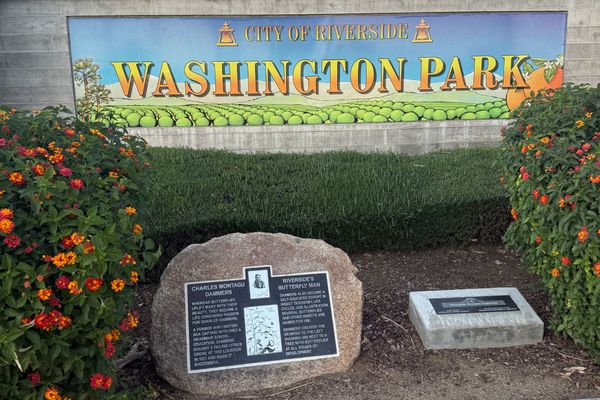
Gail Vanderlinde knew very little about her grandfather and was deeply appreciative of what I uncovered. She spread the word among her family and we eventually all had lunch together at the Mission Inn. She also arranged to have a headstone placed at Dammers' grave at Evergreen Cemetery, which had been completely unmarked. I later worked with Darleen DeMason of Victoria Avenue Forever to design and place a monument at the corner of Victoria Avenue and Mary Street.
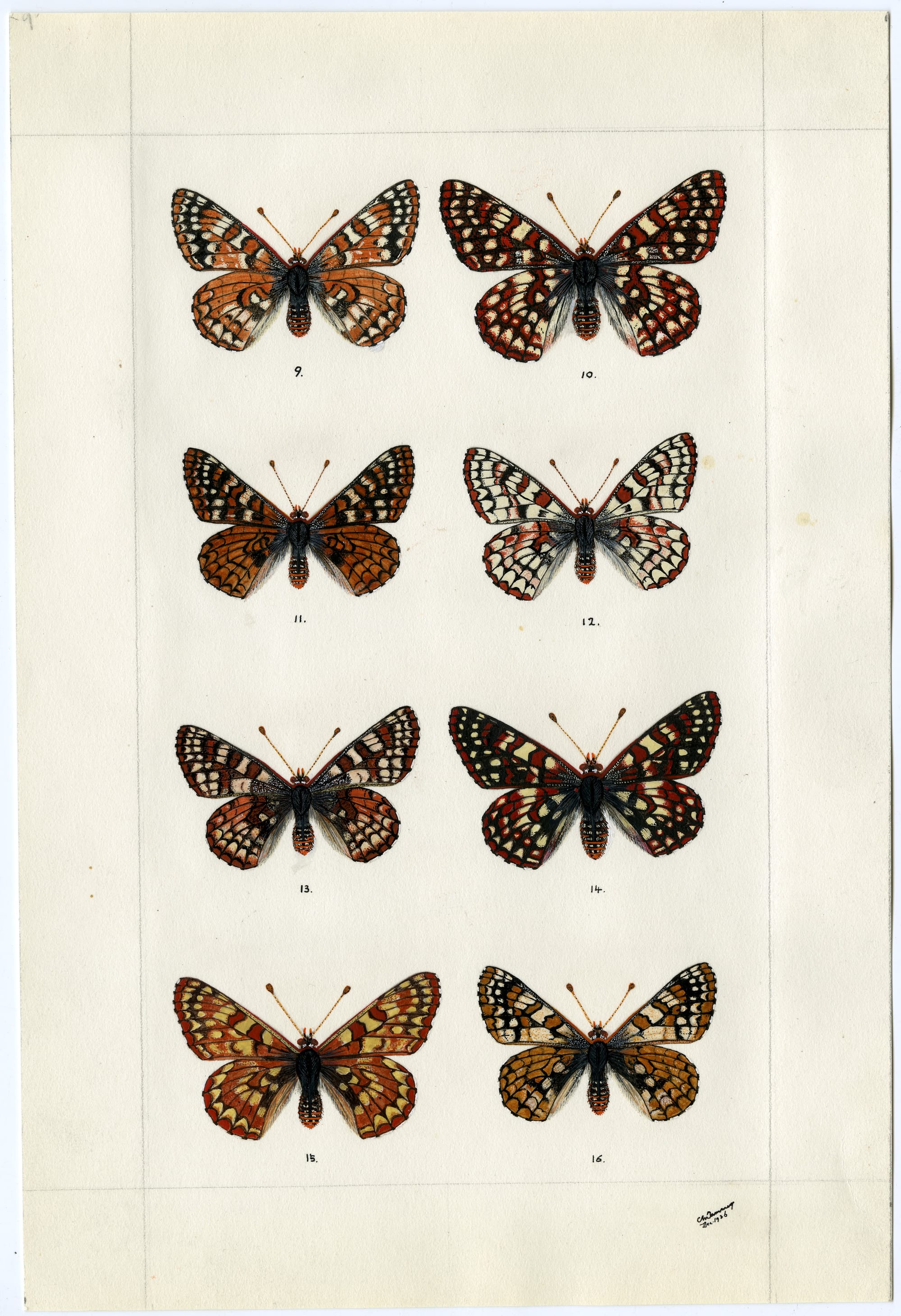
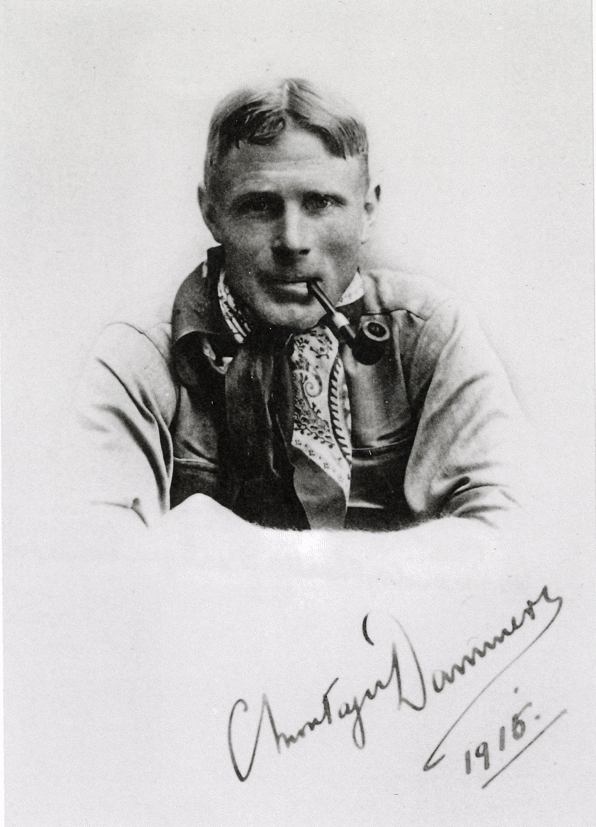
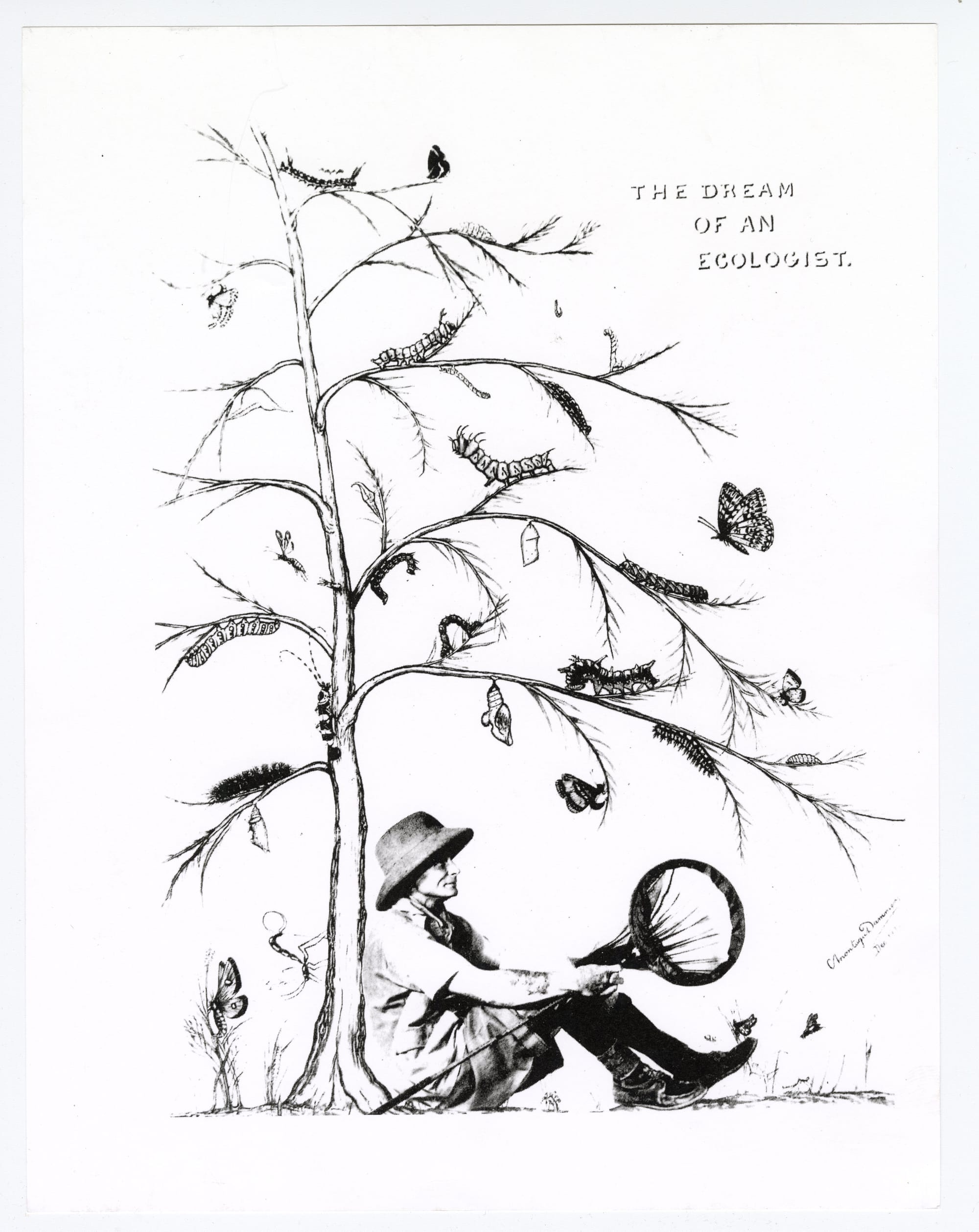
Charles Montagu Dammers left behind a rich visual record of his life and work. His detailed butterfly illustrations and the whimsical "Dream of an Ecologist" — in which he depicted himself surrounded by butterflies at all stages of development — reveal a man equally devoted to science and art. A self-portrait signed in 1915 captures him years before he made Riverside his home. (Courtesy of the Museum of Riverside)
What role did you have in erecting the memorial marker at Mary Street and Victoria Avenue?
I designed the marker and located the boulder upon which it was placed. Darleen DeMason of Victoria Avenue Forever felt a monument would be a meaningful way to make Dammers' story more widely known, and she spearheaded the installation.
What legacy does Dammers leave behind?
His story has been told through my research, and the monument has helped spread the word. He certainly helped put Riverside on the map as a renowned scientist in the field of lepidopterology, and this Heritage House exhibition brings further awareness to that legacy.
How does it feel to see Dammers being rediscovered through this exhibition?
I feel really good about it. I provided the essential information that helped shape the exhibition, and it's gratifying to know it will carry his story to more people.
A Victorian Heritage: Riverside’s Butterfly Man on view at Heritage House through June 28, 2026, stands on the foundation of one man's curiosity. The Museum of Riverside is deeply grateful to Bill Wilkman for the years of research and care he devoted to recovering the story of Charles Montagu Dammers. Without him, that story may have been lost entirely. It is our honor to help carry that story forward and introduce Dammers to a new generation of Riverside residents.
To find more information out about Charles Montagu Dammers or Wilkman Historical Services, reach out to Bill at wilkman.history@gmail.com.