
A Life Well Lived: An Introduction to Katherine Siva Saubel
How a Cahuilla elder became one of California's most influential voices for Native language, culture, and rights.
How a Cahuilla elder became one of California's most influential voices for Native language, culture, and rights.
The city is recruiting for a new watchdog position created after voters approved Measure L, though some question whether the appointed role can operate independently.
How a Cahuilla elder became one of California's most influential voices for Native language, culture, and rights.

Katherine Siva Saubel learned at a young age that her Cahuilla culture and traditional ways needed to be preserved. By the time Mrs. Saubel was born, March 7, 1920, many changes had occurred to Native people. The reservation system was in place; her family lived on Los Coyotes reservation but moved to Agua Caliente Reservation in Palm Springs a few years after her birth. Riverside had been established decades earlier, and Sherman Institute was still a tourist attraction for guests of the Mission Inn.
The eighth child of eleven children, Mrs. Saubel grew up speaking Cahuilla and taught herself how to speak English as she was virtually ignored in elementary school due to segregation. She became the first Native American woman to graduate from Palm Springs high school. During this time, Mrs. Saubel documented plants and their uses in a notebook with descriptions of food, medicine and tools so they would never be lost to the past. This later shaped one of the advocacies for which she is remembered. At a time when Native scholarship was limited to anthropologists, she took ownership of her community's narrative. In this way, Mrs. Saubel ensured her Cahuilla culture would have a place in Southern California history. She strongly advocated for her people and any injustices that may arise. According to the Malki Museum:
"Since childhood, Katherine has always had a fiery wit, an unwavering bluntness, and a strong sense of justice. She was never afraid to stand up for her people and their rights. During high school she had to wait at a bus stop on the reservation in front of a small restaurant that had a sign in the window saying, 'Whites Only.' When she noticed the sign, she marched into the restaurant and told the owner to take it down because his restaurant was on reservation land and he had no right to keep Indians out of a restaurant on their own land. The owner didn't say a word when she told him this (she thinks he was shocked to have an Indian teenage girl telling him what for), but later when she walked by the restaurant the sign had been taken down."
By 1940, she was married to Mariano Saubel and living with his family on their farm at the Morongo Reservation in Banning, CA. In 1943, they had their only child, before Mariano drafted to World War II. He spent 3 years away from his wife and son. In the 1950s, Mrs. Saubel helped support her family by working at a shirt factory along with Jane Penn (a cousin by marriage) and there the two started the first labor union in Banning, CA with only four women joining in the beginning but later when the factory bumped the pay by a dollar, more joined and it became a success.
Throughout Riverside's documented histories there have been genuine allies to Native people. One such person is Dr. Lowell John Bean (1931–2024), who later became an emeritus professor of anthropology at California State University, Hayward. In 1958, Mrs. Saubel began a long-lasting friendship with the then-UCLA graduate student in anthropology and ethnology. The two collaborated on publishing works around Cahuilla people. Those works include: Cahuilla Ethnobotanical Notes: Oak (University of California Archaeological Survey Report, 1962); Cahuilla Ethnobotanical Notes: Mesquite and Screwbean (University of California Archaeological Survey Report, 1968); Kunvachmal: A Cahuilla Tale (The Indian Historian, 1969); Temalpakh: Cahuilla Indian Knowledge and Usage of Plants (1972); I'Isniyatam(Designs) a children's book (1980), and many other editorials.
Native people are traditionally an oral history people. Land management, family stories, songs and language all being shared and passed on generation through generation. With the arrival of settlers to what we now know as Riverside County, change came in the form of dispossession, prejudice, boarding schools and forced assimilation. The way Native people were perceived by newcomers all depended on who wielded the printed word. The ones writing the histories control the narrative. Riverside's history is not exempt from this truth. Despite these challenges, Mrs. Saubel remained steadfast in her traditional ways while taking full advantage of gaining a higher education.
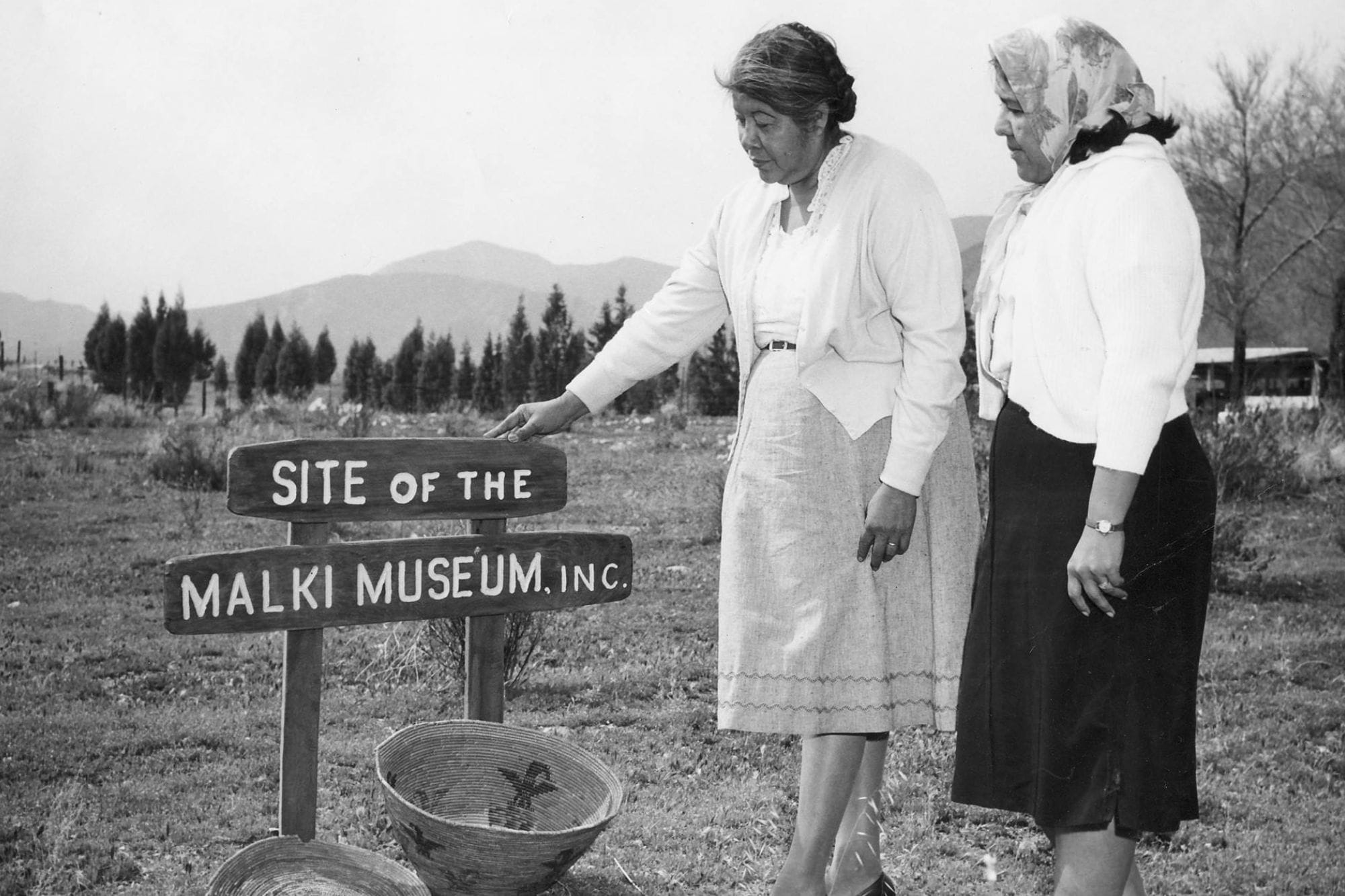
In 1962, at the age of 42, Mrs. Saubel received the Kennedy Scholarship for Native Americans and studied linguistics, ethnology, and anthropology at the University of Chicago and University of Colorado at Boulder. This opened many lecture opportunities for her to discuss the importance of preserving and protecting Native American heritage and rights to academic groups, government agencies and various committees across the country. She quickly became an activist for her tribe and other California Indians. In doing this, she ensured that her people would be written about from a Native perspective. She went beyond the written word in 1965. Mrs. Saubel and Jane Penn collaborated once again when they co-founded the first museum on a California reservation founded and operated by Native Americans, to house many of Jane Penn's family heirlooms. The two women solidified their people's culture and knowledge with Malki Museum and Malki Museum Press, still open to the public today. After Jane Penn's passing in 1980, Mrs. Saubel continued on as Museum President.
Mrs. Saubel's collaborations go beyond the reservation. She worked on a Cahuilla dictionary — the first time the language would be preserved in writing — with linguist Hansjakob Seiler at the University of Cologne, Germany. She gave speaking seminars in Japan and New Zealand and later revised another book on Cahuilla language with Seiler and Japanese linguist Dr. Kojiro Hioki, from the Hachinohe University. She worked locally with linguist Dr. Eric Elliott, and together they published I'sill He'qwas Wa'xish: A Dried Coyote's Tail, a two-volume, 1,385-page cultural biography of Saubel told in both Cahuilla and English — the product of more than a decade of collaboration.
Mrs. Saubel, known as an acclaimed lecturer, activist, and respected elder; her recognition across politics, museums, and academics proves her impact on advocacy. In 1982, the Governor appointed her to the California Native American Heritage Commission where she worked to preserve and protect sacred sites. In 1986, the Riverside County Historical Commission selected Mrs. Saubel "Historian of the Year." California State Indian Museum named her "Elder of the Year" 1987. In 1993, she became the first Native American woman to be inducted into the National Women's Hall of Fame in Seneca Falls, New York. She received the Chancellor's Medal from the University of California-Riverside, and an honorary doctorate in Philosophy from La Sierra University, Riverside, California in 2002. A few more of her achievements are as follows:
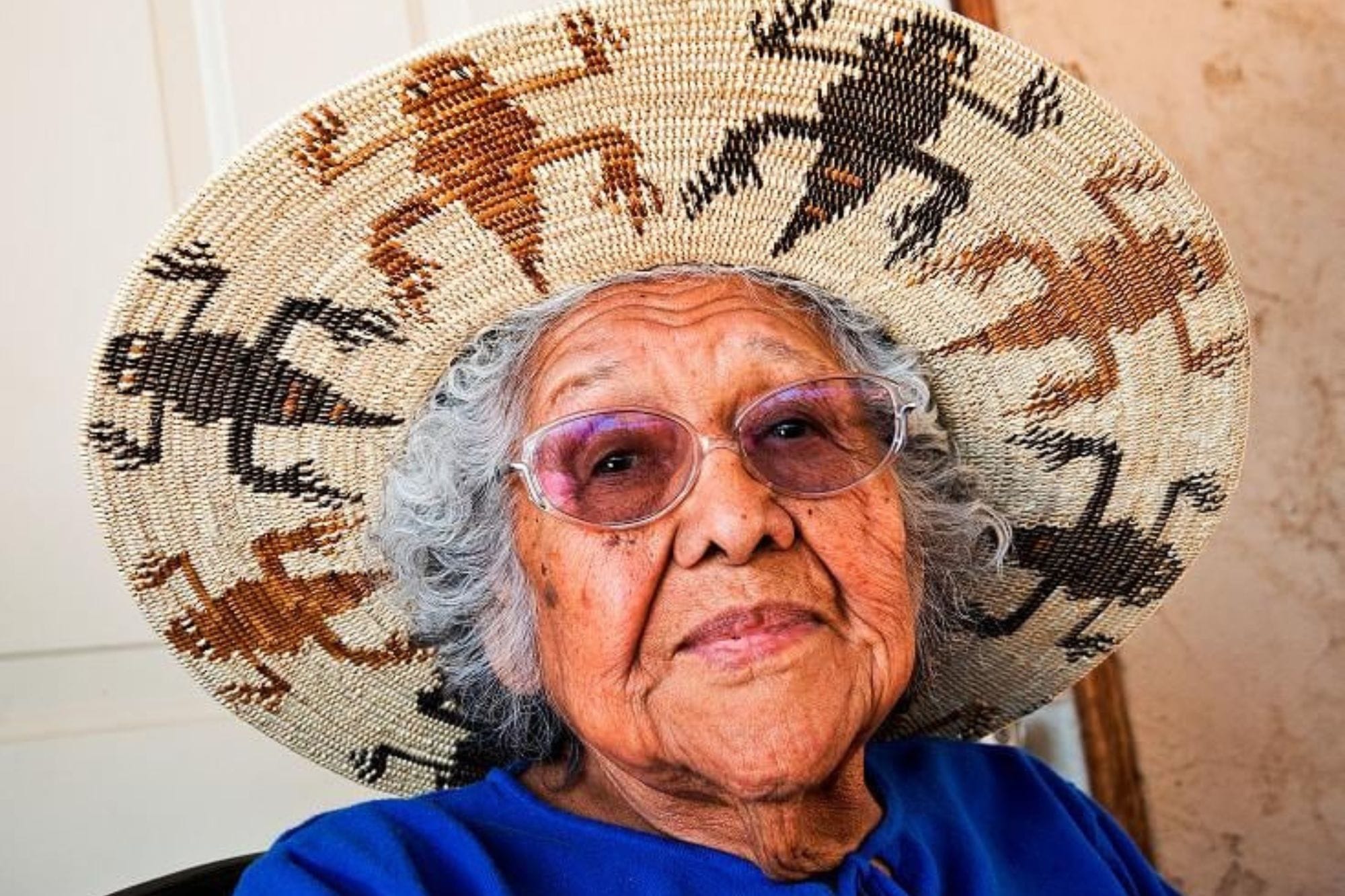
In her lifetime, Katherine Siva Saubel became one of the last fluent speakers of the Cahuilla language and accomplished so much for a Cahuilla woman living when the Indian Citizenship Act of 1924 (also known as the Snyder Act) and the American Indian Religious Freedom Act of 1978 were adopted, and the American Indian Movement was created. In her own right, she was her own movement and embodied the self-reliance that forged a path for California Native people today. She did all of this not for herself but for the generations to come. Her example shows them with effort and heart they can accomplish more for themselves and their community. Mrs. Saubel understood to survive in this new world she needed to acclimate to a different way of life than what her ancestors knew. Her accomplishments came from a deep love of her culture and heritage. When she moved through spaces, her strength and resilience followed. Mrs. Saubel passed away Nov. 1, 2011, at the age of 91 on the Morongo Reservation, her final resting place. She lived a life of determination, firsts, long-lasting impressions, and defender of Indian rights, land and culture — that is her legacy.
By Rosy Aranda

Alexander Strachan arrived in Riverside with little history and left behind a packing house that outlasted his company by more than a century.


Zona Gale won the Pulitzer Prize, planted a tree in Riverside, and became the first to chronicle the life of Mission Inn founder Frank Miller.

How Riverside honored Frank A. Miller's legacy with a citrus-covered replica at the 1926 National Orange Show.

The tenor soloist who sang at Booker T. Washington's memorial service traded his Mission Inn post for the battlefields of World War I, earning a place on Frank Miller's banner of heroes.
Let us email you Riverside's news and events every morning. For free!
