
🗞️ Riverside News- February 19, 2026
Crack down on Nitrous Oxide & Kratom, Stray Dogs turns 1, Philharmonic upcoming intimate show...
Crack down on Nitrous Oxide & Kratom, Stray Dogs turns 1, Philharmonic upcoming intimate show...

The Downtown dog-friendly café is celebrating its first anniversary with events through the end of February, including a movie night, a matcha class and a two-day anniversary weekend.
The salon-style gathering at Loft .84 will feature live music and a candid discussion about the orchestra's future direction.
A century ago, the city issued more than $2 million in building permits for the third straight year, transforming downtown with structures that still shape our landscape.


The beginning of a new year is a good time to look back, often to the previous year. In Exploring Riverside's Past, we will look back not one year, but 100 years to 1925. A newspaper article on Jan. 1, 1926, declared "Riverside is Growing." For the third year in a row, the city issued building permits totaling more than $2 million. For 1925, the total was $2,261,227. By today's standards, that does not seem high, as some homes and most commercial buildings easily exceed that amount on a single project. Most of the construction was for new homes, but several significant commercial buildings were erected in 1925. We will examine four of them.
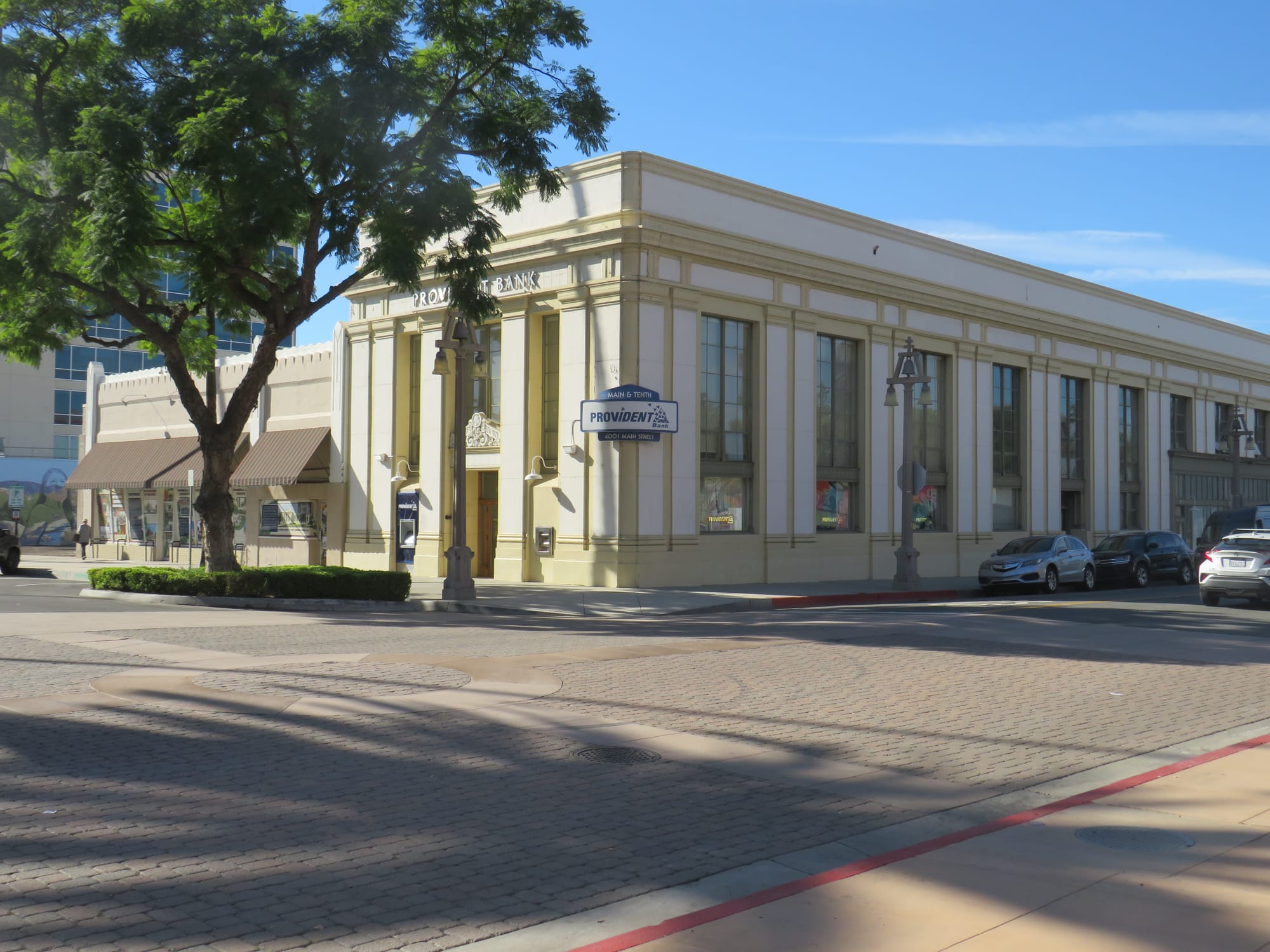
The Security Investment Company was incorporated in Riverside in 1912. When their offices at 667 Eighth St. (today 3667 University) were no longer large enough, they looked to G. Stanley Wilson to design a new home office at the southwest corner of Main and Tenth streets. Designed to complement the 1903 Riverside County Courthouse, across the street from the site, the design has been described as Beaux-Arts. Many believe that the design was drawn by Peter J. Weber, who worked for Wilson. The Cresmer Manufacturing Company of Riverside had the contract to build the edifice.
Actual work began in November 1924 and continued into 1925. The structure was 40 feet wide along Main Street and ran back 158 feet along Tenth. The cost of the building was estimated at $70,000. Reports of the day called it one of the most striking from the standpoint of architecture, convenience and civic appeal.
The opening reception for the new office was held on Saturday, Sept. 12, 1925. Gorgeous floral arrangements and baskets filled the inside as other businesses joined in celebrating the opening of Security Investment Company's new home. The doors opened at 2:30 p.m., and guests came and went until 10 p.m.
In March 1970, the Transamerica Title Insurance Co. of Oakland opened a branch office in the old Investment Security Company building at 4001 Main St. and was there for some years. The building was empty for a time before Provident Bank moved its downtown location to the site at Tenth and Main in 1997. They are still the present occupants of the structure.
G. Stanley Wilson and the Cresmer Manufacturing Company were also involved in the second structure on our 1925 list, Rouse's. Gaylor Rouse opened his department store in 1886 on the west side of Main Street between Eighth and Ninth streets. Nine years later, Rouse moved across the street into the Cunningham building and doubled his floor space. Over time, he added floor space by using previously unused space in the back and obtained additional buildings on both sides of the store. Gaylor Rouse died in 1923, but his company, G. Rouse & Co., continued for many years.
In 1925, the board engaged Wilson to remodel and unify the structures. The Cresmer Company did the work. Construction costs were given at $71,000. Starting from the roof down, the store was reworked both inside and out - the exterior was white brick with beautiful second-floor balconies of ornamental iron. Handsome store windows were across the front. The center of the interior provided an open area to the second floor, accessible via a modern elevator.
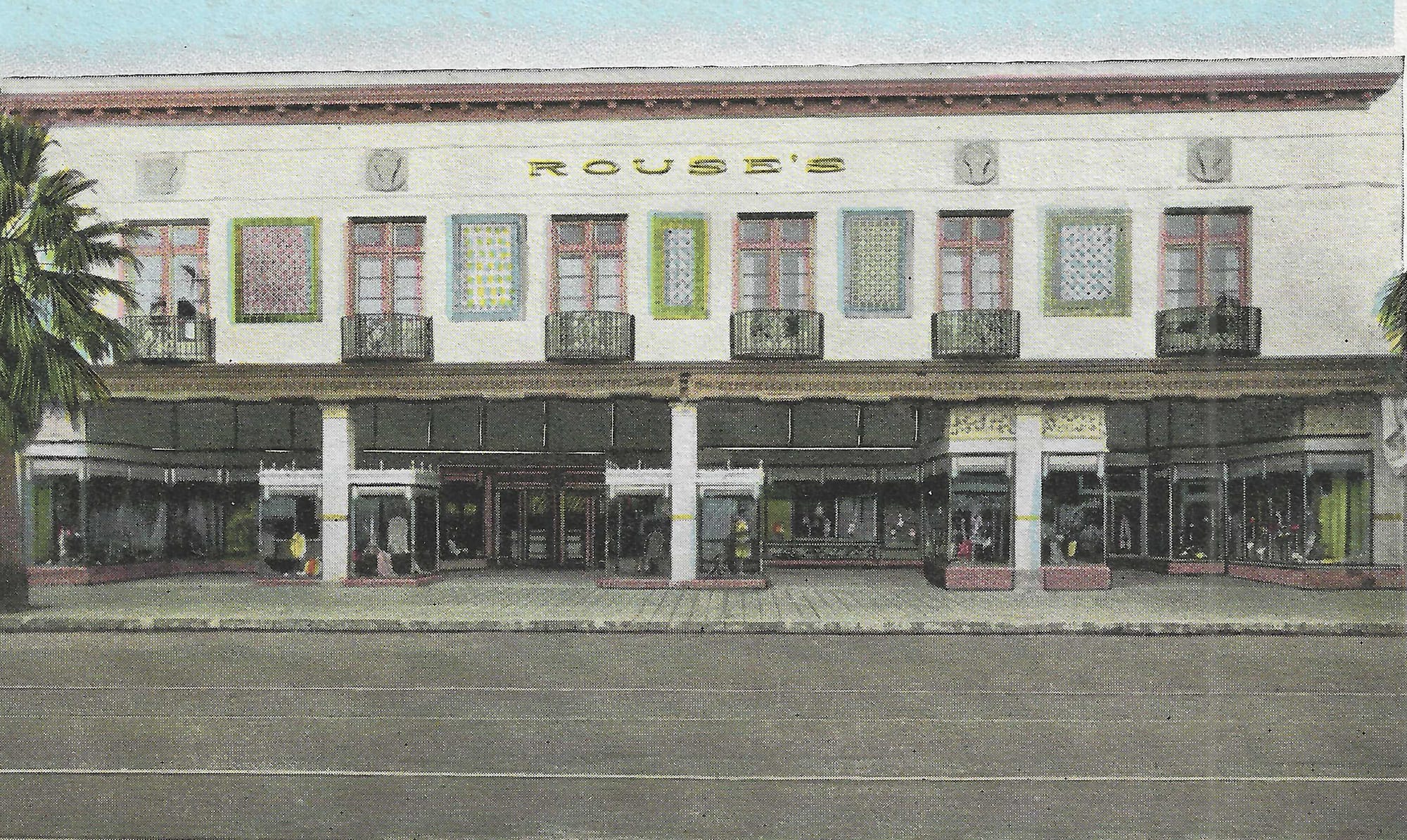
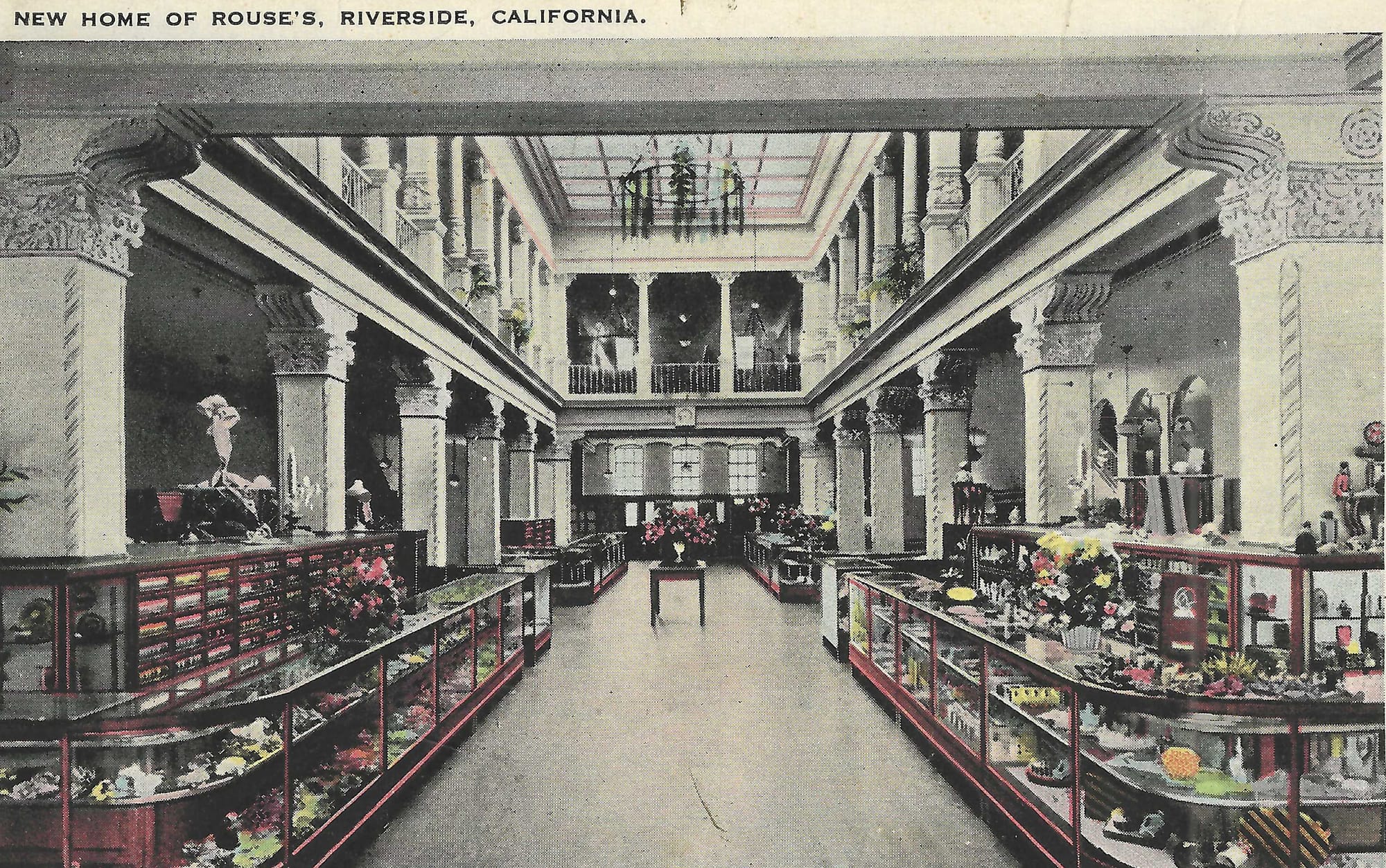
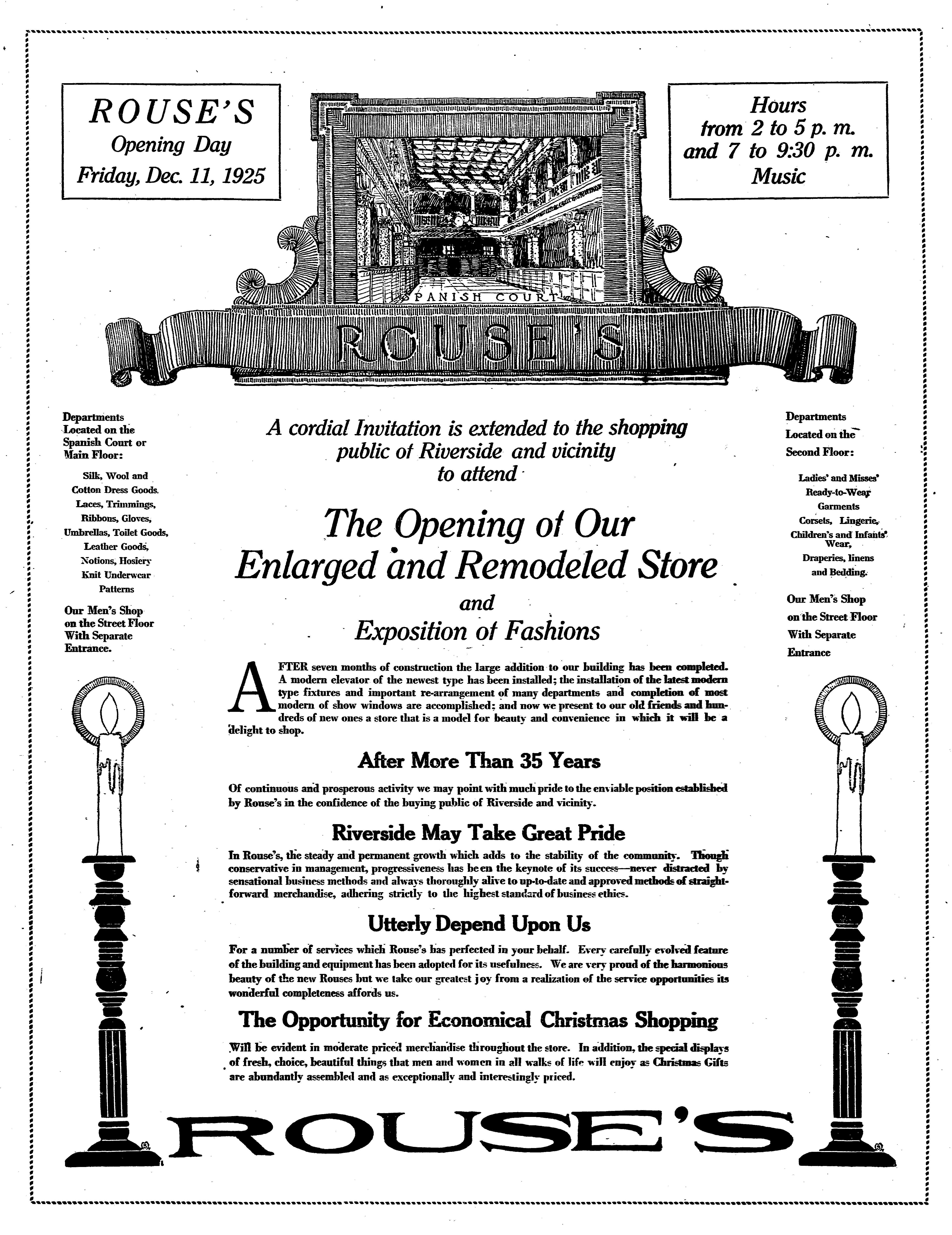
From left: Postcard of New Home of Rouse's, Postcard of the Interior of the New Rouse's (Author's Collection), Ad for Opening (Riverside Daily Press)
On Friday, Dec. 11, 1925, Rouse's opened its doors to the people of Riverside at its remodeled and expanded facility.
With the construction of the Riverside Plaza, many of the downtown businesses struggled. In September 1964, the Federal Bankruptcy Court locked the doors on Rouse's, a retail landmark in Riverside for many decades. In November 1964, Glenn Christensen, a former Rouse employee, opened a clothing store in the former Rouse building. Over the years, the building has housed various tenants, including Casual Gourmet Restaurant and the Tamale Factory.
In 2000, a new idea was conceived for the use of the old Rouse building. With a seed-money gift of $5 million, Tony and Frances Culver helped initiate the conversion of the old department store into the Barbara & Art Culver Center of the Arts. The Culver family, along with the Hayes family, owned the Press Enterprise from the 1930s until 1997. It took 10 years, but in October 2010, the Culver Center opened its doors. The Center provides exhibition space, a theater, performance space, and offices and workspaces for professors and students.
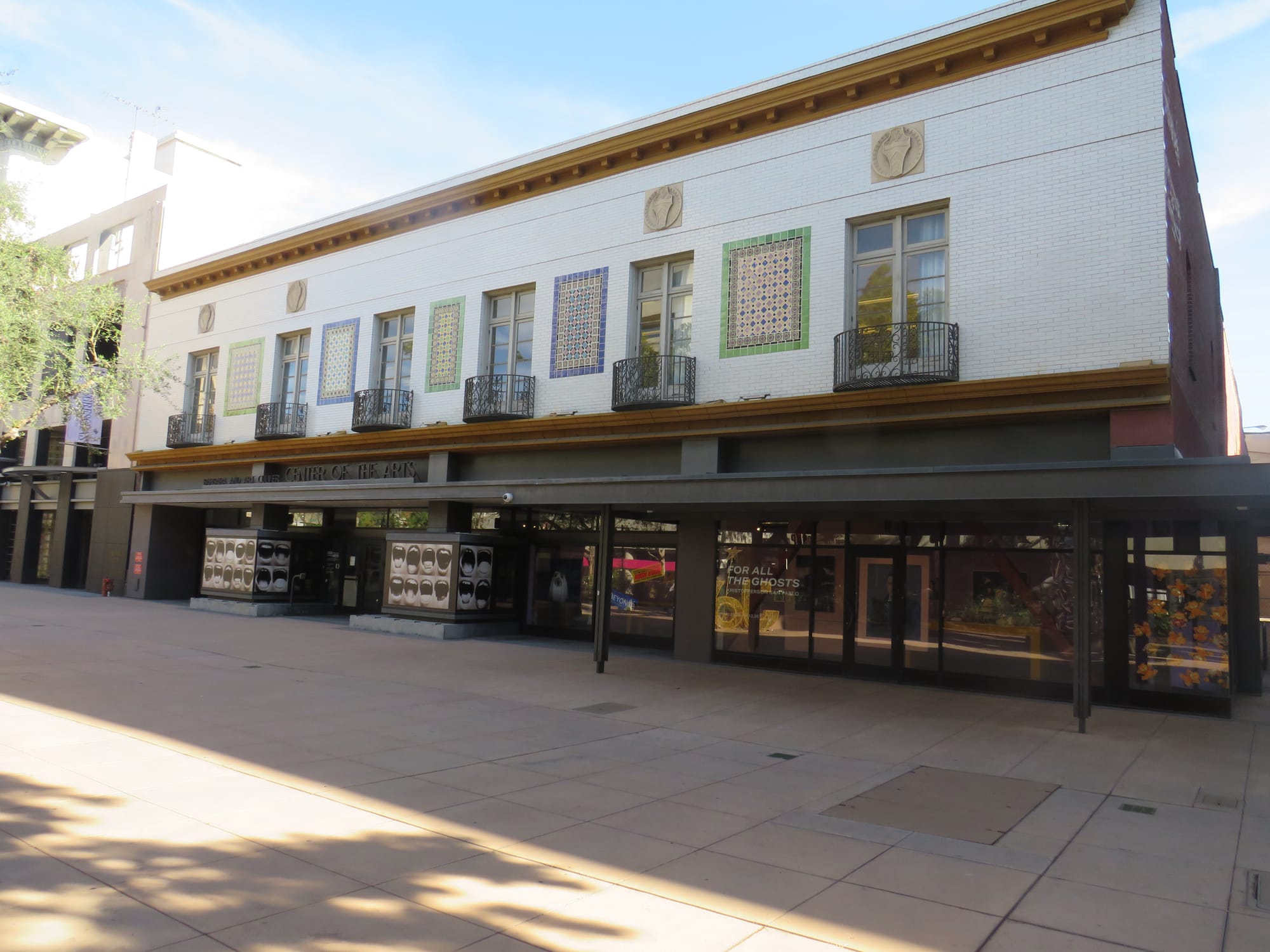
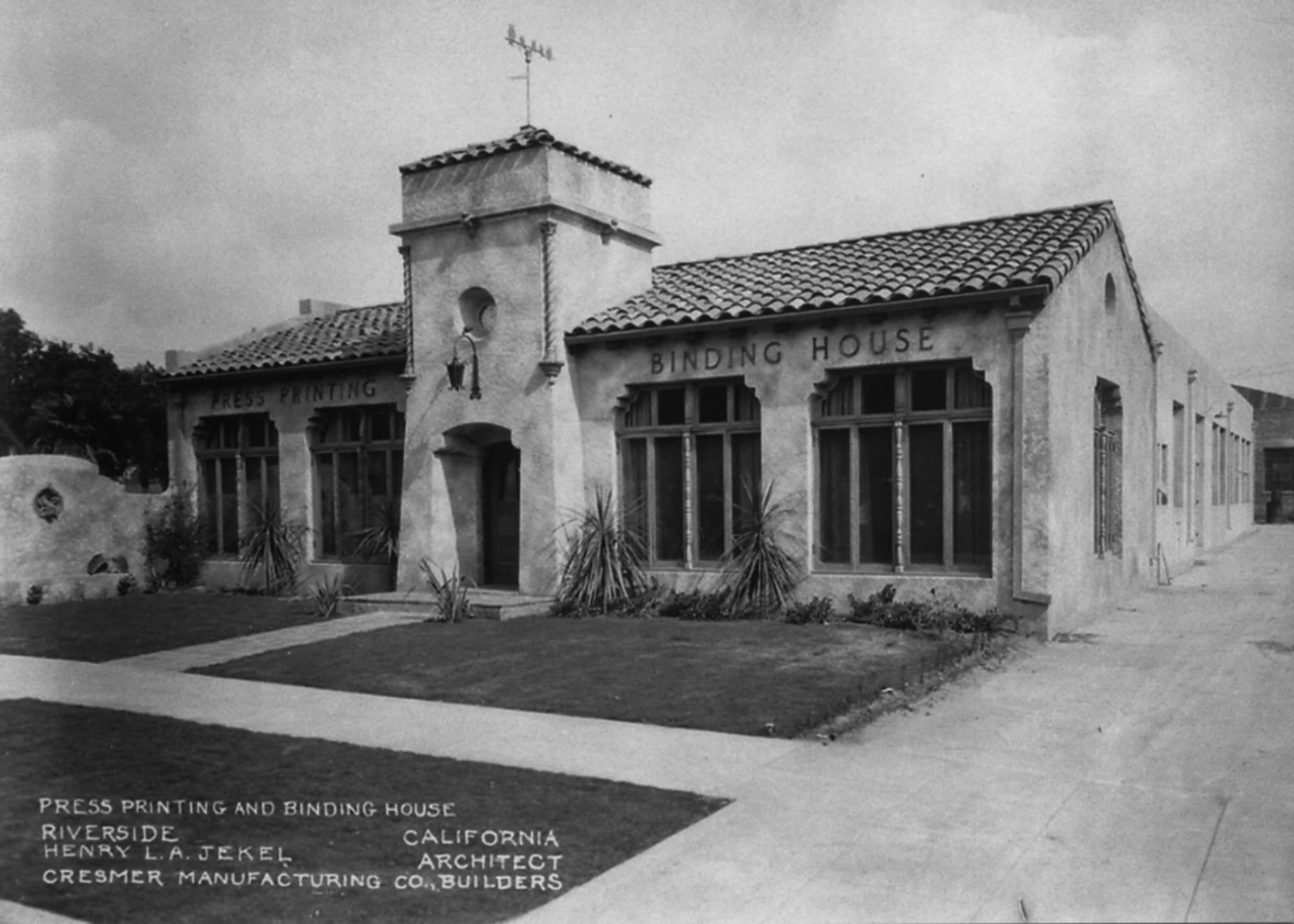
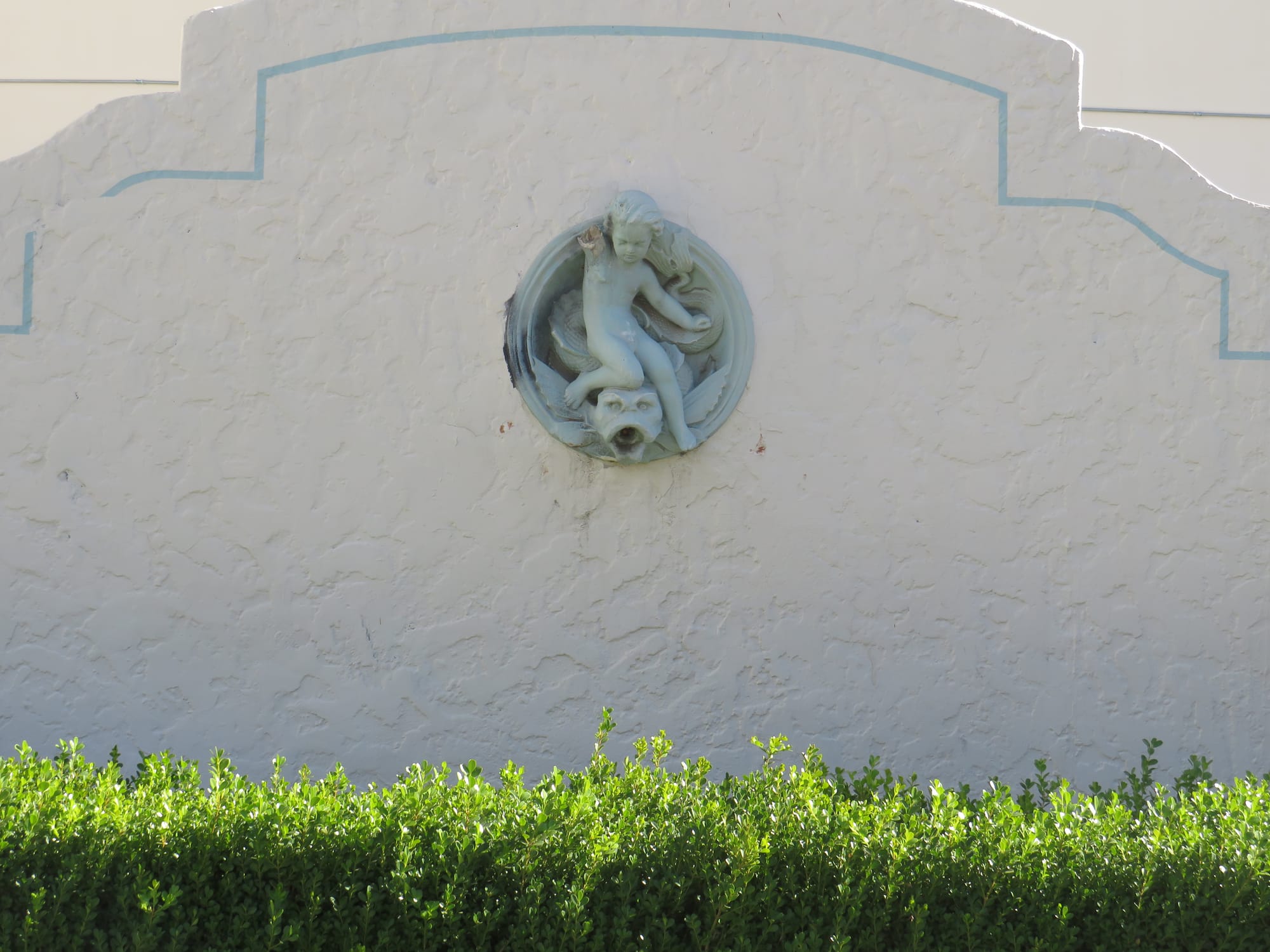
From left: Photo of the Barbara & Art Culver Center for the Arts (Photo by Author), Photo of Press Printing & Binding House (Christine Keil Foglietta Collection), Photo of Wall and Fountain Plaque (Photo by Author)
The Cresmer Manufacturing Company was very popular and busy in Riverside, as they were once more the builders of our third building, the Press Printing & Binding House, from 1925. We do have a different architect, as Henry L. A. Jekel was hired to design this building. Located on Fairmount Boulevard between Sixth and Seventh streets, Jekel designed a reinforced concrete structure that Dr. Vince Moses, in his book on Jekel, calls a combination of Italian form and Spanish Colonial Revival influences. The entrance at the front center had a tower, and the roof was tiled. A small wall was in front of the building and contained a small fountain plaque.
Sometime before 1939, the building was sold to the Rubidoux Printing Company, which occupied it for many years. By 2011, the building was vacant as a contractor prepared to construct a new parking structure for the Fox Theater. The contractor claimed that he accidentally demolished most of the structure, leaving only a shored-up façade and the small wall.
The final building we are reviewing from 1925 was not designed by one of Riverside's famous architects and was not built by a familiar firm. On Sunday evening, Nov. 29, 1925, a new auditorium was dedicated at Sherman Institute. What was special was that students of Sherman supplied the labor under the direction of James Tarant, superintendent of industries at the school. Tarrant drew up the plans for the building, which was started in October 1924 and completed in time for the dedication the following year.
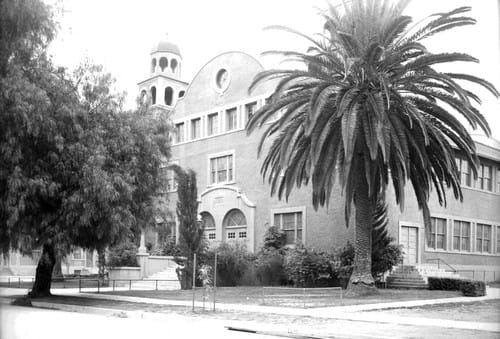
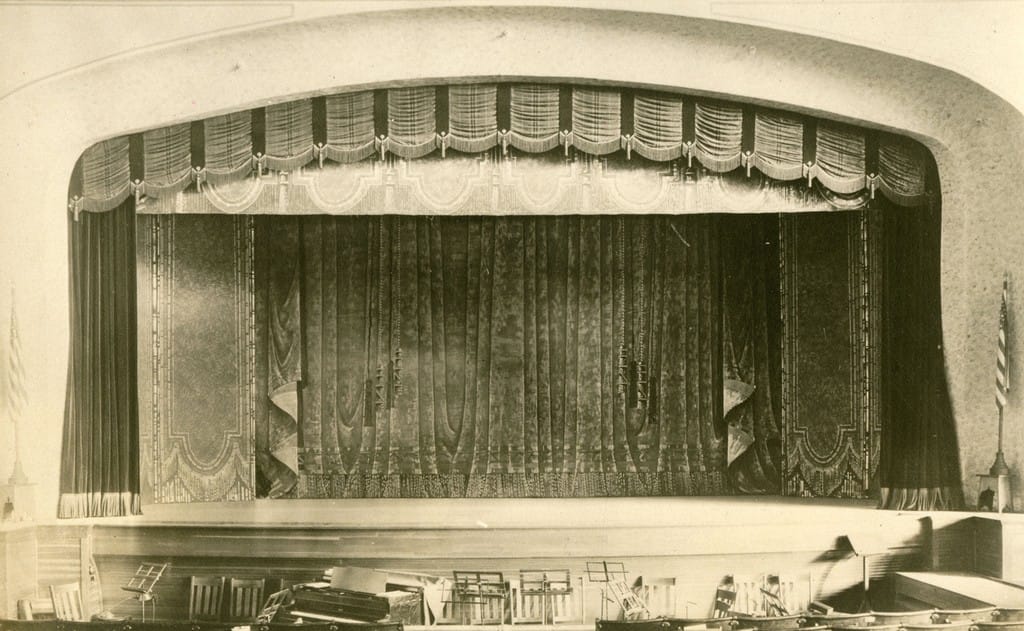
From left: Photo of the Auditorium, Photo of the Stage and Orchestra Pit in Auditorium (Sherman Indian Museum)
The reinforced concrete structure was 74 feet wide and 112 feet long. The main floor and balcony seated 1,300 people. On the main floor were the auditorium, orchestra pit, stage and two dressing rooms. The balcony, in addition to seating, had a motion picture booth and two more dressing rooms. The basement had practice rooms for the band. The cost for the materials was $20,000. If done by an outside contractor, the price would have been closer to $75,000.
At the dedication, congratulatory addresses were made by Mr. H. A. (Stella) Atwood, who was very active in Riverside circles and especially a champion for Indian rights; Dr. Horace Porter, former pastor at Congregational Church and former mayor; Dr. E. P. Clarke, editor of the Riverside Daily Press; and Major Samuel C. Evans. A few days later, Clarke wrote an editorial entitled "A Monument To Indian Skill," praising the skill and achievement of the Sherman students in their work on the auditorium.
In the late 1960s, the auditorium, along with many of the other early buildings at Sherman, was condemned as they did not meet California earthquake safety standards for schools. In 1970, they were torn down, a sad end to a structure that had demonstrated the skill and achievement of earlier students.
There was more construction in 1925, but these four buildings give us a taste of the work being done in Riverside 100 years ago.

How Riverside honored Frank A. Miller's legacy with a citrus-covered replica at the 1926 National Orange Show.

The tenor soloist who sang at Booker T. Washington's memorial service traded his Mission Inn post for the battlefields of World War I, earning a place on Frank Miller's banner of heroes.

Riverside's longest-serving fire chief modernized the department, survived smoke inhalation and a bicycle crash, and never asked his men to face dangers he wouldn't confront himself.

For 20 years, the inn's founder staged an annual Nativity production blending California mission history with the Christmas story.
Let us email you Riverside's news and events every morning. For free!