
First Notes at Dawn
When Riverside held its first Easter Sunrise Pilgrimage in 1909, Gustav Hilverkus was there — cornet in hand, music echoing off the mountain.
When Riverside held its first Easter Sunrise Pilgrimage in 1909, Gustav Hilverkus was there — cornet in hand, music echoing off the mountain.

Neighbor of the Week is a series profiling the hidden heroes of Riverside, doing incredible works of service throughout our different neighborhoods.

Sunrise Pilgrimage marks 116 years, meet Caitlyn Cohen, write about napkins...
When Riverside held its first Easter Sunrise Pilgrimage in 1909, Gustav Hilverkus was there — cornet in hand, music echoing off the mountain.

When the first Riverside Sunrise Easter Pilgrimage was held on Mount Rubidoux on April 11, 1909, Gustav Hilverkus was among the main participants. In this simple ceremony, Gustav played on his cornet, accompanied by a portable organ and a violin. The Holy City, a Victorian ballad was written about 1892 by Stephen Adams. The words were by Frederick Weatherly and in three verses describe Jesus' Triumphant Entry into Jerusalem on Palm Sunday, His Crucifixion outside Jerusalem on Good Friday and the eventual triumph into the spiritual New Jerusalem. The Riverside Enterprise reported, "He played The Holy City in tones of exquisite harmony, and the sweet notes of music were wafted away on the chill mountain air, echoing in the distance." For twelve of the first fourteen services, Hilverkus played this song on his cornet. In 1915, Marcella Craft sang The Holy City, and in 1919, the song was not part of the service. Then, from 1925 through 1929, Gustav Hilverkus was part of a brass quartet that played The Holy City. The Holy City became a fixture in almost every Easter Pilgrimage Service for as long as the Miller family was connected to the service.
In an interview in March of 1959, he showed the reporter a photograph in his personal collection taken at the first service in 1909. In this photo published in the newspaper, Hilverkus identified himself, Mr. and Mrs. Miller (Mrs. Miller would still have been Marion Clark at the time of the first service), Allis Miller (later that same year, Allis married DeWitt Hutchings), and DeWitt Hutchings.
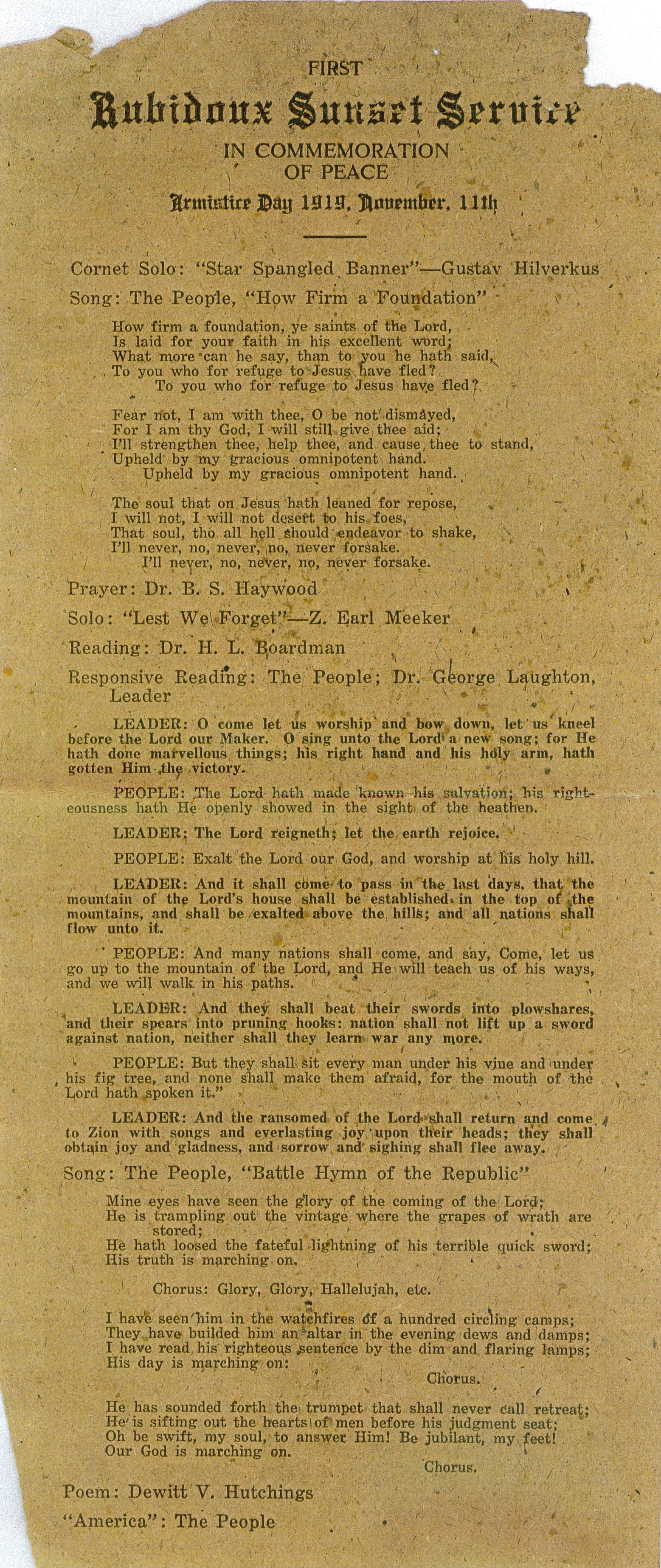
Hilverkus was also part of the first Armistice Day Sunset Service held on Mount Rubidoux on November 11, 1919. For this service, he opened the program with a cornet solo of The Star-Spangled Banner. For the 1920 Armistice Day service, he played The Holy City on his cornet. In 1921, Hilverkus directed the Riverside Military Band as it played the Star-Spangled Banner while a chorus led the people in singing the words. The band also played the Garibaldi Hymn while the Italian flag was raised, as Italy was the honored nation that year.
Another time that Hilverkus participated in a ceremony on Mount Rubidoux was when he directed the Polytechnic High School band for fifteen minutes of patriotic music prior to the dedication of the plaque honoring Louis Robidoux on March 8, 1926. This plaque was placed by the Daughters of the American Revolution on one of the two old bridge towers near the St. Francis Fountain. The band's final number led into the singing of "America" by the assembled people.
Gustav was born on April 8, 1868, in Werineskirchen, Germany, to William and Rosa Hilverkus. In 1893, he came to the United States with a German band to perform at the Chicago World's Fair as a trumpeter. He would only return to Germany for visits after that. After living in Des Moines, Iowa, Hilverkus moved to Riverside, California, in 1905 and began directing the Riverside Military Band, which had been formed in 1905 from the old Riverside Concert Band (begun in 1876). He would direct this band for the next twenty-eight years, with early performances at the bandstand in White Park and later at the same old bandstand after it was moved to Fairmount Park.
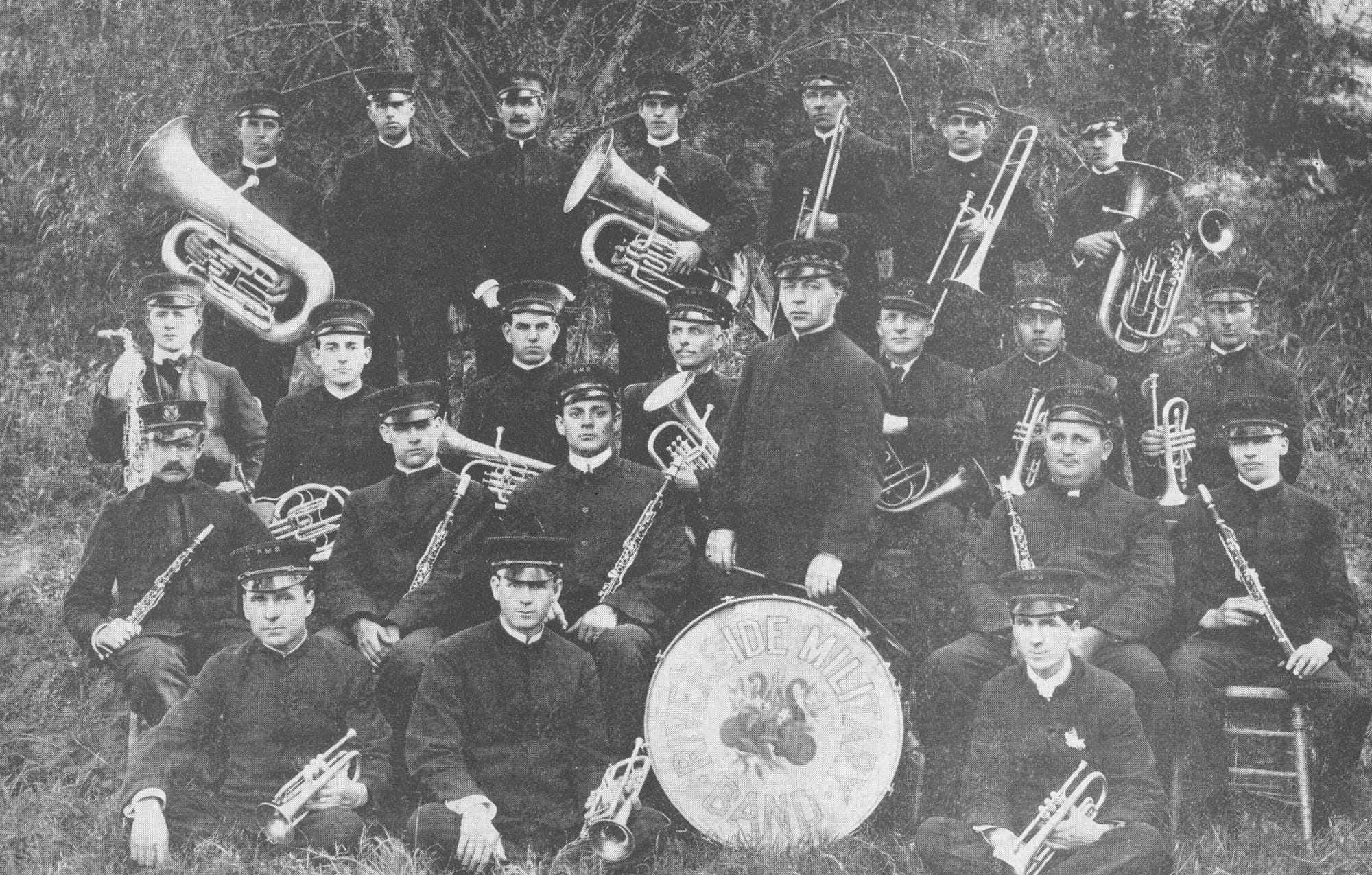
In 1908, he took over the orchestra and band program at the old Riverside High School located on Ninth Street. When the high school was divided in 1912, separating the boys and the girls, Hilverkus directed music at the new Polytechnic High School. This new high school was on Magnolia Avenue, on the present site of Riverside Community College. For the 1916-17 school year, the band was redesignated under the R.O.T.C. program. He would conduct this band until his retirement in June of 1939. When he retired, he reported that over eighty of his former students were now musicians who made their living in the music world.
Hilverkus also played with a Spanish ensemble that performed at the Mission Inn. They dressed in full Spanish regalia for their performances. In addition, at times, he conducted the Riverside Elks Band and a town orchestra.
On July 15, 1918, Hilverkus married Anna Roberts in a ceremony in Los Angeles. He was fifty at the time, and she was 34.
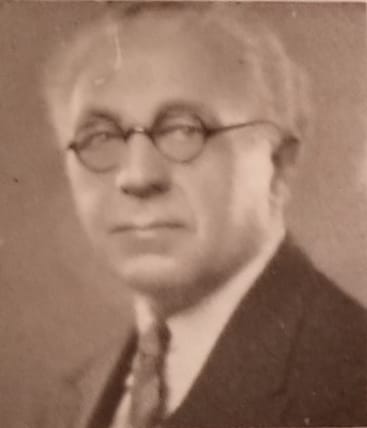
Gustav Hilverkus died in Riverside on June 15, 1959, at the age of ninety-one years. Anna died three years later on March 23, 1962. They are both buried at Evergreen Cemetery, just below Mount Rubidoux.

How a Cahuilla elder became one of California's most influential voices for Native language, culture, and rights.

Alexander Strachan arrived in Riverside with little history and left behind a packing house that outlasted his company by more than a century.

Zona Gale won the Pulitzer Prize, planted a tree in Riverside, and became the first to chronicle the life of Mission Inn founder Frank Miller.

How Riverside honored Frank A. Miller's legacy with a citrus-covered replica at the 1926 National Orange Show.
Let us email you Riverside's news and events every morning. For free!