
Legal Firms, Community Urge Council to Reconsider $20.1 Million Homekey Grant
Advocates warn Riverside's rejection of a grant to house 114 homeless residents may violate fair housing law — but the window to reconsider may have closed.
"Out in the I.E." traces decades of activism, community care and cultural impact across the Inland Empire.

The Civil Rights Institute opened "Out in the I.E." Thursday evening, a six-month exhibition documenting the LGBTQ+ community's impact across Riverside and San Bernardino counties.
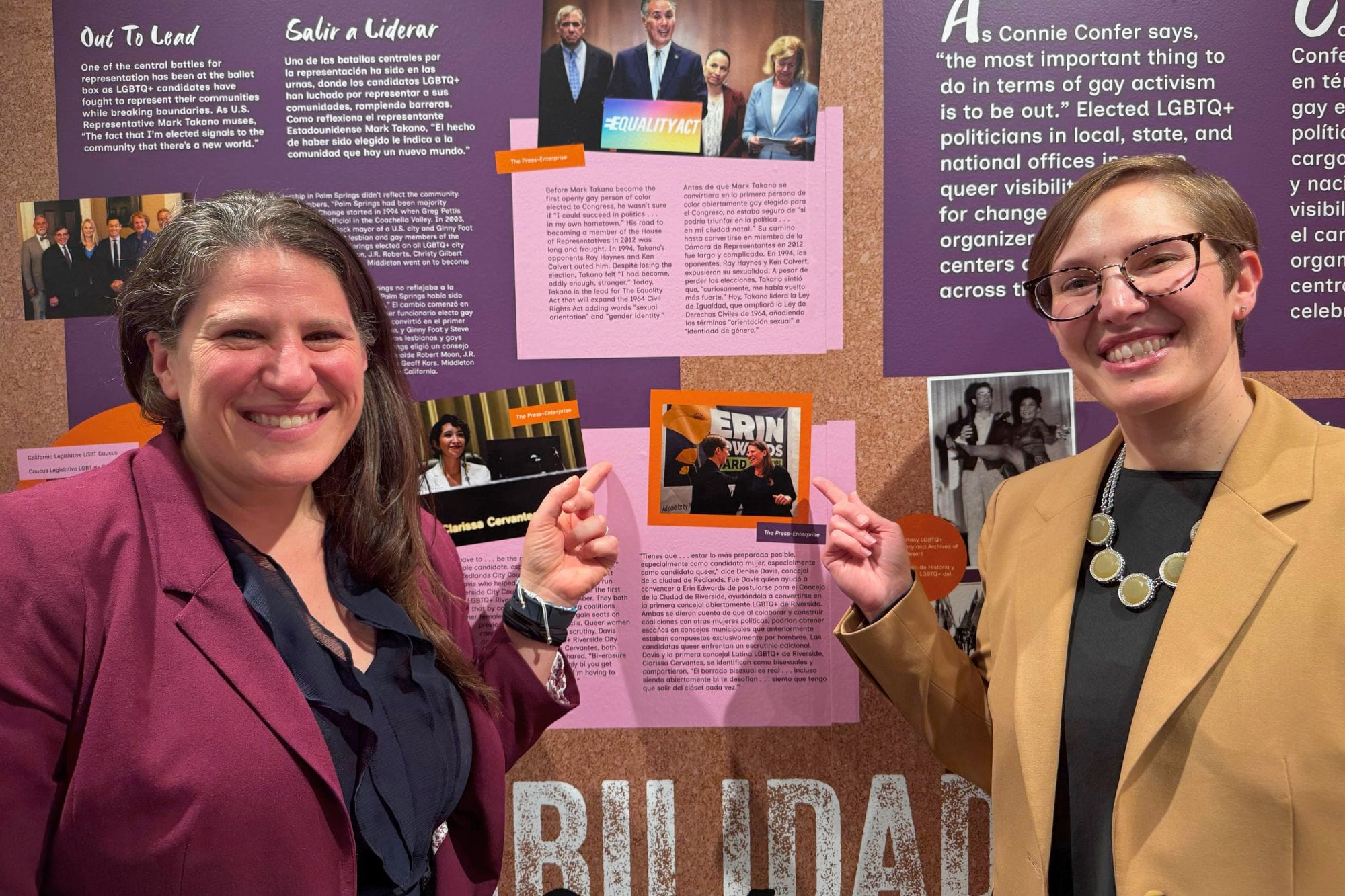
The opening celebration filled the Bank of America Diversity Center wall to wall, with overflow crowds on the patio where speakers broadcast the program. State Sen. Sabrina Cervantes, Redlands Councilmember Denise Davis, former Riverside Councilmember Erin Edwards and former Palm Springs Councilmember Lisa Middleton attended.
Davis, Redlands' first openly LGBTQ+ councilmember elected in 2018, told attendees about co-founding Safe Space Allies at the University of Redlands in 2003.
"Spaces like this matter because they give us room to be seen, to be heard, and to be remembered," Davis said. "They tell young people, especially those still trying to find their place, that they are not alone."
"I carry that responsibility with deep gratitude and with profound respect for the people and movements that made it possible for me to stand here openly, proudly, and authentically," Davis said. "This exhibition reminds us that our stories give us power, and when we honor them, we build a future where every person knows they belong."
Bishop Benita Ramsey, executive director of Rainbow Pride Youth Alliance and pastor at Unity Fellowship Church Riverside, served on the exhibition's advisory committee.
"Memory is holy work because when a people's story is preserved, it's not just information, it's affirmation, it's evidence, it's survival," Ramsey said.
She described the curation process as examining what stories deserved preservation and how to present them respectfully.
"We weren't just picking what looks good, we were wrestling with what tells the truth," Ramsey said. "We talked about things, what mattered enough to name and what had been ignored for too long."
"Sometimes it lived in whispers, in flyers tucked in drawers and chosen family networks and church basements and late night meetings in quiet courage," she said. "This exhibit reflects the meetups that weren't advertised, the networks built through word of mouth, the elders who quietly mentored the next generation."
"Let it be a mirror, let it be a doorway, let it be a reminder: our stories are real, our contributions are permanent, and our community has always been part of the Inland Empire civil rights story, not as a footnote, but as a force," Ramsey said.
Cervantes presented a California Senate resolution commemorating the exhibition. As vice chair of the California Legislative LGBTQ Caucus, she outlined the caucus's work on civil rights, health care access, housing security, education and safety.
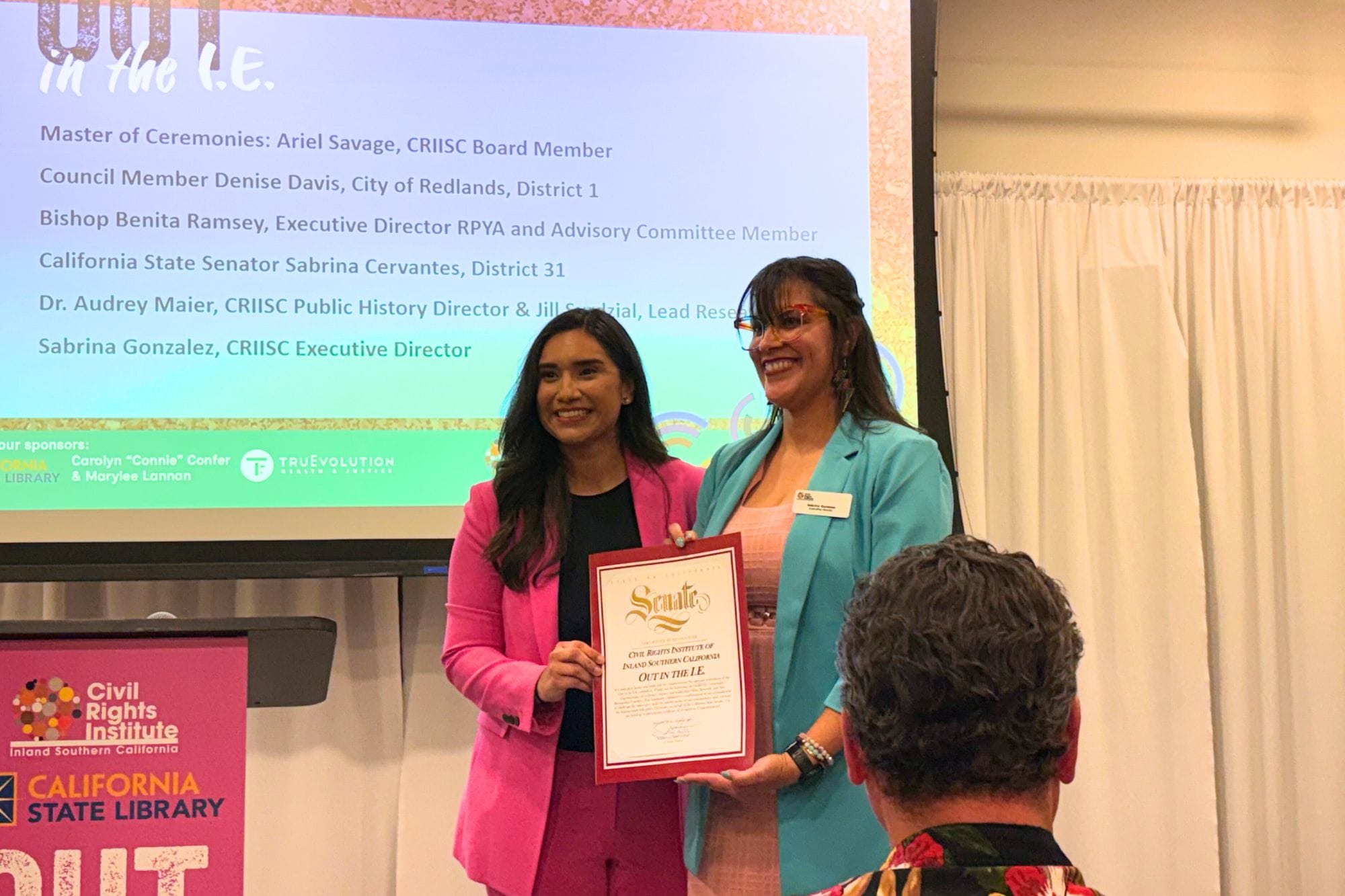
"The LGBTQ caucus exists to ensure that the voices of our LGBTQ+ Californians are not only heard but protected through meaningful legislation and advocacy," Cervantes said. "At its core, the caucus works to preserve dignity and equality for all, especially for communities that historically have been marginalized or erased."
"Representation shapes policy, it shapes priorities, and it shapes who feels seen and valued in society," Cervantes said.
She highlighted securing $3 million for the Inland Empire's first LGBTQ+ resource center at TruEvolution and $10 million for housing project Legacy.
"This exhibition matters. It reinforces how here in our region we continue to honor our community's histories and lived experiences," Cervantes said. "When stories are documented, archived and shared, they affirm identity, foster understanding, and inspire the next generation of leaders and advocates."
The exhibition, which runs through June 30, covers 10 themes: art, AIDS, community care, political representation, student movements, drag and nightlife, safety, faith, pride and representation, and queer futures.
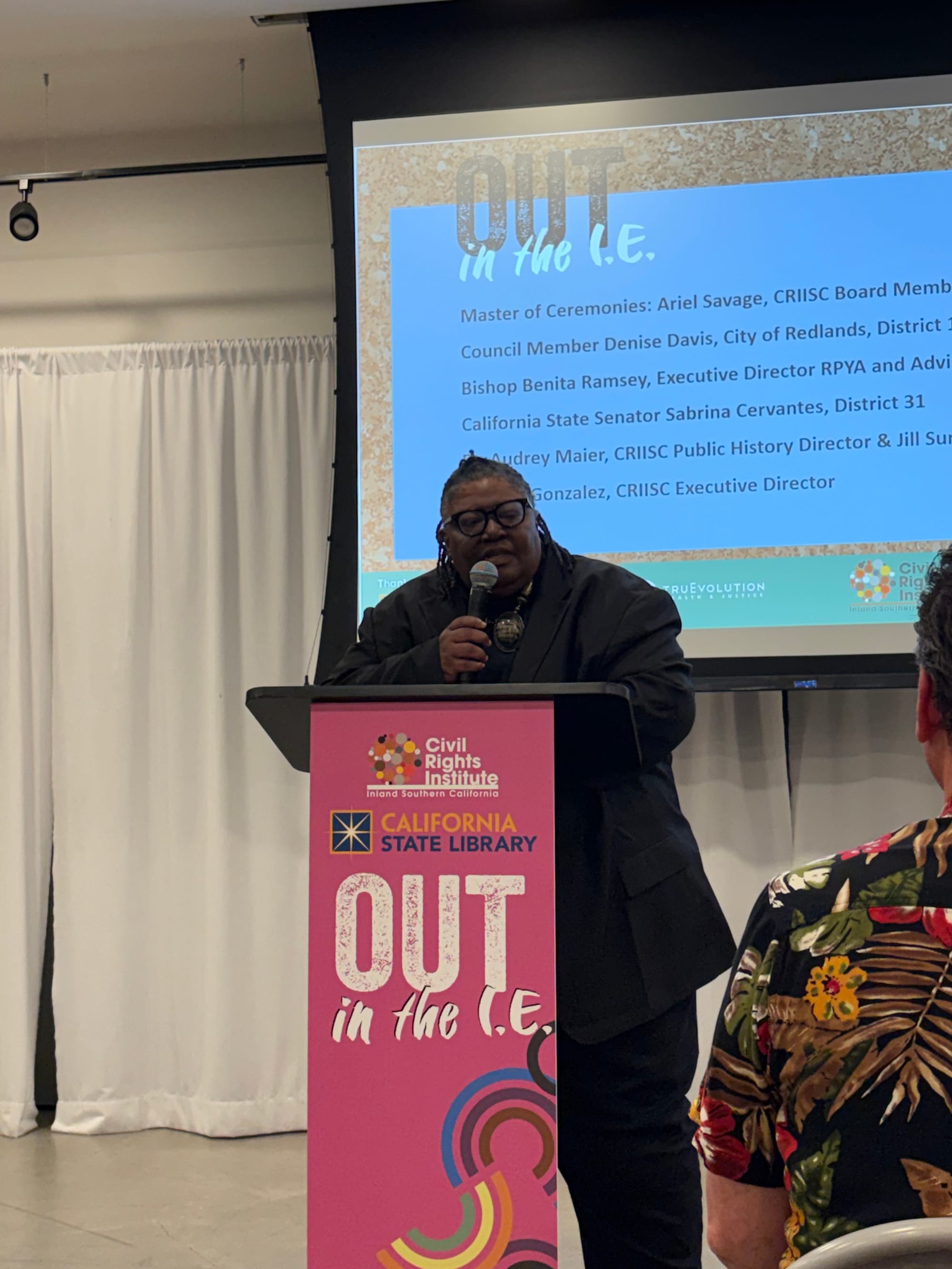
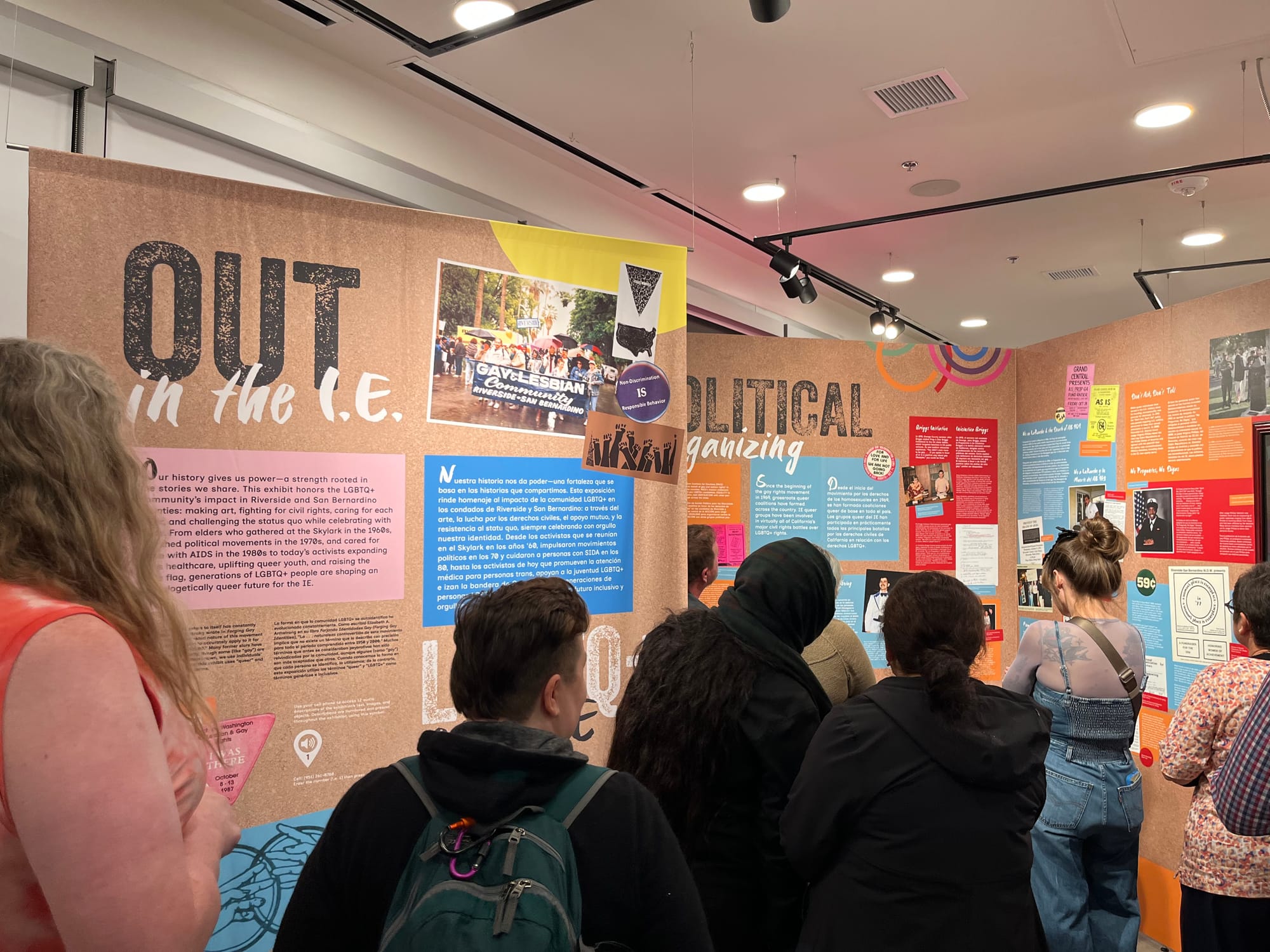
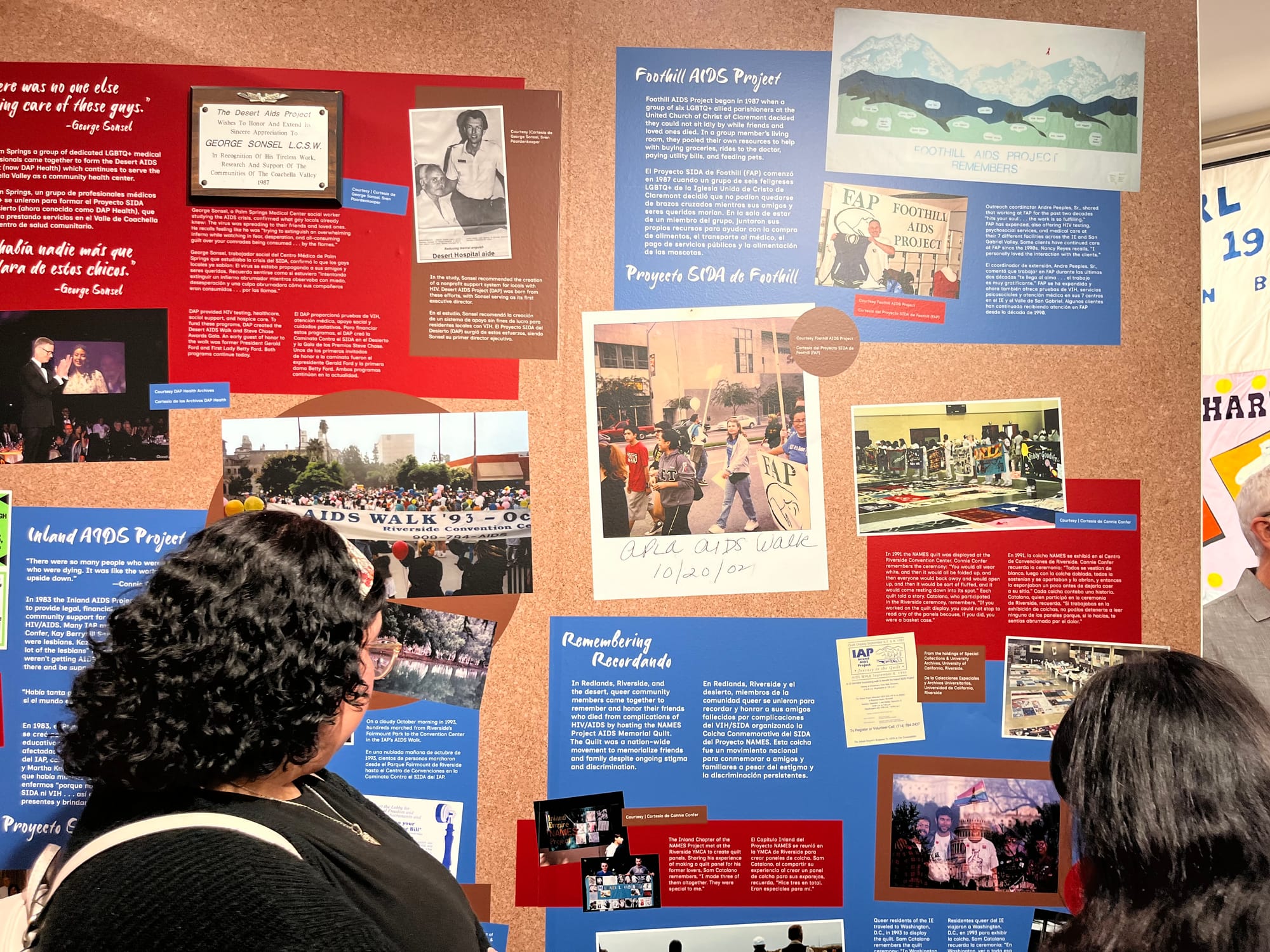
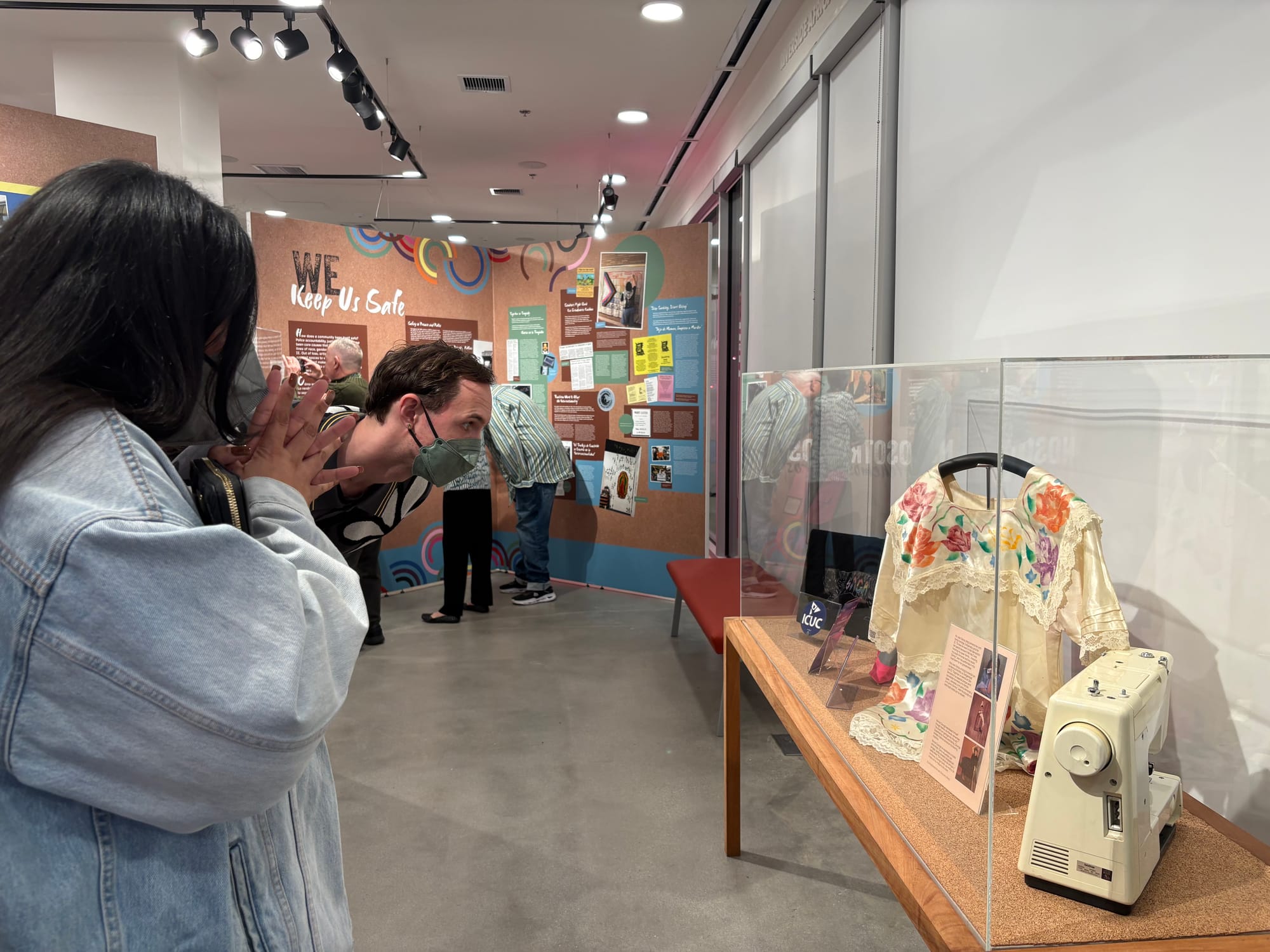
From left: Bishop Benita Ramsey speaks at the opening; visitors view exhibition panels; attendees examine the AIDS section; an attendee photographs artifacts on display.
Dr. Audrey Maier, the institute's public history director, and co-curator Jill Surdzial, a doctoral candidate in public history at UC Riverside, conducted 46 oral history interviews, each approximately three hours long. The interviews will be available through the institute's digital archive by the end of January.
"Our history gives us power, a strength rooted in the stories we share," Maier said. "This exhibit is here today because so many people opened up to share their stories with us and now to you."
Surdzial highlighted George Soel, founder of Desert AIDS Project, whose oral history documents experiences from early LA Pride events in the 1970s through the AIDS crisis.
"One that affected us very deeply, I wanted to share because I think it shows how important this work is," Surdzial said, describing Soel's story.
She described his experiences holding people's hands in hospitals during the AIDS epidemic as chosen family faced lack of support from those in positions of power.
"Everyone has a different story and everyone's perspective is so important," Surdzial said. "These stories can't go to their graves. Everyone deserves to get their flowers now."
Grace Saunders and Dawn Hassett designed the exhibition, with Spanish translation by Juan Castellanos. It follows a Pride Month pop-up version in June 2024 that focused on research for the City's LGBTQ+ Historic Context Statement. The full regional exhibition began Thursday, expanding from a timeline to 1,500 square feet of exhibition space, executive director Sabrina Gonzalez said.
"These are authentic stories," Gonzalez said. "We're not taking away the harsh times. We're not pretending that things didn't exist, but we're rather making sure that we're honoring that."
The California State Library provided a grant in January 2025 to fund the project. Additional support came from TruEvolution, Carolyn "Connie" Confer and Marylee Lannan, Inland Empire Health Plan, Ken and Mary Gutierrez, Q'Vinc and Irma Asberry, and Phil, Theresa and Ariel Savage. Gonzalez noted the exhibition was one of the institute's most difficult to find full sponsorship for.
The Civil Rights Institute is an exhibition space, archive and resource center focused on civil rights, social justice and civic engagement in Riverside and San Bernardino counties. Founded by local civil rights leaders to preserve and share the region's civil rights history, the institute received the Riverside Hero Award from the Greater Riverside Chambers of Commerce in 2024. It offers free exhibitions, events and youth programming.
More information: "Out in the I.E." is free and open to the public Wednesday through Friday from noon to 5 p.m. at 3933 Mission Inn Ave., Suite 103, at the corner of Mission Inn Avenue and Fairmount Boulevard. Group tours are available by completing an online form at the institute's website, inlandcivilrights.org.

The Mission Inn Foundation and Museum kicks off a new annual celebration with a free public reception Wednesday evening.


A series by Anthony Solorzano exploring Riverside through the eyes of a transplant, as the memory of a hometown slowly fades.


The Titans defeated crosstown rival Martin Luther King High School to earn a trip to the state competition in March.

A monthly stroll through Riverside's everyday neighborhoods, one step at a time.

Let us email you Riverside's news and events every morning. For free!