
City Council Awards Contract for Riverside Civil Rights Walk
The Downtown trail will link 24 civil rights history sites, with construction set to break ground in May and a ribbon-cutting planned for fall.
The Downtown trail will link 24 civil rights history sites, with construction set to break ground in May and a ribbon-cutting planned for fall.

Civil Rights Walk contract approved, Restaurant Week returns with 20 restaurants...
Diners can explore specially priced menus at restaurants across the Downtown core from March 28 through April 5.
Those seedless Cuties you pack in your kid's lunchbox? UCR scientists helped create them. Now anyone can plant the trees—if they can find them.

After 20 years of generating more than $70 million for UC Riverside and becoming a major presence in the global citrus industry, the university's famous Tango mandarin is entering a new chapter: home gardeners can finally plant them without paying royalties.
But don't rush to your local nursery just yet.
The U.S. plant patent for Tango expired recently, freeing domestic growers—including backyard gardeners—to plant the variety that's marketed under brand names like Cuties and Halos. The sweet, virtually seedless mandarins have become a lunchbox staple.
However, Mikeal L. Roose, the UCR professor emeritus of genetics who helped develop Tango in the 1990s, told The Raincross Gazette that newly affordable trees won't hit the market for months.
"Expiration of the patent allows wholesale nurseries to propagate a Tango tree without paying royalties," Roose said via email. "Therefore it will be about 6-12 months until there are trees available from new propagations."
Trees currently available were propagated when royalties were still charged, so buyers won't see immediate savings. "Who knows whether the wholesale nurseries will reduce the cost of trees to retail nurseries or just make a bit more profit," he said.
There's another hurdle for Riverside residents: state quarantine rules designed to stop the spread of citrus greening disease.
"Riverside is in a quarantine zone and trees are not supposed to be moved out," Roose explained. "I think you would have to go out of the quarantine zone to buy a tree."
For gardeners who eventually get their hands on a Tango tree, Roose offered encouraging words about the variety's backyard potential.
"Tango is an easy tree for a homeowner to grow," he told The Gazette. "It is vigorous and not particularly demanding of care. Fruit hold pretty well on the tree so you get a long harvest period."
Some pruning helps maintain fruit size and prevent alternate bearing—when trees produce heavy crops one year and light crops the next—but Roose said Tango has fewer problems with this than most mandarins. Because it's a later-maturing fruit, "you will lose some fruit when pruning," he added.
The variety began as an experiment in the 1990s when Roose and Timothy Williams set out to develop a mandarin that would stay seedless no matter what citrus varieties bloomed nearby. Williams, a longtime staff research associate and citrus breeder in UCR's Department of Botany and Plant Sciences, worked alongside Roose throughout the development process.
With support from the California Citrus Research Board, the duo exposed buds of another mandarin variety to gamma irradiation — a controlled dose of radiation that triggers beneficial DNA changes in plants.
About 200 trees were planted, but many withered or still produced seeds.
"Some genetic changes happen, some don't," Roose said in a UCR press release announcing the patent expiration. "You just have to grow the trees and wait — sometimes for years — to see what you've got."
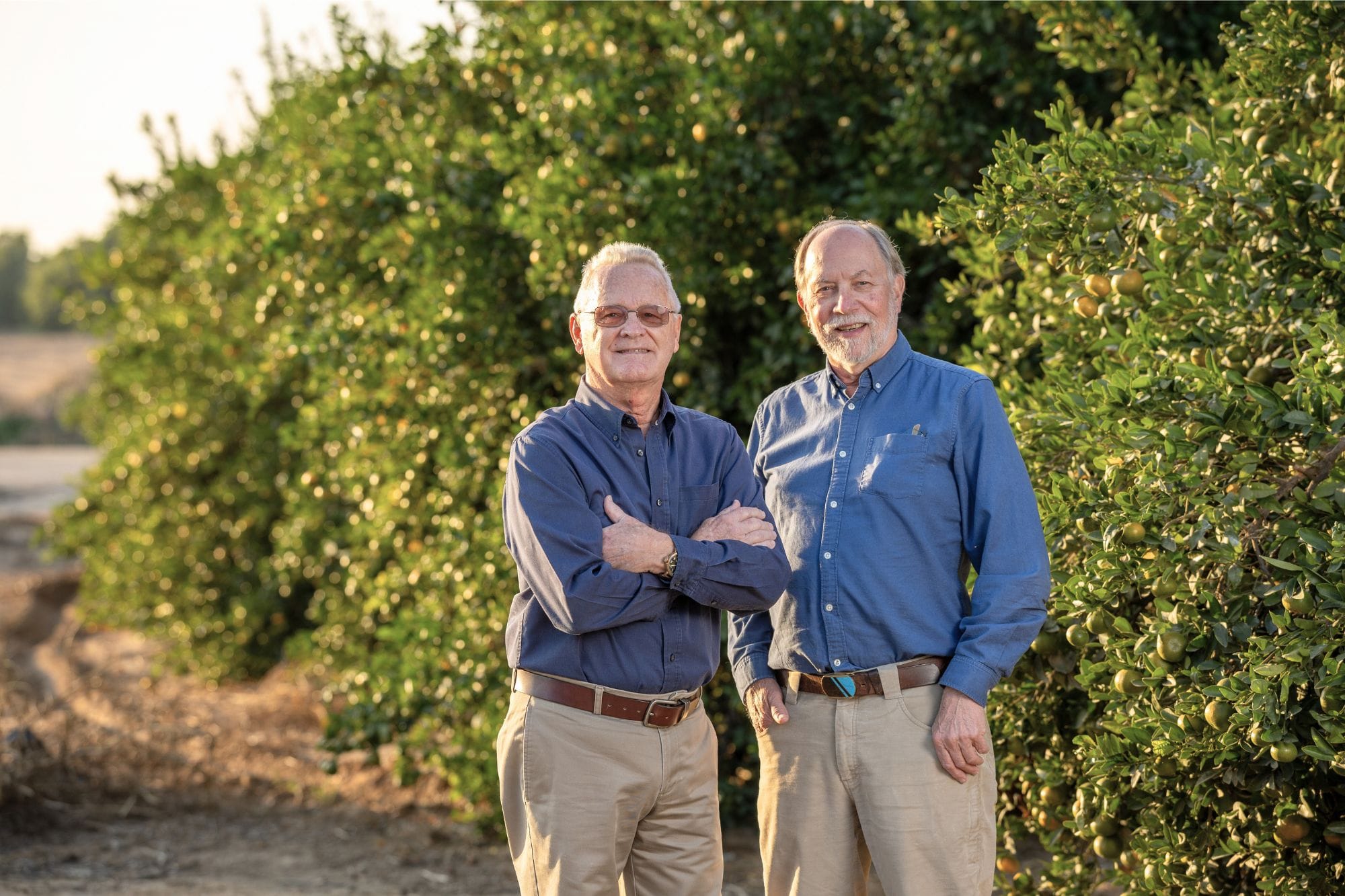
After several seasons, seven trees looked promising, but only two truly stood out. Williams and Roose faced the deciding moment together, with their final selection winning over another tree that "just happened to have a few more seeds."
That selection became Tango.
"You spend years working with hundreds of trees, and then one day there it is—the one that checks all the boxes," Williams said in the UCR press release. "When you see it in grocery stores and lunchboxes around the world, that's a pretty good feeling."
First released to growers in 2006, Tango established itself as one of UC's most successful innovations, generating more than $70 million in cumulative economic value for UCR.
Williams reflected on seeing the fruit worldwide: "You spend years working with hundreds of trees, and then one day there it is — the one that checks all the boxes. When you see it in grocery stores and lunchboxes around the world, that's a pretty good feeling."
The Tango is part of a citrus breeding effort that began in 1907 when the UC Citrus Experiment Station opened on what is now the UCR campus. UCR has since introduced more than 40 new citrus varieties, including the sweet-tasting Oroblanco grapefruit.
"When you look at Tango's success, it's gratifying—but it also reminds you that we're just one chapter in a much longer story of citrus improvement at UCR," Williams said. "The challenges facing citrus today—new diseases, climate, sustainability—are different from those a century ago, but the mission is the same: to keep California citrus viable, valuable, and accessible well into the future."
As for whether the scientist who spent decades developing the mandarin actually eats them himself?
"Yes, I enjoy eating Tangos," Roose said. "If it is hot, then I prefer them cold from the refrigerator. Occasionally I make Tango juice."
While the U.S. plant patent has expired, plant variety protection for Tango continues internationally, meaning royalties will still flow from international growers. The variety is now grown in more than 20 countries and marketed worldwide in more than 50 countries.
This month, a European trade association named Tango "Flavor of the Year" in Spain and Portugal based on consumer taste evaluations. In Spain, 89% of participants indicated they would "probably" or "for sure" buy the mandarins, while in Portugal, 80% expressed similar willingness.
"This is very satisfying," Williams said. "We all should be happy about this—it's been a huge effort over many years."

Teresa Buelna's shop on 12th Street grew from thrifted tubs of fabric into a creative hub for the community.

The Human Migration Institute's annual event offered a space for creativity, connection, and cultural exchange for women rebuilding their lives in Riverside.

With CBU entering the Big West, UCR's new AD inherits a rare intracity, intraconference rivalry - and a fight for the Inland Empire's loyalty.


Geoff Gouveia, Jake Driscoll and Steven Burgos finally open the doors on their long-awaited Midtown coffee and bagel shop.
Let us email you Riverside's news and events every morning. For free!