
🗞️ Riverside News- March 10, 2026
King High honors vets, Hole Lake revival ahead, Citrus Fest is back...
King High honors vets, Hole Lake revival ahead, Citrus Fest is back...

The free-admission event features live music, citrus tastings, cooking demos, and activities for kids at the 247-acre Arlington park.
Councilmember Steve Hemenway envisions cafes, trails, and waterfront gathering spots where illegal dumping and overgrown brush now reign.
Councilmember Steve Hemenway envisions cafes, trails, and waterfront gathering spots where illegal dumping and overgrown brush now reign.

Amid Mayor Patricia Lock Dawson's mission to put the "river" back in Riverside, Councilmember Steve Hemenway is starting with a lake - the former reservoir in the southwestern part of the city known as Hole Lake.
"Picture this," Hemenway said, excitement creeping into his voice. "You grab a cup of coffee from a cafe, maybe a pastry or dessert, and take a walk across the street to Hole Lake, and you just sit there gazing out at the water, enjoying the peace of the outdoors."
Maybe there's a park and a sports field nearby where kids can run around, he added.
"That's what I envision for Hole Lake… a community gathering place, with its own unique Riverside flair," Hemenway said.
Hemenway said Hole Lake's revitalization project is in partnership with the mayor's vision to reconnect Riverside with the Santa Ana River, as the lake serves as a "bookend" to the stretch of river in the city.
Lock Dawson said the lake effort is a "meaningful step toward putting the river back in Riverside" by investing in restoration and addressing issues like illegal dumping.
"Hole Lake represents an opportunity to reconnect our community with the Santa Ana River," Lock Dawson said in a statement to the Gazette. "Through a thoughtful master planning process, we are working with residents and partners to shape a vision that expands recreational access, restores habitat, and transforms an underutilized space into a place our community can connect with nature."
Hemenway described Hole Lake today as "a void" where illegal dumping, overgrown vegetation and homeless encampments run rampant and pose significant fire risk.
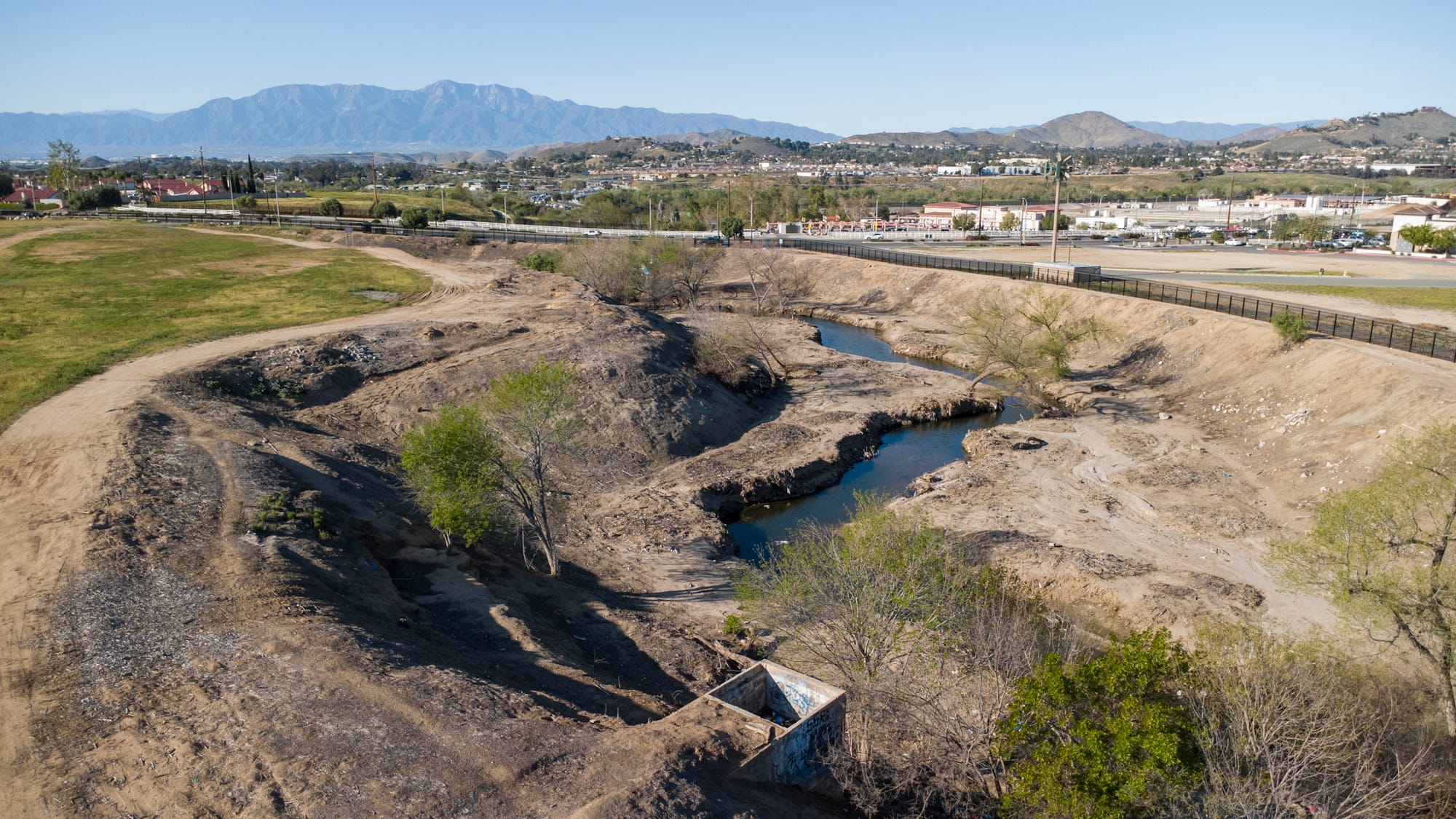
However, Hole Lake has lived many lives since it was built in the 1910s by its namesake, prominent Riverside landowner Willits Hole.
Hole used the dam as an agricultural reservoir to irrigate his ranch. The reservoir was 35 feet deep and held 75 acres of water, according to a 2008 historic preservation survey by the city, and was once stocked with game fish for Hole and his friends to fish.
During World War II the U.S. Army purchased the ranch and converted it to a military training camp called Camp Anza - using Hole Lake for lifeboat training. The camp operated through the end of the war; after 1946, it was abandoned and Hole Lake lacked regular maintenance and upkeep. [reporter should verify Camp Anza operating dates]
In the 1970s the lake was drained and has sat dry since, though sometimes it receives water runoff that eventually flows toward the Santa Ana River, which is located about a mile north of the lake, according to a 2021 report by the Western Municipal Water District.
Today, city officials hope to give Hole Lake a brand-new life.
Some ideas for the area include nature trails, sports fields, fishing, water sports, parks, playgrounds and even businesses and restaurants, according to Parks and Recreation Director Pamela Galera.
"I would love to see a beautiful park, something that's really loved and cherished by the community," she said.
Galera said the timeline for the project is unknown, as it is currently in its earliest stages of conception - but this year, Riversiders can expect the city to hire a designer to create a master plan for Hole Lake and to host meetings where the community can give their input for what they'd like to see.
"This year, we're looking forward to reaching back out to the community after we have a design consulting team on board," Galera said.
Once hired, the designer will survey the land and suggest options for what the city could build. The designer must take into account certain constraints, such as the airport's flight paths, migratory birds and certain areas of the lake that are protected as a natural habitat by the California Department of Fish and Wildlife, Galera said.
Once designers have prepared suggestions and gained environmental clearance, the city will open up meetings for community input before solidifying the master plan.
When the project's master plan is solidified, city officials will apply for grants to fund construction - and builders will break ground on the project once funding is secured.
By Micaela Ricaforte

The annual event pairs juniors with veterans from across the military branches for one-on-one interviews - and its founder says both sides leave with something irreplaceable.

The weekly market relocates four blocks south to a larger space with more free parking, beginning March 7 from 8 a.m. to 1 p.m.

Seven leaders recognized for roles in building RAM and The Cheech, including four posthumous honorees.

The Mission Inn Foundation and Museum kicks off a new annual celebration with a free public reception Wednesday evening.
Let us email you Riverside's news and events every morning. For free!