

When curating Chicano Camera Culture: A Photographic History, Elizabeth Ferrer chose to begin the timeline in the 1960s. This generation didn’t call themselves artists. Instead, they saw an urgency in capturing the moment and their training grounds were the protests happening around them.
"Chicano photography really starts with those activist years," she said. "That's when people began to refer to themselves as Chicanos, and it was during the era of Cesar Chavez and the protests."
The exhibition will be split between two museums - running through Sept. 6 at The Cheech Marin Center for Chicano Art & Culture and through July 5 at the Riverside Art Museum's Julia Morgan building. It is the first major survey to explore the evolution of Chicana/o/x-based practices across six decades, featuring 150 artists from around the country.
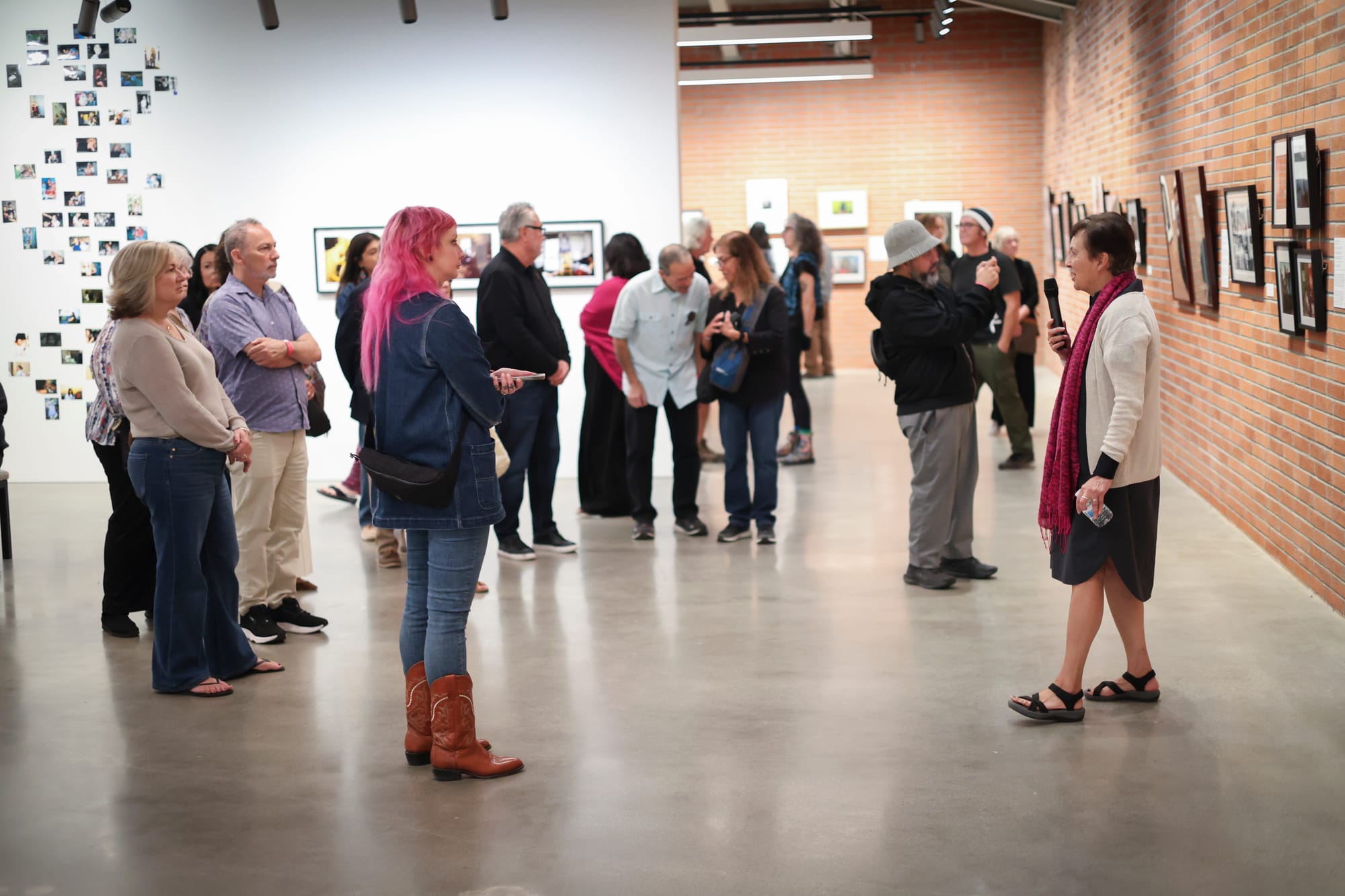
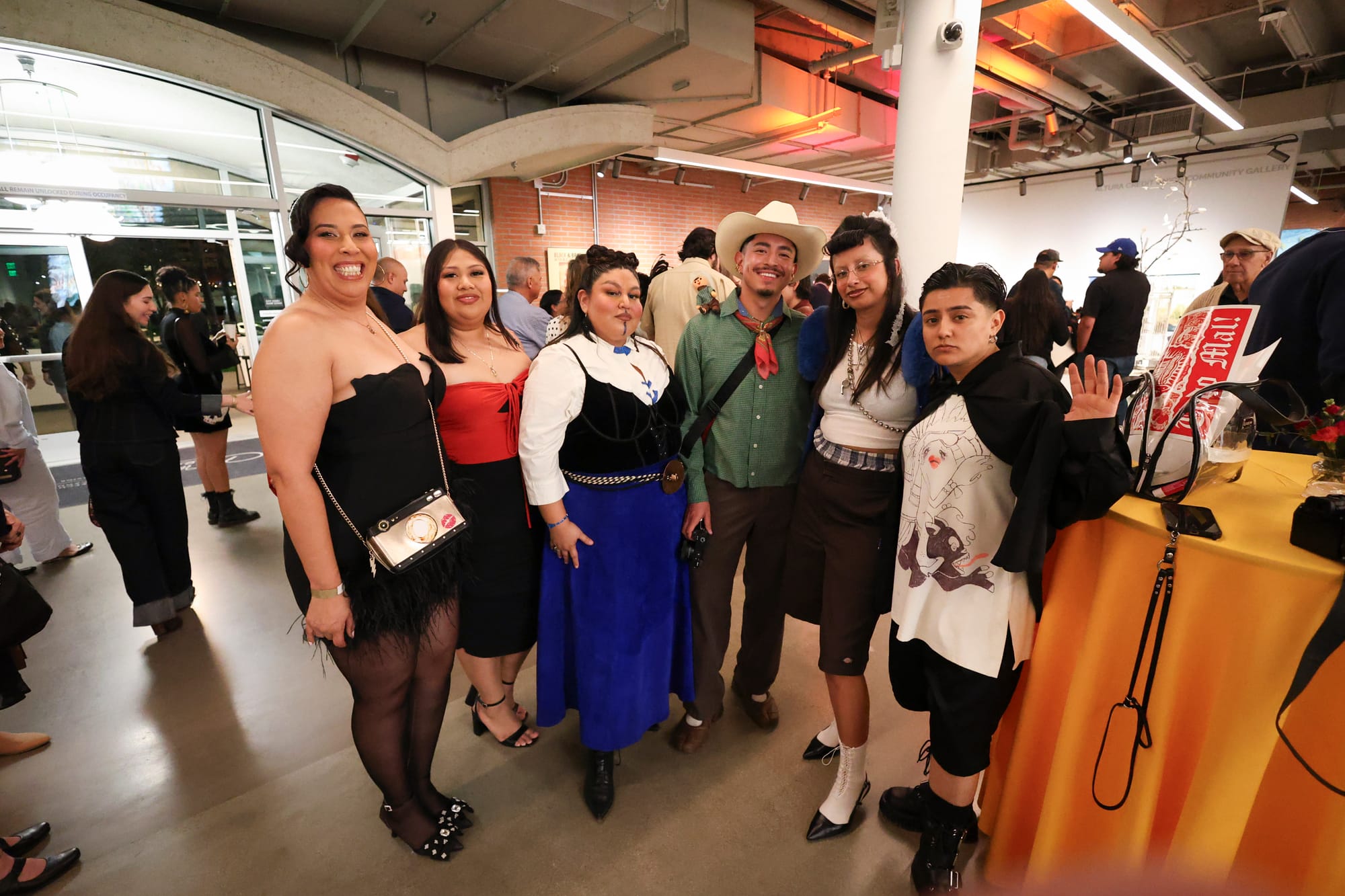
Attendees and artists gather to celebrate the opening reception of Chicano Camera Culture: A Photographic History on February 7. The exhibition features 150 artists spanning six decades of Chicano photography. (Courtesy of Carlos Puma/ Puma Photography on behalf of Riverside Art Museum)
"All this work that goes back to the 1960s, it's also part of American photography history, American art history," Ferrer said. "My goal as a curator has always been to document these photographers, to document these movements, so that future museum curators and scholars and students will have a basis from which to develop their own work."
Chicano Camera Culture arrives at a moment when questions of Chicano culture, immigration and belonging remain as relevant as they did in the 1960s. The exhibit highlights how the photographers have used the camera as a tool to document their communities and assert their place in American art history.
"Photography has always been an essential part of Chicano culture–it's how we've seen ourselves, how we've been seen, and how we've reshaped that vision," Cheech Marin, actor and partner with the RAM, said in a statement to the Gazette.
That legacy continues through the work of young artists like Yulissa Mendoza. They first began photographing their family before turning their lens toward their hometown of Muscoy, which they say is slowly being overtaken by the logistics industry.
"For me, my subjects are the mundane," Mendoza said. "It's the vibrancy of the community, it's the food vendors, it's the food, it's the historical spots."
Growing up in an unincorporated area of San Bernardino has shaped the way Mendoza approaches photography. Their upbringing informs a communal approach - one that ensures their subjects feel seen.
"I like to make sure that whoever I'm photographing, they feel confident and comfortable, but also that we're able to have a relationship when they know where the photos are gonna be," they said.
Mendoza's work focuses on portraits. They are at a loss for words to describe their feelings about being a part of an exhibit alongside artists who have built the foundation of their work.
"It's surreal," they said.
Ferrer hopes this exhibit allows the younger generations to understand the power they all hold. With cameras being so accessible to anyone, and photography being a big part of the young generation, she hopes it inspires them to use the medium in a way that allows them to see themselves.
"Photography is totally relevant and they know that because they're all on social media," she said. "They're all using the camera to take pictures of themselves."
She believes that the young generation will continue the tradition that began in the streets decades ago in the digital era.
"They're also creating this history."
More information: Chicano Camera Culture: A Photographic History runs February 7 - July 5, at RAM and February 7 - September 6, at The Cheech. Admission hours are Wednesday - Saturday, 10 a.m.- 5 p.m. and Sunday, 12- 5 p.m. Tickets are available at riversideartmuseum.org.


