
Mikey G's Finally Has a Home, and It Was Worth the Wait
Geoff Gouveia, Jake Driscoll and Steven Burgos finally open the doors on their long-awaited Midtown coffee and bagel shop.
Geoff Gouveia, Jake Driscoll and Steven Burgos finally open the doors on their long-awaited Midtown coffee and bagel shop.
Mikey G's has a home, MLK High student featured neighbor, a "hair-raising" prompt...

Neighbor of the Week is a series profiling the hidden heroes of Riverside, doing incredible works of service throughout our different neighborhoods.
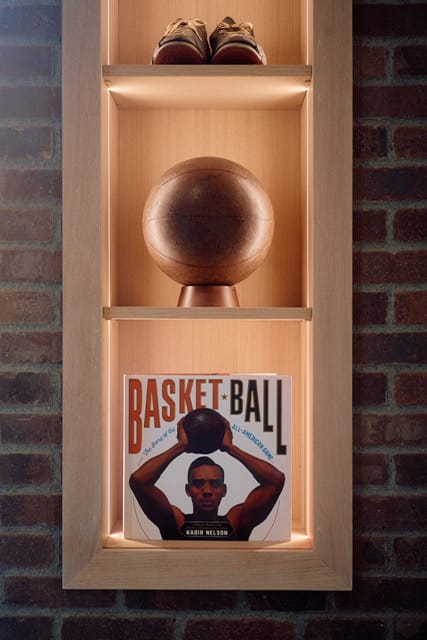
The award-winning author and illustrator explores basketball's history and its power to bring people together in his new book "Basket Ball: The Story of the All-American Game"


When Kadir Nelson, the author and illustrator of "Basket Ball: The Story of the All-American Game," was in the middle of developing the book around 2020, he was living through history. The COVID-19 pandemic forced the country to shut down and mass protests against police violence and racial injustice followed the death of George Floyd.
"My artwork became more focused on what was going on in the moment for the rest of that year," he said.
As it hits the bookstores, nothing much has changed. History continues to unravel on a daily basis. Now, more than ever, people need a sense of joy and for Nelson, there's nothing like the feeling of togetherness that comes with sports, specifically, basketball.
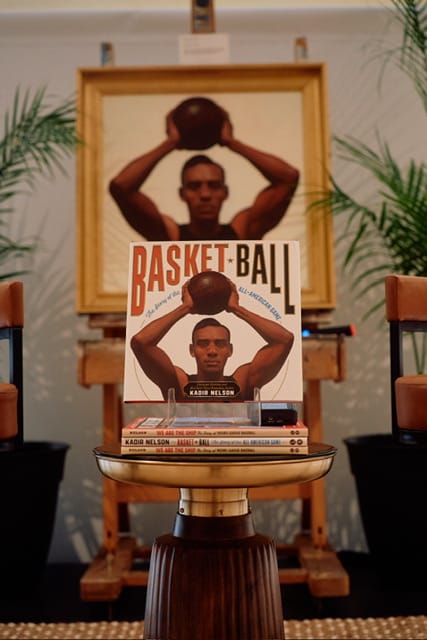
"I think it was something that we all really need, something to distract us or give us an escape from our kind of day-to-day lives, whether something is going on that we're not pleased with," Nelson said. "We can turn to something else to give us joy and for me, basketball has always been that."
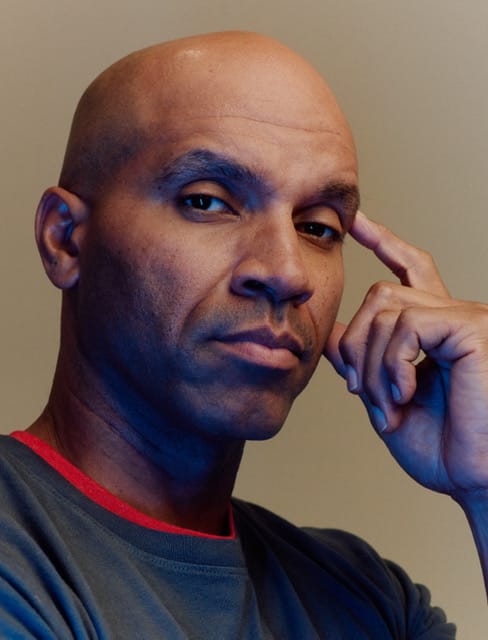
Nelson, a Caldecott Medal-winning illustrator, Society of Illustrators Hall of Fame inductee, Art Directors Club award winner and New York Times best-selling author, explored the game's history out of curiosity. He'd been a fan of basketball since he was a kid. Throughout his childhood, his drawings were significantly focused on the court. As an adult, he continued to play the game but his knowledge of the history of the game was minimal.
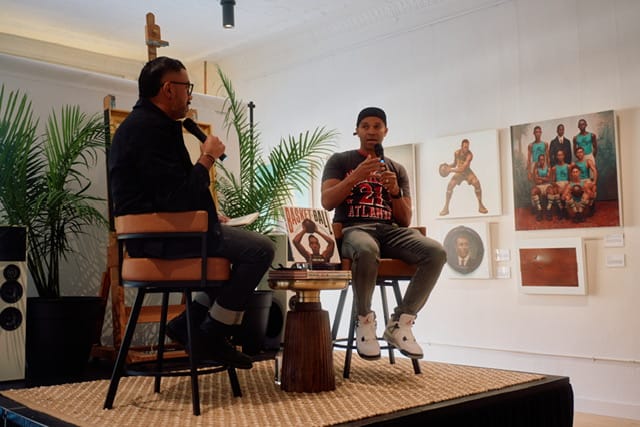
With the book, he knows the ins and outs of the game, from the way dribbling was introduced to the rules to how it started to gain popularity in the community.
"The biggest takeaway I got from it was that basketball didn't become successful, it didn't really gain its footing until it became accessible," Nelson said. "Until it became integrated."
With his work, he's tackled cultural identity and community by telling the story of the Negro leagues with the book, "WE ARE THE SHIP: The Story of Negro League Baseball" (Disney, 2008). Covering the game of basketball was a great way to understand his own identity and his craft, using the lens of basketball.
Through dribbling the ball up the court and shooting threes from outside the perimeter, Nelson learned how to work with others. While developing his ball skills, he used the same discipline to practice his craft. By playing the game and watching it as a fan, he learned to communicate movement and energy in his work.
"Basketball [has been] an environment of my life since I was a little kid," Nelson said. "It's really kind of shaped me as a human being, and as an artist."
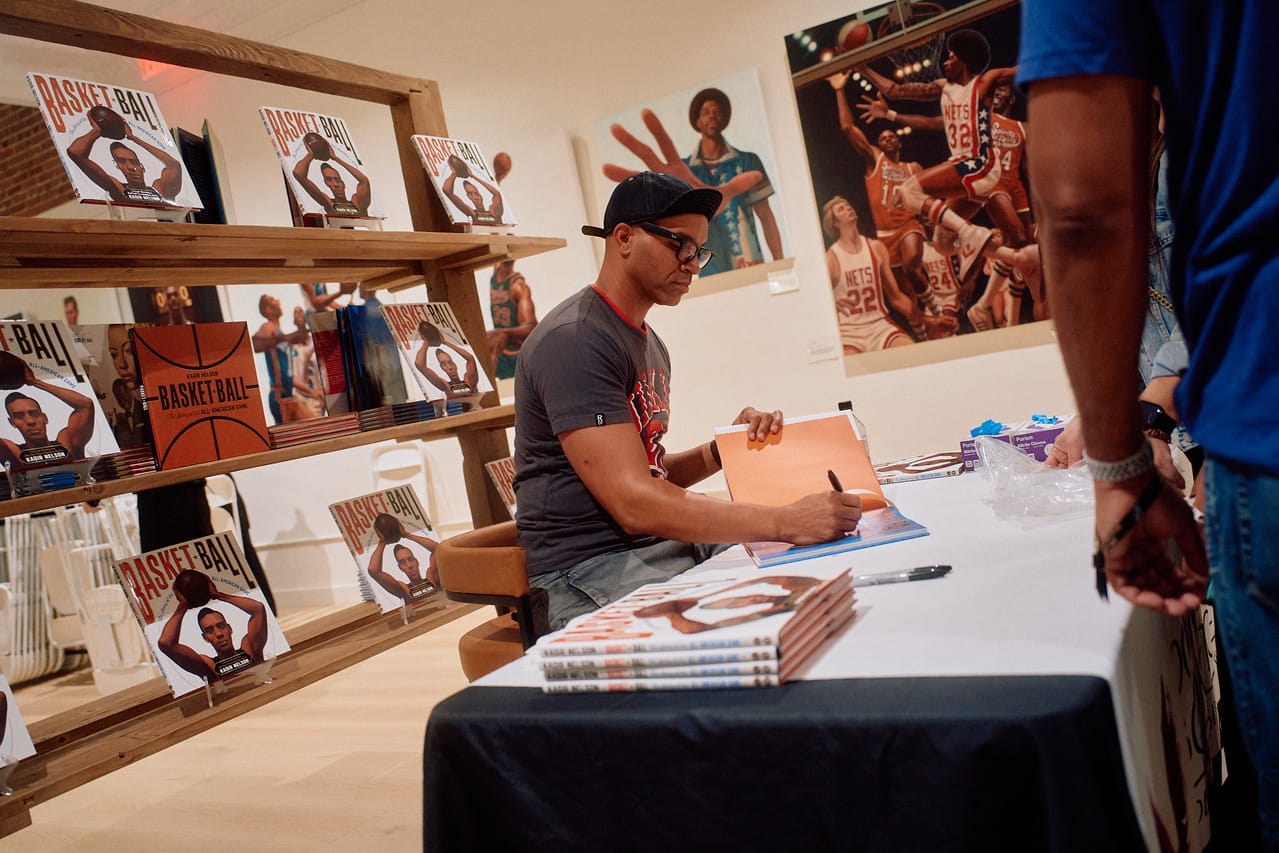
By covering personalities of the game that are larger than life, who perform feats unlike anyone else, he hopes to honor the people who revolutionized the game through their outstanding play.
"Basketball only survived because it became inclusive," Nelson said. "It would not have survived if it didn't incorporate the play style and personalities and skills of the players from the black five, which were like the Negro leagues of basketball."
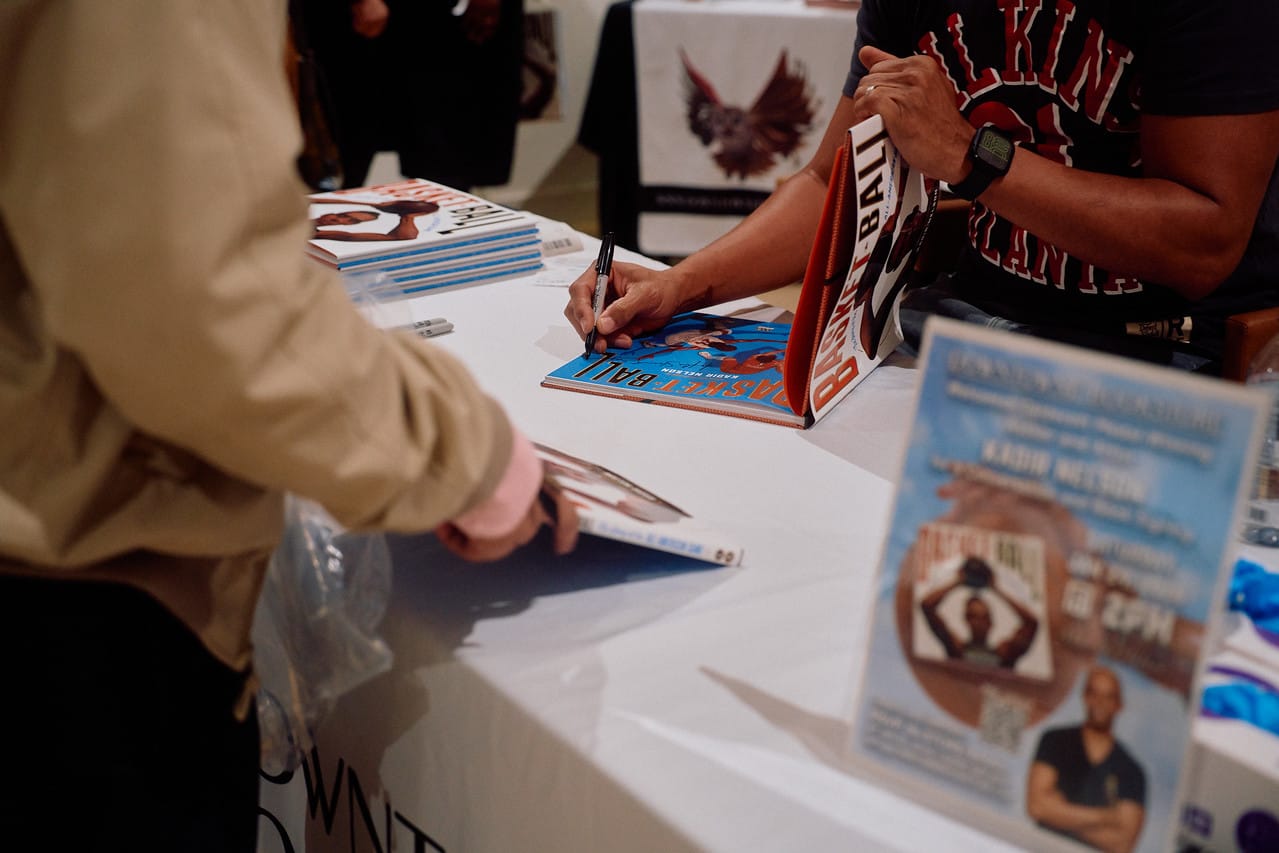
The theme of inclusivity can resonate with readers of all ages during the current social environment, Nelson said.
"... Life, like basketball, is more interesting and fun, when we can all play together."

Geoff Gouveia, Jake Driscoll and Steven Burgos finally open the doors on their long-awaited Midtown coffee and bagel shop.

A monthly stroll through Riverside's everyday neighborhoods, one step at a time.


The City said it is "processing potential next steps" regarding a community center and statue bearing Chávez's name, as a local nonprofit canceled its March 30 celebration.

The Riverside consignment sale, founded by three local moms in 2008, holds its spring event March 19-23.
Let us email you Riverside's news and events every morning. For free!